Camping on Your Period: The Realistic Planning Guide Nobody Gives You
Quick Answer: Pack a dedicated odour-sealing disposal bag, choose products based on that specific trip’s water access and length, bring a small separate hygiene kit, add a heat patch and pain relief, and store used products with the same scent protocol you’d use for food in bear country.
There’s a whole genre of camping checklist that covers headlamp spares, three ways to start a fire, and precisely nothing about a monthly event that affects roughly half of campers.
It’s not a delicate topic. It’s a logistics problem with straightforward answers.

Why does camping advice skip this?
Default assumptions. Most packing lists are written from a starting point that skips period logistics entirely — the same gap that shows up across a lot of general beginner camping guidance.
Residual awkwardness. General reluctance to discuss period logistics openly carries into outdoor content, leaving a real information gap about an entirely ordinary thing.
Home routines assume infrastructure. Everyday management quietly depends on a bathroom, a bin, and privacy. A campsite offers none of those by default, which means genuinely different planning rather than the same plan outdoors.
There’s a camping-specific question too. Scent and wildlife attraction, particularly in bear country, is a legitimate concern that simply doesn’t exist at home.
It comes up often enough in outdoor communities to deserve the same practical treatment as food storage or sleeping systems.
What actually needs planning?
- Disposal. Most camping and all backcountry settings are pack-it-out. A home bathroom bin handles this invisibly; a campsite doesn’t.
- Hygiene and privacy. Managing at camp-level water access and privacy takes more deliberate setup than an at-home routine.
- Product tradeoffs shift. Reusable options need water for cleaning; disposables need disposal logistics. The right answer changes by trip, not by preference.
- Comfort without conveniences. Cramping without a heating pad, a familiar bed, or easy hot water needs its own small plan.
- Scent-secure storage. In bear country and similar regions, used products follow the same principles as food storage.
What Nobody Tells You
Your cycle can shift on the trip itself. Altitude, unfamiliar exertion, disrupted sleep, and travel stress can all move timing by a few days. Pack for the possibility even when the dates say you’re clear — this is the single most useful thing on this page.
Bear canisters are not just for food. Anything scented goes in — that includes toiletries, wipes, and sealed period waste. This isn’t a special accommodation; it’s the standard protocol applied consistently.
Cold makes cramps worse. A cold night in a sleeping bag noticeably amplifies cramping for a lot of people. A chemical heat patch weighs almost nothing and is worth more than any other comfort item you could pack.
Dark-coloured base layers solve a lot of anxiety. Not glamorous advice, and genuinely the thing experienced campers mention first.
Double-bagging is the whole disposal system. An opaque odour-sealing bag inside a second sealable bag handles the problem completely. It’s a two-dollar solution to the thing most people worry about most.
What actually works at a real campsite?
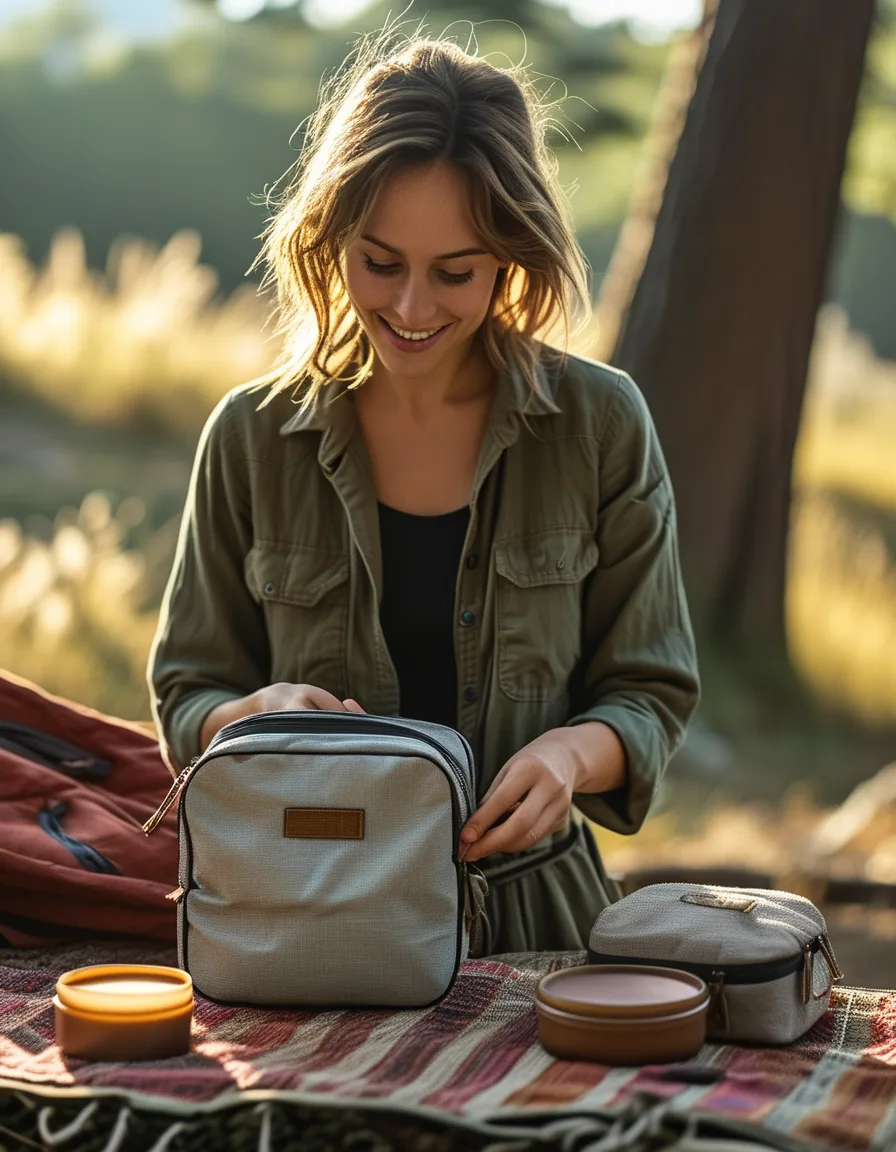
A dedicated sealable disposal kit. Small, opaque, odour-sealing bags packed specifically for this. It solves the disposal gap directly and takes up almost no space.
Product choice matched to the trip. A short trip with limited water favours different products than a longer stay at a site with a tap. Decide per trip rather than defaulting.
A small separate hygiene kit. Unscented wipes and a modest amount of water set aside for this purpose, independent of general camp water. Unscented matters in wildlife areas.
A compact comfort kit. A heat patch, over-the-counter pain relief, and one familiar comfort item cover most of what a home routine would otherwise provide.
Existing camp protocol, applied. Store used products the same secured, scent-controlled way you already store food waste. No separate system needed — just consistency with the one you have.
One note worth adding: unusually heavy bleeding, severe pain that over-the-counter relief doesn’t touch, fever, or feeling faint are reasons to head out and see a doctor rather than tough out the rest of the trip. Backcountry is a poor place to wait and see, and your first aid kit should include pain relief you already know works for you.
FAQ
What period products work best for camping?
It depends on the trip more than on the product. Menstrual cups and discs reduce waste volume substantially but need clean hands and some water; disposables need no water but require a solid pack-out plan. For a short trip with no water access, disposables plus a good disposal kit is usually simplest.
Do periods actually attract bears?
Evidence specifically linking menstruation to bear encounters is limited, and the sensible approach is the same one you’d take with any scented item: store it sealed and secured with your food. Following standard scent protocol is straightforward enough that it isn’t worth debating.
How do you manage without a bathroom?
Wipes, a small dedicated water supply, and a private spot away from water sources and trails — the same privacy planning as any other camp bathroom need, just with a disposal bag added. Our period camping guide covers setup in more detail.
TL;DR:
- Camping guides skip this; it’s a solvable logistics problem, not an awkward one.
- The real challenges: disposal, hygiene without a bathroom, product tradeoffs by trip, comfort without a heating pad, and scent storage.
- Pack an opaque odour-sealing double-bag disposal kit.
- Match product choice to that trip’s water access and length rather than defaulting.
- Bring a small hygiene kit with unscented wipes, plus a heat patch and pain relief.
- Store used products with your food-scent protocol. Severe pain, heavy bleeding, fever, or faintness means head out and see a doctor.
Keep Reading
This article is for general informational and styling purposes only. Fit, sizing, and product availability may vary.