7 Mistakes People Make Camping Near Water in Early Autumn
Quick Answer: Water holds heat longer than land, so early-autumn lakeside and riverside sites generate heavy overnight fog, sit in a cold-air drainage path, and soak everything with condensation. Pitch at least 200 feet from the water and higher than the shoreline, expect the temperature to drop faster and further than the forecast, vent the tent aggressively, and dry your gear at midday rather than in the morning. Most bad nights near water come from a pitch decision made at 4pm in the sun.
The site was perfect when you arrived. Golden light on the lake, warm enough for a t-shirt, everyone congratulating themselves. Then at 2am you were awake, cold, in a tent with wet walls, wondering what happened. Here is exactly what happened, and how to avoid all seven versions of it.

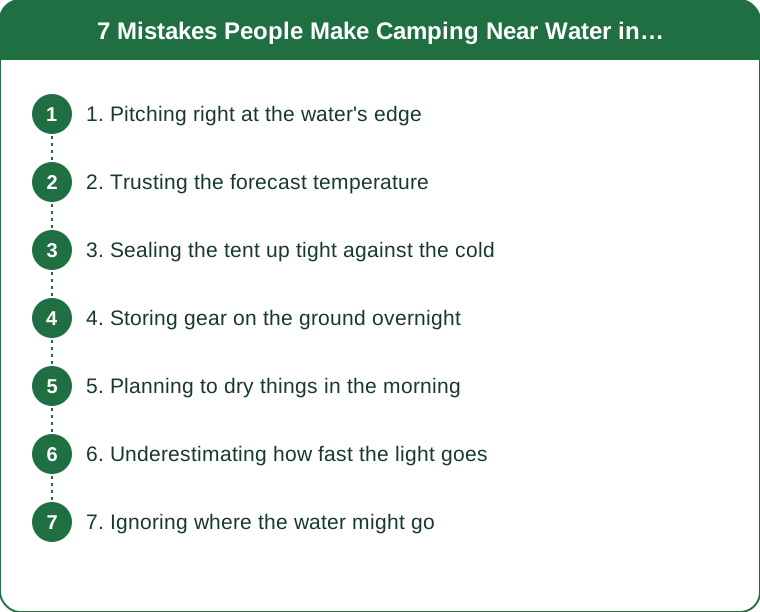
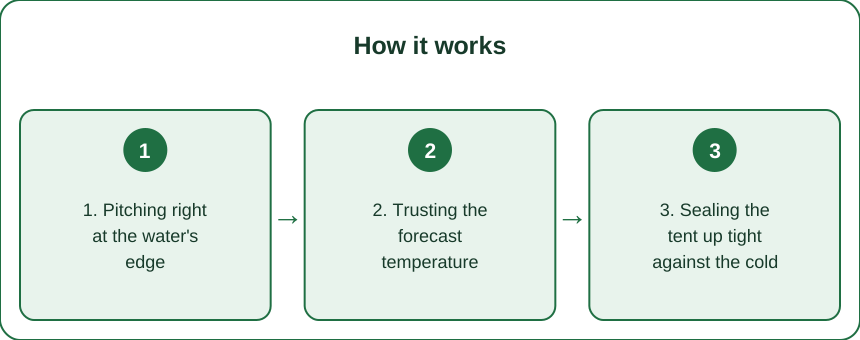
1. Pitching right at the water’s edge
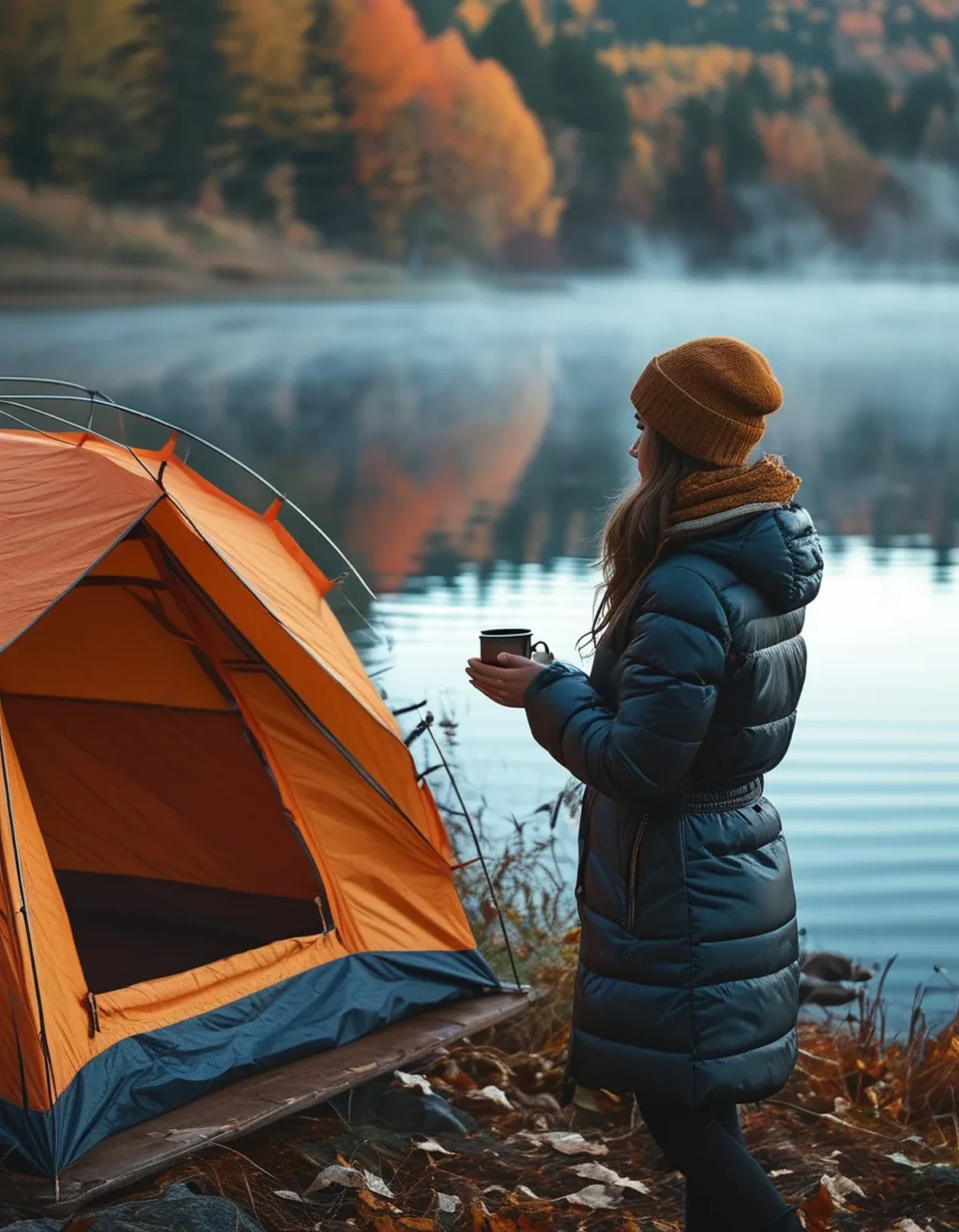
The photograph is worth it exactly once. The shoreline is the coldest, dampest, and most exposed strip of the entire site in autumn.
Cold air sinks and pools in low ground. Water bodies sit at the bottom of a drainage basin by definition, so at night cold air flows off the surrounding higher ground and settles right where you pitched. Temperature at the shoreline can be 5 to 10 degrees Fahrenheit colder than ground 30 feet higher.
Humidity is also maximal there, which means both more condensation inside your tent and a sleeping bag that loses loft as it takes on moisture. A damp down bag can lose a substantial part of its rated warmth.
Move up and back. Twenty vertical feet and 200 horizontal feet transforms a night, and it also keeps you clear of the rising damp and the bugs. In most places 200 feet from water is also the standard Leave No Trace guideline, which exists partly for this reason.
2. Trusting the forecast temperature
Forecasts are issued for a regional station, usually in an open, elevated, well-ventilated spot. Your lakeside hollow is not that spot.
In clear, still autumn conditions, valley bottoms and lakesides routinely run 8 to 15 degrees colder overnight than the forecast low. This is radiative cooling plus cold air drainage, and it is strongest on exactly the nights that look most promising - clear skies and no wind.
Clear skies are the warning sign, not the reassurance. Cloud cover acts as a blanket, trapping radiated heat. A clear, calm September night is the classic setup for the coldest possible pitch.
Plan your sleep system for the forecast low minus 10. Bring the warmer bag, the liner, or the extra mat. Being too warm is a solvable problem at 2am; being too cold is not.
3. Sealing the tent up tight against the cold
This is the single most counterproductive instinct in cold-weather camping. Closing every vent to keep warmth in traps the roughly one pint of water vapor each person breathes out overnight.
That vapor condenses on the inside of the fly and drips. By morning your sleeping bag has picked up moisture, and a damp bag is dramatically colder the following night. Near water, where the outside air is already saturated, this happens faster and worse.
Open vents at both ends, and leave a gap at the fly. Cross-ventilation removes the vapor. You lose a small amount of warmth and save a great deal of it by keeping your insulation dry.
Keep the inner tent off the fly. Any contact point transfers condensation straight through to the inside. Guy the fly out properly rather than leaving it slack - a slack fly touching the inner is the most common cause of what people mistake for a leaking tent.
4. Storing gear on the ground overnight
Ground near water is a moisture reservoir, and it wicks. Anything left directly on it - boots, packs, spare clothes in the vestibule - will be measurably damper by morning, even with no rain.
Boots left outside in autumn can freeze or fill with dew. Put them in a bag inside the vestibule, upside down, or bring them inside the inner tent at the foot.
Get your pack off the ground. Hang it, put it on a mat, or set it on a dry bag. The temperature difference between ground level and two feet up is substantial after midnight.
Keep tomorrow’s clothes in the bottom of your sleeping bag. This keeps them dry and warm, and it removes the single most demoralizing moment of a cold camp, which is putting on cold damp clothes at 6am.
5. Planning to dry things in the morning
Morning near water is the worst drying window of the day. Fog sits on lakes and rivers well into mid-morning in autumn, dew point and air temperature are close together, and there is often no direct sun on a shoreline until late.
Everything you hang out at 7am gets wetter, not drier. People pack away wet gear at 9am convinced they gave it a fair chance.
Dry at midday instead. Plan the day so you are back at camp or stopped somewhere open and sunny between 11am and 2pm, and hang the fly and bag then. Twenty minutes of midday sun does more than three hours of morning air.
If you must pack wet, pack it separately and unpack it the same day you get home. A wet fly rolled with a dry tent body ruins both, and a bag left packed damp for a week can develop mildew that never fully leaves.
6. Underestimating how fast the light goes
In early September, daylight is already shortening by two to three minutes a day, and a shoreline pitch loses direct sun long before official sunset because the sun drops behind whatever high ground surrounds the water.
Practical effect: you have roughly an hour less usable evening than you did in July. Cooking, washing up, and setting up in the dark near water is where most burns, lost items, and wet feet happen.
Do the chore sequence early. Pitch, water, firewood, and dinner prep done by the time the sun leaves the site, not by sunset. If it is already dusk when you start dinner, you are behind.
Have a headlamp on your body, not in the pack. The moment you need it is the moment you cannot find the pack. This is the most reliable small mistake at every autumn campsite.
7. Ignoring where the water might go
Autumn rain lands on ground that has been baked hard all summer, so it runs off rather than soaking in. Rivers rise faster in September than the same rainfall would raise them in May.
Read the ground before you pitch. Look for a debris line, flattened grass, or a clean gravel strip - all of these mark where water has been recently, and it will go there again.
Never pitch in a dry channel or a hollow, however inviting and flat it looks. Flat, smooth, gravel-floored ground next to a river is flat and smooth because water made it that way.
Check upstream weather, not just local. A river can rise from rain that fell twenty miles away in hills you cannot see, under a clear sky above your tent.
Have a middle-of-the-night plan. Know where the higher ground is and how you would get there in the dark. You will almost certainly never use it, and it costs two minutes when you arrive.
TL;DR:
- Pitch 200 feet back and above the waterline - shorelines are the coldest, dampest, most exposed strip of any autumn site.
- Expect 8 to 15 degrees colder than the forecast on clear, still nights, and clear skies are the warning, not the reassurance.
- Vent aggressively rather than sealing up, keep the fly off the inner, and store gear off the ground.
- Dry gear at midday, not in the morning fog, and finish all chores before the sun leaves the site.
- Read the ground for old water lines and never pitch in a channel, however flat it looks.
Early autumn by the water is some of the best camping of the year, right up until the pitch decision. Spend ten extra minutes choosing where the tent goes, and the rest of the night takes care of itself.
Keep Reading
This article is for general informational and styling purposes only. Fit, sizing, and product availability may vary.