7 Mistakes People Make Sharing a Tent — and How to Avoid Every One
Quick Answer: Nearly all tent-sharing friction comes down to space allocation, light discipline, and the order you do things in. Decide who sleeps on which side before dark, give every item a fixed home, agree on a headlamp rule, and get all gear-rustling done before either of you lies down. Seven specific mistakes cause most of the misery, and all seven are decided during setup rather than at 2am.
A tent rated for two people is designed to physically contain two people. It is not designed to make that pleasant.
The good news is that the difference between a good shared night and a terrible one is almost entirely decided in the twenty minutes before you get in.
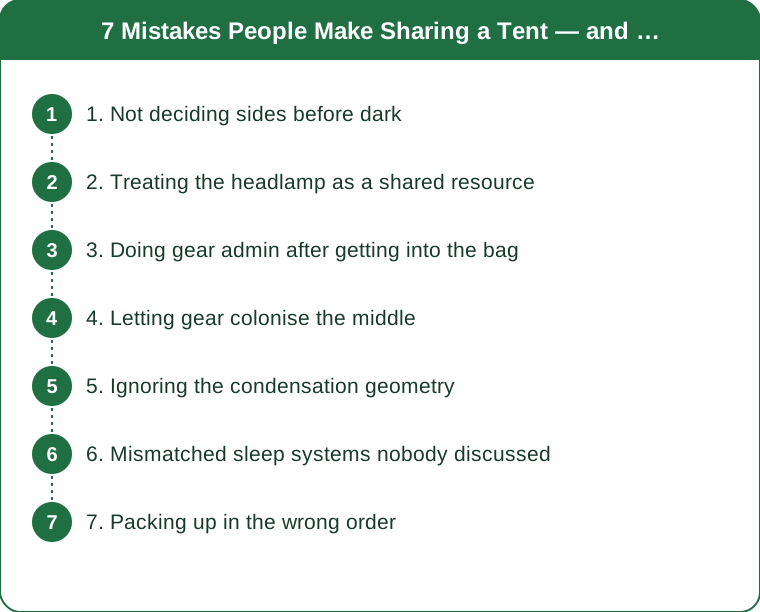
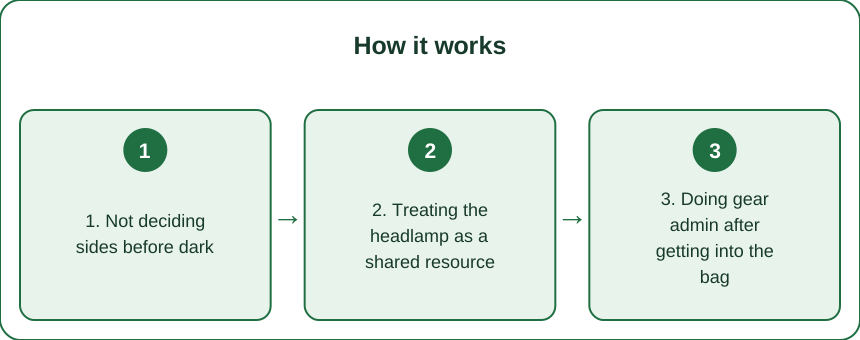
1. Not deciding sides before dark
The single most common mistake, and the easiest to fix.
Sleeping position is not a preference — it is a set of constraints. Who gets up in the night? Who needs the door side? Who sleeps hot and wants the vent? Who is a light sleeper and should be away from the zip?
Sort it in daylight, out loud, in ten seconds. The person who gets up at night takes the door side. Everything else follows from that.
Doing it in the dark means one of you crawls over the other at 3am, in a bag, with a headlamp, and neither of you sleeps again for an hour. It also means the mats are already laid out and someone has to move theirs, which in a small tent is a genuine ten-minute operation.
If neither of you gets up at night, give the door side to whoever wakes first in the morning.
2. Treating the headlamp as a shared resource
A headlamp inside a tent is enormously bright, and the wearer never realises it because it is pointed away from their own eyes.
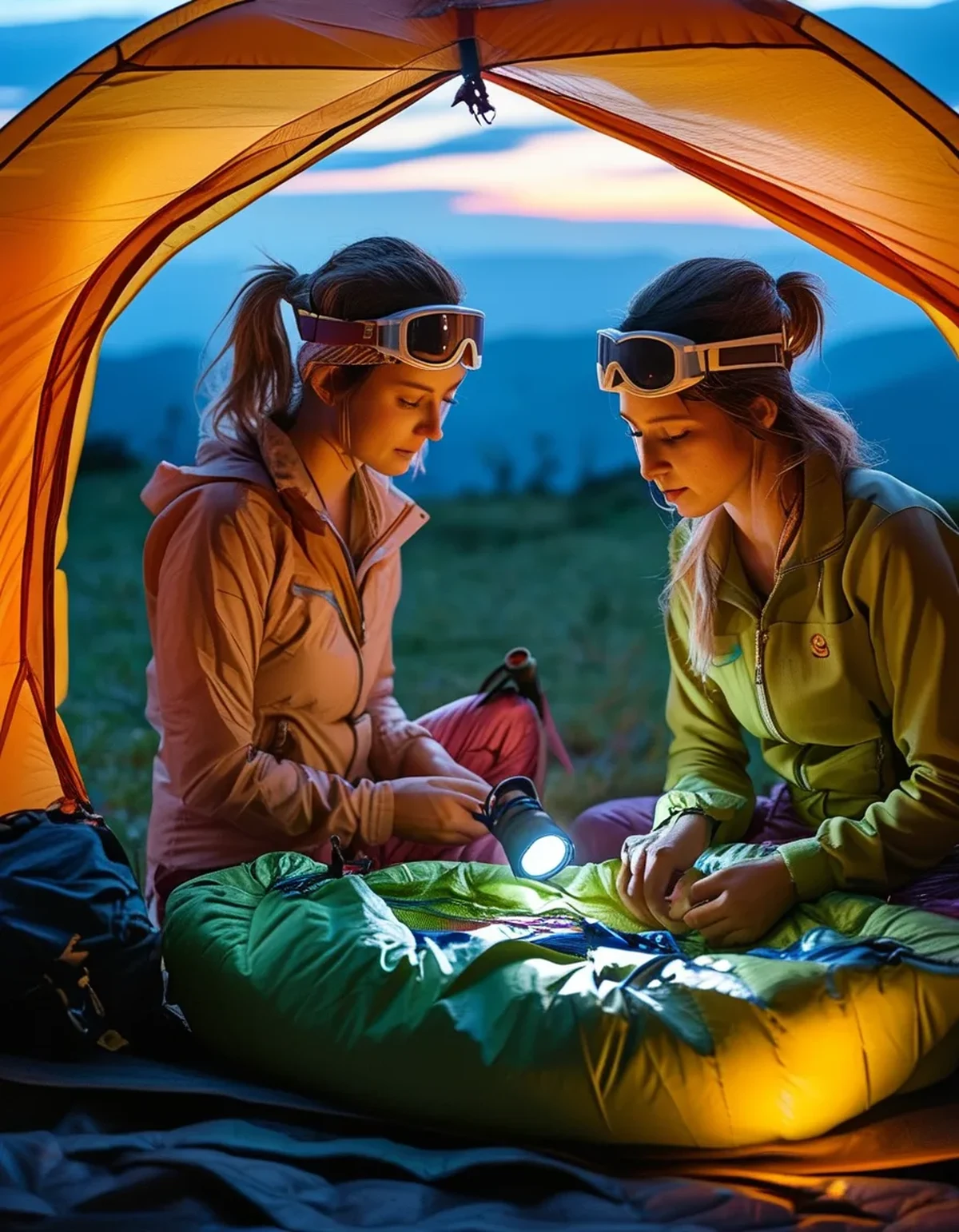
Two rules solve it. First, red mode after lights out — it does not destroy night vision and it does not wake the other person. Second, point it at the tent wall, not at the other person or at the ceiling. Bounced light is enough to find anything in a two-person tent.
The corollary is that both of you need your own light. Sharing one means one person waits in the dark while the other rummages, which is where impatience starts.
Also: put your headlamp in the same pocket every night. The number of arguments caused by someone searching for a light in the dark is much higher than it should be.
3. Doing gear admin after getting into the bag
This is the one that turns a fine night into a bad one.
Once you are in your sleeping bag, every movement involves nylon on nylon, which is loud, and every retrieval involves sitting up, which involves cold air. Doing it twice is annoying. Doing it four times is the thing your tent partner will remember.
Run a pre-bag checklist, out loud, before either of you lies down: water bottle within reach, phone where you want it, glasses somewhere findable, layer for the cold hour before dawn already inside the bag, boots positioned, headlamp in the pocket.
It takes ninety seconds and it eliminates most of the night’s noise. In late-season camping it matters more, because the temperature drop after midnight is steeper and the extra layer is not optional.
4. Letting gear colonise the middle
A two-person tent has a footprint that fits two mats and almost nothing else. Any bag placed between the mats will migrate, be kicked, and end up under someone’s hip.
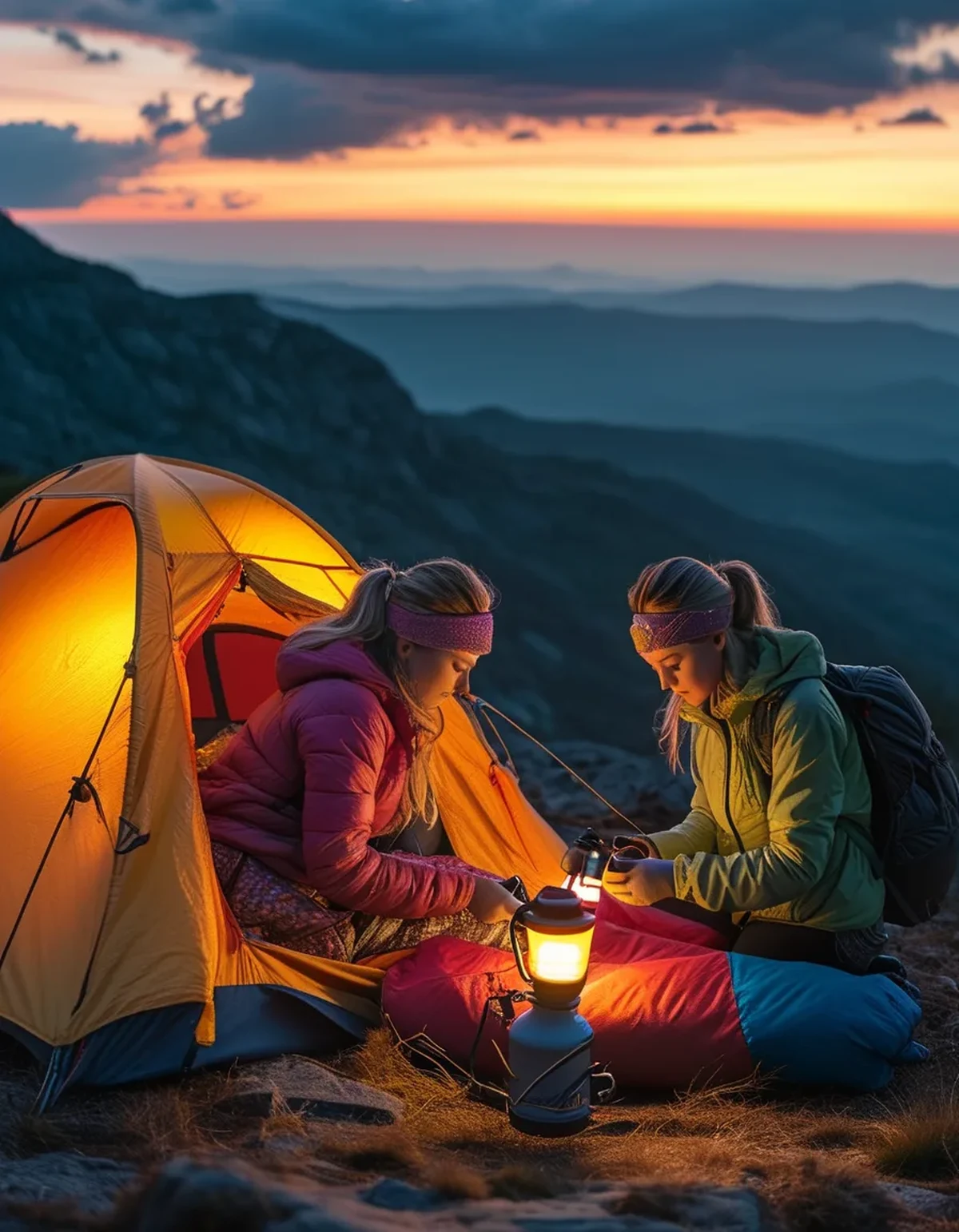
Everything soft goes at the head end. Everything hard goes in the vestibule. Boots, stove, cooking kit, anything with a frame or a buckle — outside, under the fly. Clothes, tomorrow’s layers, and a spare jumper make a perfectly good pillow and take no floor space.
Give the middle strip to nothing at all. It is the walkway, and the moment it has items in it, every night movement becomes a negotiation.
One exception worth making: a single shared item — usually water — placed at the foot end, where neither of you will roll onto it.
5. Ignoring the condensation geometry
Two people breathing in a small tent produce a startling amount of moisture — roughly a litre overnight between them. That moisture condenses on the inner surface of the fly and drips.
Where it drips is decided by your setup. Keep sleeping bags off the tent walls. A bag touching the inner wall wicks condensation straight through, and the person in it wakes up damp and blames the tent.
Open both vents even when it is cold. People close vents on cool nights and wake up in a wetter, colder tent, because damp insulation stops insulating. Airflow matters more than sealing.
Do not cook or boil anything inside. Beyond the safety issue, it adds a huge amount of moisture to a space that already has too much.
If one of you is significantly closer to a wall because of how the mats are arranged, that person will get the condensation. Worth mentioning in step one.
6. Mismatched sleep systems nobody discussed
Two people can have very different thermal setups and not discover it until 2am.
The classic version: one person has a mat rated for cold ground and the other has a summer foam pad. On an early-autumn night, when ground temperature drops well below air temperature, the second person is awake and cold and there is nothing to be done about it at that hour.
Compare mats before the trip, not at the campsite. Ground insulation matters more than sleeping bag rating on cold nights, and it is the thing people under-buy.
The other mismatch is timing. One person wants to read for an hour; the other wants darkness at nine. Agree on it in advance and the reader brings a book light or reads outside. It is a thirty-second conversation that prevents a genuinely sour hour.
And if one of you is a snorer, earplugs for the other person are not an insult. They are equipment.
7. Packing up in the wrong order
The morning creates as much friction as the night, for a structural reason: one of you has to leave the tent before the tent can be packed, and whoever is still inside is in the way.
The sequence that works: both people get dressed inside, in turn, while the other stays in their bag. Then everything personal goes out of the tent in one pass each. Then bags and mats. Then, and only then, does anyone start on poles.
The failure mode is one person deflating their mat while the other is still finding a sock, which means the sock-finder is now kneeling on bare groundsheet in a tent that is half collapsing.
Assign the outside jobs before you start — one person does the fly and poles, the other does the bags and the vestibule. Two people working on the same pole is slower than one, and it is where the last argument of the trip usually happens.
TL;DR:
- Decide sides in daylight; the person who gets up at night takes the door.
- Two headlamps, red mode after dark, pointed at the wall.
- Finish all gear admin before anyone gets into a sleeping bag.
- Soft things at the head end, hard things in the vestibule, nothing in the middle strip.
- Bags off the walls, vents open, no cooking inside.
- Compare mats and sleep timing before the trip.
- Pack in sequence: dressed, personal items out, bags, then poles.
None of this is about being a better camper. It is about removing the six or seven small decisions that otherwise get made at the worst possible hour by the tiredest possible version of you.
Keep Reading
This article is for general informational and styling purposes only. Fit, sizing, and product availability may vary.