7 Mistakes People Make Camping With a Dog
Quick Answer: The seven mistakes that ruin dog camping trips are: assuming the dog will sleep, underpacking water, letting the dog sleep on cold ground, ignoring paw condition, misjudging the tie-out setup, forgetting that campgrounds are full of food smells, and not doing a backyard trial run first. Fix the sleep setup and the water plan and you have solved most of it.
Everything is fine until about 2am, when the dog decides that the raccoon forty feet away is a personal matter and the whole campground finds out about it.
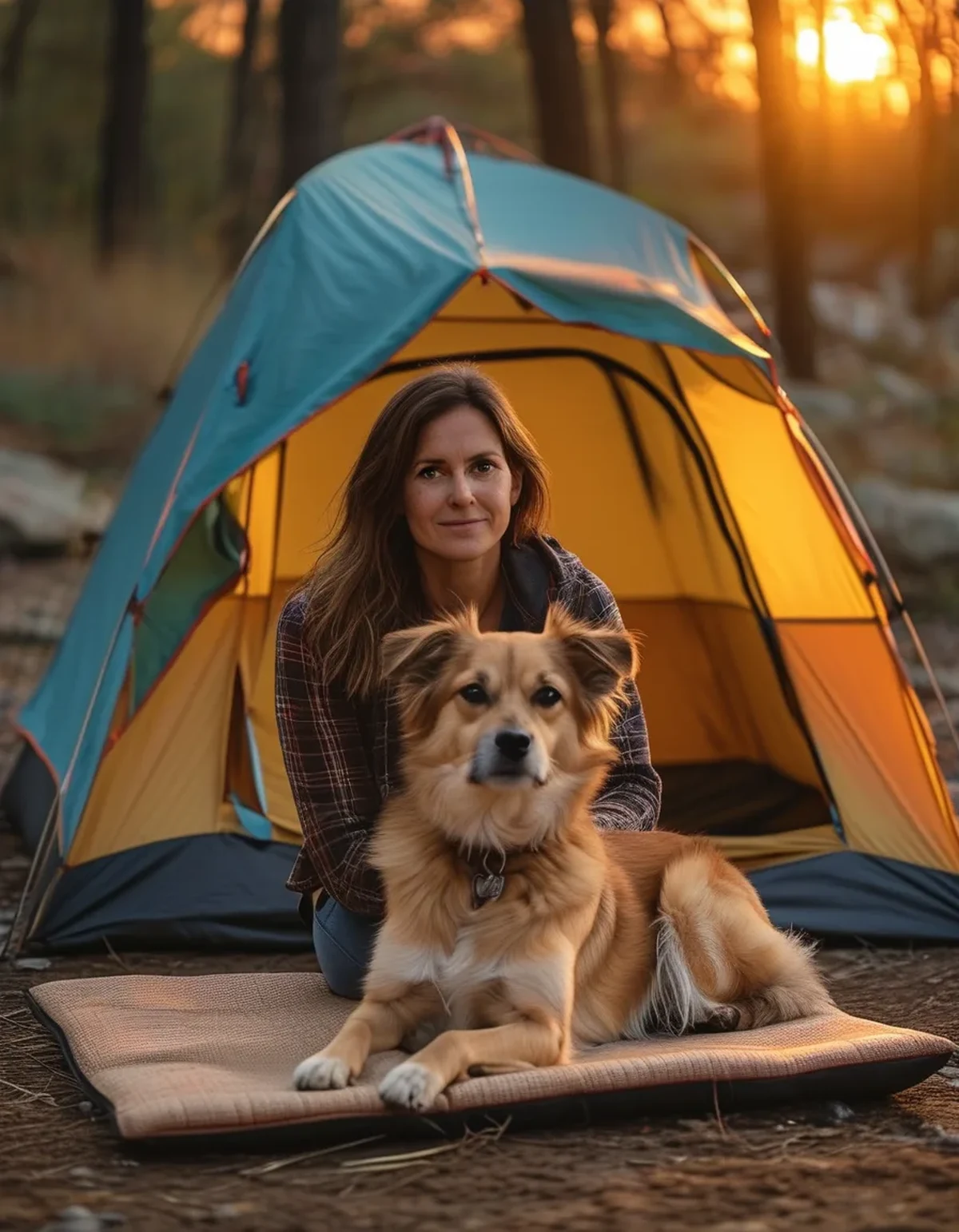
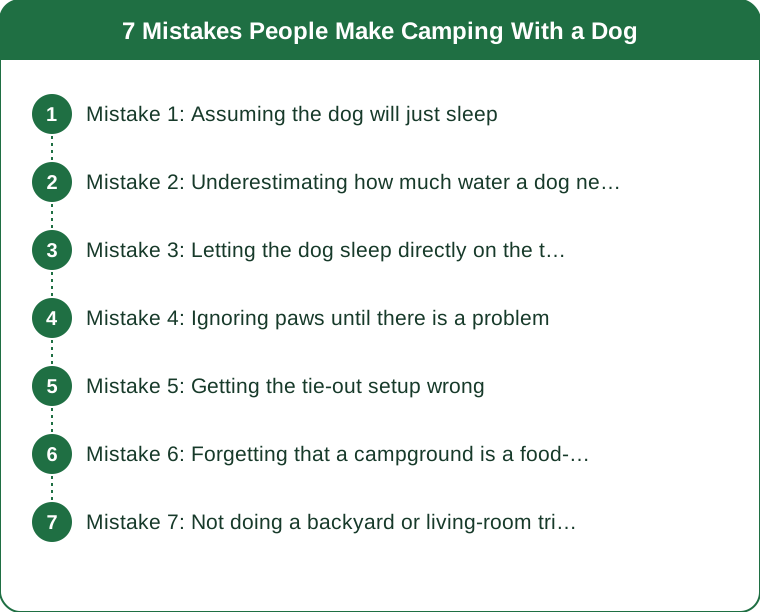
Mistake 1: Assuming the dog will just sleep
This is the number one reason people come home early. A dog that sleeps twelve hours a day at home is in a nylon box surrounded by unfamiliar smells and sounds, and every single one of them is worth investigating.
The dog is not being difficult - it is doing its job. Alerting to novel sounds is exactly what most dogs were bred to do, and a campground at night is nothing but novel sounds.
The fix is familiarity, not discipline. Bring their actual bed, or a blanket that smells like home, and put it in the tent before the dog goes in. Familiar scent does more for settling than anything else you can pack.
Tire them out on arrival, not on the drive. A long walk after setting up, before dinner, means the dog goes into the tent already ready to sleep.
Expect the first night to be bad and the second to be fine. Most dogs settle dramatically by night two, and knowing that in advance stops you from abandoning the trip at breakfast.
Mistake 2: Underestimating how much water a dog needs
Dogs cool almost entirely through panting, which is a water-intensive process. An active dog on a warm day can need considerably more water than its home baseline, and campsite taps are not always where you assume they are.
Plan roughly a litre per 10 kg of dog per day as a starting point, and more in heat or on hiking days. It is far better to carry too much than to ration.
Do not rely on streams and lakes. Standing water can carry giardia and blue-green algae, both of which cause serious problems, and blue-green algae blooms are more common in late summer heat.
Bring a collapsible bowl and offer water more often than you think. Dogs frequently will not drink from an unfamiliar source unless prompted, and small offers every hour beat one big bowl at dinner.
Watch for heavy continuous panting, thick drool, or unusual lethargy - those are early heat warning signs and mean shade and water immediately.
And remember that a dog in a hot car is a genuine emergency, which matters on camping trips because people underestimate how quickly a parked vehicle heats up even in mild weather.
Mistake 3: Letting the dog sleep directly on the tent floor
Ground temperature is the thing people forget. Even on a mild night the ground pulls heat out of a body continuously, and a thin tent floor provides almost no insulation.
Small, thin-coated, elderly, and very young dogs feel this most. A greyhound or a whippet on a bare tent floor in September will be cold long before you are.
A cheap foam sleeping pad works perfectly. It does not need to be a dog-specific product - any closed-cell foam mat under their blanket solves it.
Bring one more blanket than you think you need. Dogs that get cold at 3am wake up, move around, and wake you up too, which brings you back to mistake one.
Watch for shivering, tucking tightly, or trying to get into your sleeping bag - all of these are the dog telling you the floor is the problem.
And in genuinely cold weather, a dog coat for sleeping is not indulgent, particularly for short-coated breeds.
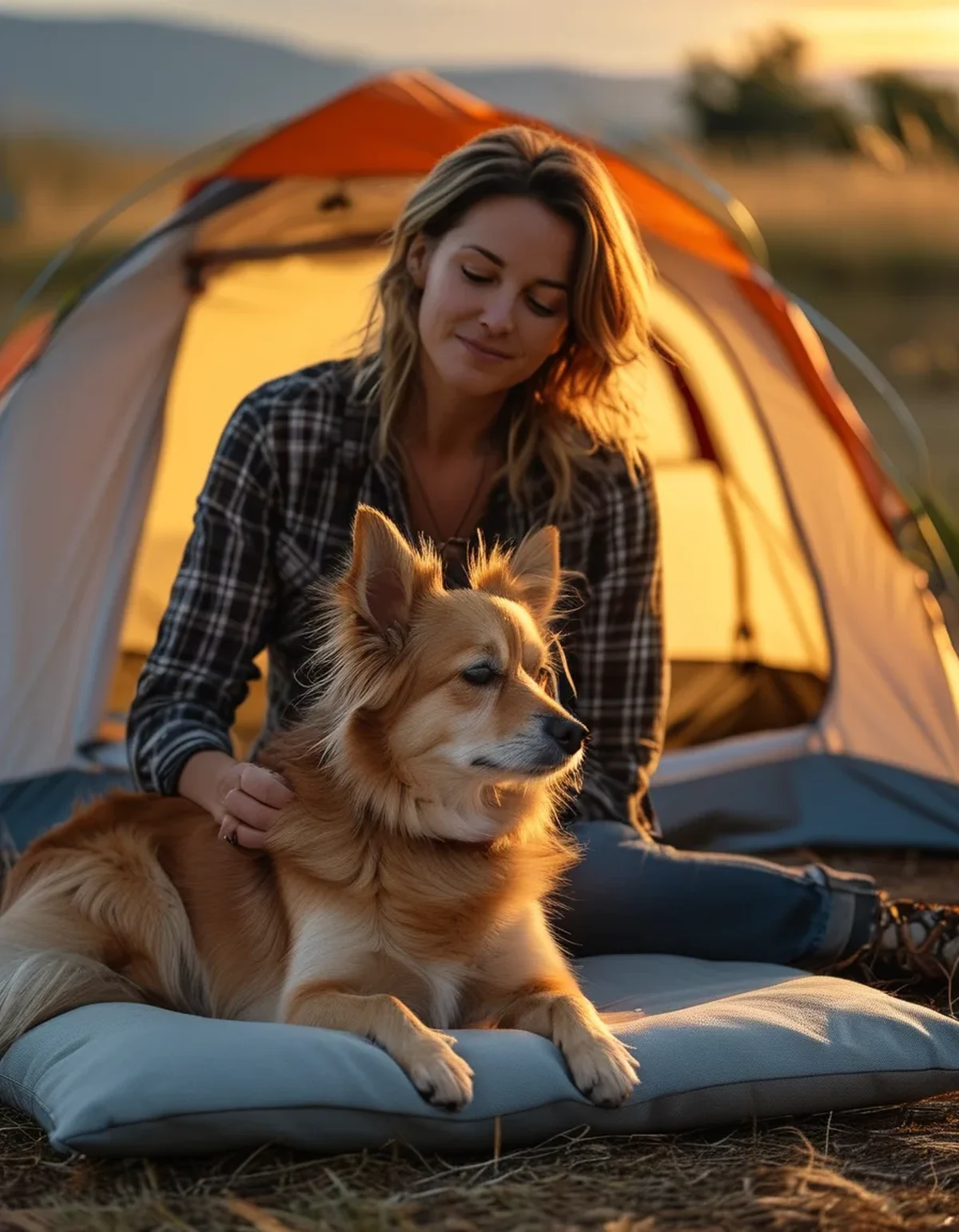
Mistake 4: Ignoring paws until there is a problem
Campground terrain is harder on paws than the pavement dogs are conditioned to. Gravel, hot rock, sharp sticks, thorns, and burrs all accumulate over a weekend of activity.
Check paws every evening. It takes thirty seconds per foot, and catching a small cut or an embedded seed early prevents a limping dog on day three.
Grass seeds and foxtails are a real late-summer hazard. They work between the toes and burrow, and they are one of the most common summer vet visits in dry regions.
Hot surfaces burn pads faster than people expect. If you cannot hold the back of your hand on a rock or a path for several seconds, it is too hot for paws.
Pack a basic first-aid kit that covers the dog too - self-adhesive bandage wrap, tweezers, antiseptic, and a spare sock work for most minor paw issues.
And trim the fur between the pads before the trip. It reduces how much debris gets trapped, which prevents most of the problems above.
Mistake 5: Getting the tie-out setup wrong
A long line clipped to a collar around a picnic table is how dogs get tangled and hurt. Use a harness rather than a collar for any tie-out, so pressure never goes through the neck.
A running line between two trees beats a stake in the ground. It gives the dog a straight run of movement and dramatically reduces the wrapping-around-everything problem.
Check what the campground actually requires. Most sites have leash rules, and many have specific length limits. Arriving without knowing is how you end up improvising badly.
Never leave a tied dog unattended at a site. Beyond the tangling risk, it is the situation in which barking, theft, and encounters with wildlife all happen.
Keep the line clear of the fire ring, guy lines, and the cooking area. Setting the tie-out zone before you set up the rest of camp is much easier than moving it afterwards.
And bring a second lead. Leads get wet, chewed, and lost, and being down to none in the middle of nowhere is a specific kind of miserable.
Mistake 6: Forgetting that a campground is a food-smell theme park
Every site around you is cooking, and your dog knows it. Even well-mannered dogs test boundaries when the environment is this rich, and a dog that has never counter-surfed at home may well investigate a neighbour’s table.
Store dog food exactly as carefully as human food. In bear country that means the same locker or hang. Everywhere else it means a sealed container, because raccoons and rodents will find kibble overnight.
Feed at your own site, on a mat, at a predictable time. Routine reduces scavenging, and a mat gives the dog a defined place to be during meals.
Watch what gets picked up off the ground. Corn cobs, skewers, chicken bones, and foil are common campsite hazards, and several of them are genuine emergencies if swallowed.
Do not leave the cooler unattended and open. It is the single most common way a dog eats something it should not on a camping trip.
And know where the nearest emergency vet is before you go. Ten seconds of searching at home beats twenty minutes of panic with no signal.
Mistake 7: Not doing a backyard or living-room trial first
Set the tent up at home and let the dog spend an evening in it. This one step prevents more failed trips than everything else combined, because it turns the tent from an alien object into a known space.
Practise the sleeping arrangement you actually plan to use. If the dog will be on a pad at your feet, do that at home first rather than discovering at midnight that they insist on the sleeping bag.
Try a short overnight close to home before the big trip. A campground an hour away means that if it goes badly, you can leave without ruining a week of annual leave.
Test the car setup too. A dog that gets carsick on a two-hour drive changes the whole trip, and that is worth learning on a short journey.
Check vaccinations, flea and tick prevention, and ID tags before you go, and make sure the microchip details are current - late summer is peak tick season in most regions.
And be honest about whether your dog will enjoy it. Some dogs love camping. Some are genuinely happier with a sitter, and choosing that is a kindness rather than a failure.
This is general information, not veterinary advice. If your dog has a health condition, check with your vet before a trip involving heat, altitude, or long activity days.
TL;DR:
- Expect a bad first night: bring their own bed or a home-scented blanket, and walk them hard after setup rather than before.
- Plan about a litre of water per 10 kg of dog per day, more in heat, and do not let them drink from standing water.
- Put a foam pad under the dog - a bare tent floor pulls heat out all night, especially for thin-coated dogs.
- Check paws every evening for cuts, grass seeds, and burrs, and trim the fur between the pads before you go.
- Use a harness and a running line for tie-outs, never a collar, and never leave a tied dog unattended.
- Store dog food as carefully as human food, and watch for corn cobs, bones, and skewers on the ground.
- Do a backyard tent night and a short local overnight before committing to a real trip.
The trial run at home is the one that makes the other six manageable.
Keep Reading
This article is for general informational and styling purposes only. Fit, sizing, and product availability may vary.