How to Actually Camp Comfortably on Your Period (Without Overpacking or Overthinking It)
A trip timed against your period doesn’t have to mean canceling plans or over-preparing with an entire suitcase of backup supplies. Camping on your period is genuinely manageable with a few specific product choices and habits, even with limited access to a real bathroom.
Quick Answer: Camping on your period works best with a menstrual cup or period underwear for long stretches without a bathroom, biodegradable wipes for cleanup, a simple pack-it-out disposal system with sealed bags, and a realistic (not oversized) supply estimate based on your actual trip length.
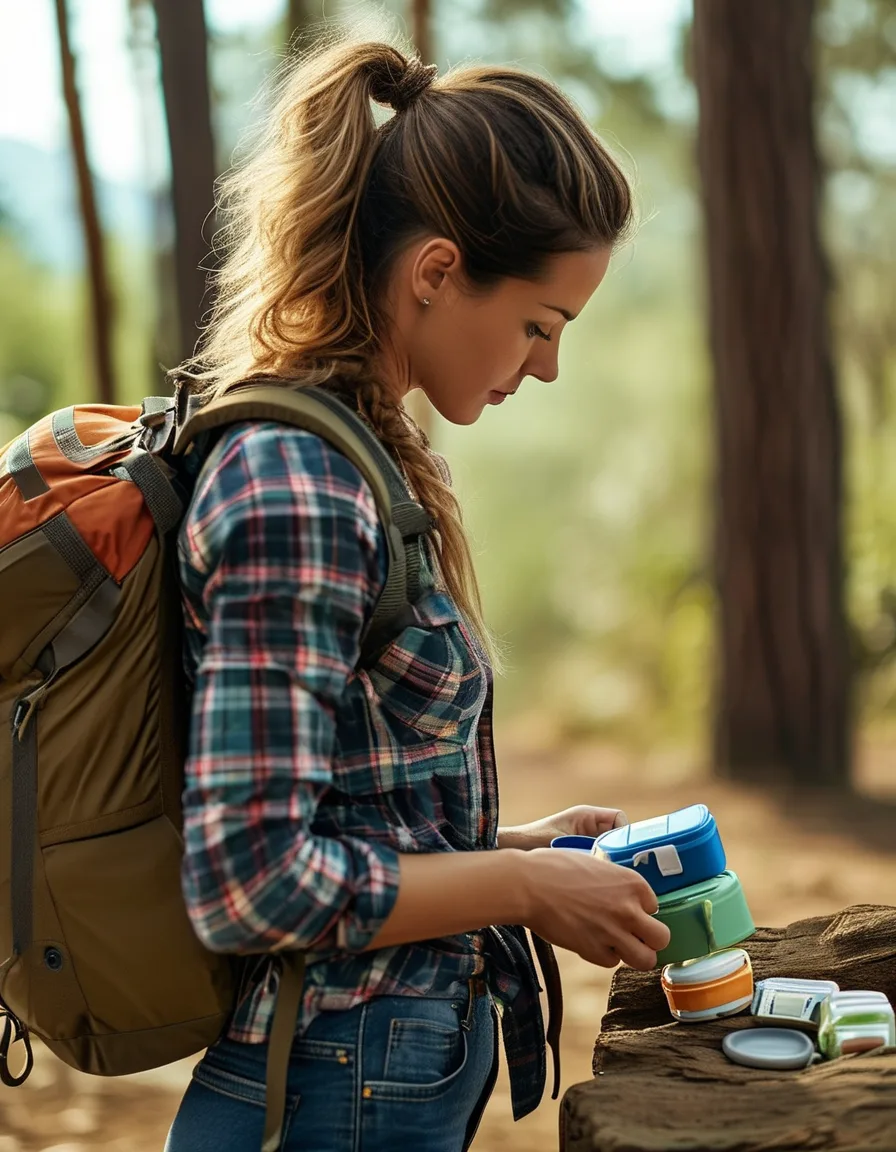
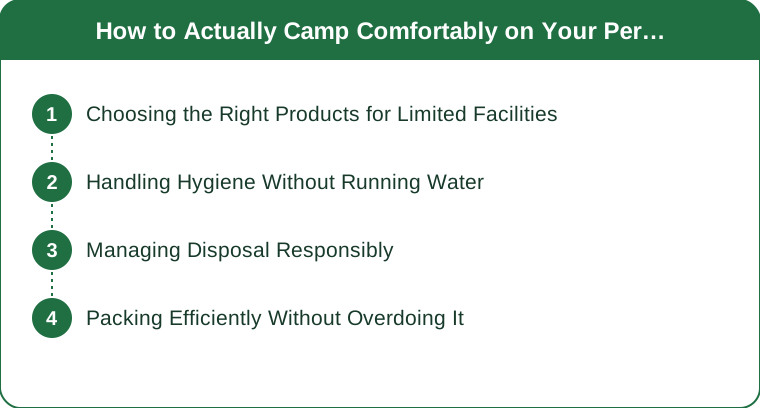
What period products actually work best with limited camping facilities?
A menstrual cup is usually the standout choice for multi-day trips. A menstrual cup only needs changing every eight to twelve hours rather than every few hours, which makes it especially practical when you’re dealing with limited privacy or no clean running water. Period-specific absorbent underwear is worth packing too, as a reliable backup layer under another product — it meaningfully cuts down on leak anxiety during long stretches away from a bathroom. If tampons are more your thing, choosing a compact or applicator-free design reduces both the volume you pack in and the trash you have to carry back out.
- Menstrual cup: fewer changes needed, ideal for multi-day or low-privacy trips
- Period underwear: a comfortable backup layer that reduces leak anxiety overnight
- Compact or applicator-free tampons: less bulk in, less trash out
How do you handle period hygiene when there’s no running water?
A few small habits cover most of it. Pack biodegradable, unscented wipes specifically for cleanup when running water isn’t immediately available — unscented matters, since scented products can cause irritation in a setting where you can’t rinse thoroughly afterward. Use hand sanitizer before and after any product change, since clean hands matter just as much at a campsite as they do at home. It also helps to pick a specific, reasonably private spot near camp in advance, rather than scouting for one in the moment when you’re already uncomfortable.
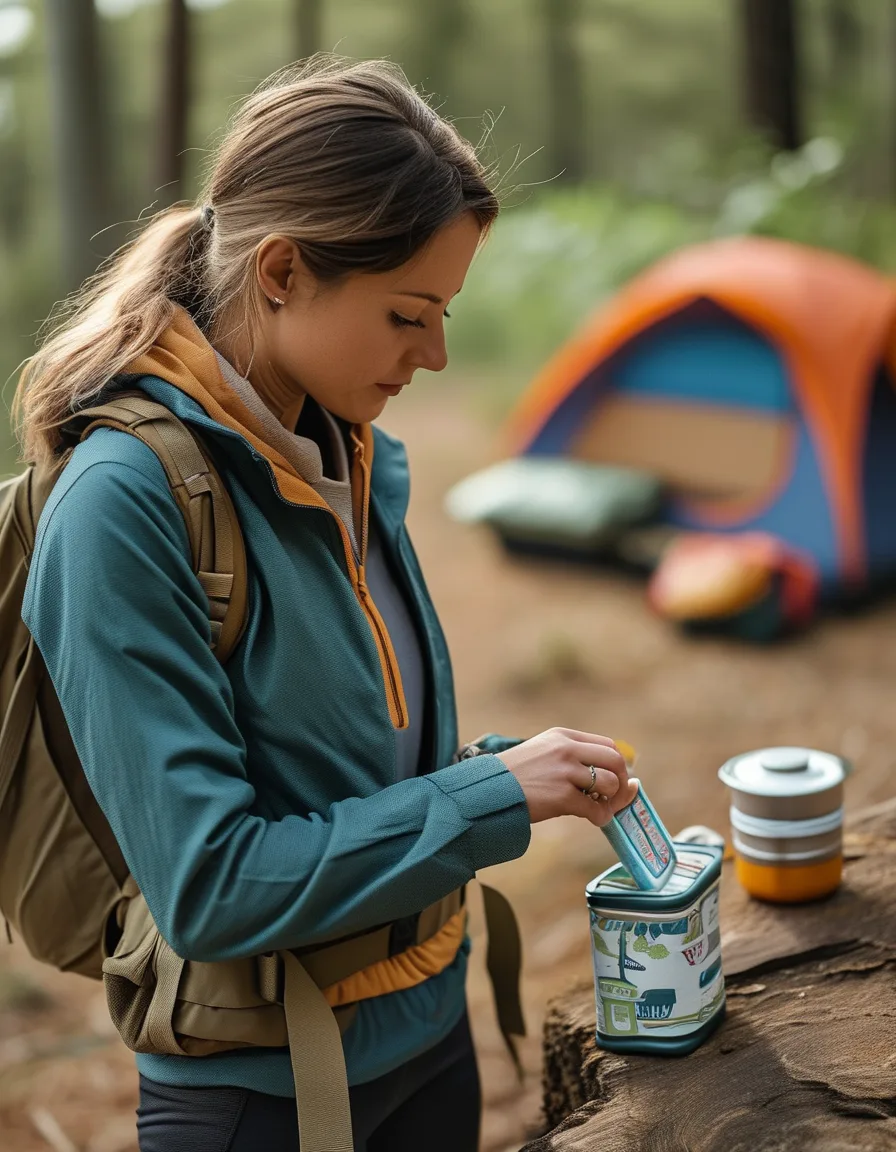
What’s the right way to deal with disposal when you’re away from a real trash can?
The same pack-it-out principle that applies to all camping trash applies here too — used period products should never be buried or left behind, no matter how remote the site feels. Bring a small supply of opaque, sealable bags dedicated specifically to used-product disposal, kept separate from your other trash to control odor. On longer trips, double-bagging used products before they reach an actual trash receptacle meaningfully cuts down on odor buildup in a pack carried over several days.
- Never bury or leave used products behind, even in remote backcountry settings
- Use opaque, sealable bags kept separate from regular camp trash
- Double-bag on multi-day trips to control odor in a shared pack
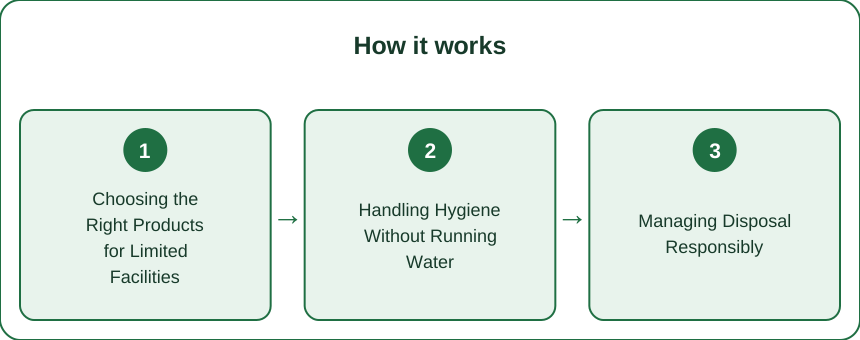
How much should you actually pack — and how do you avoid overdoing it?
Base it on a realistic estimate of trip length and your actual flow pattern, not a worst-case emergency stash. Packing a large “just in case” supply mostly just adds unnecessary pack weight without meaningfully reducing risk. It’s worth including a small contingency — two or three extra days of product — in case your period arrives early or runs long, along with a travel-sized pain reliever and a disposable heat pack for cramps, since both pack down small and solve a real comfort problem when you don’t have access to a heating pad.
A quick, balanced note: period symptoms vary a lot person to person, and what’s “normal” cramping for one person may not be for another — this guide covers general trip logistics, not medical advice.
What Nobody Tells You About Camping on Your Period
- A menstrual cup that works fine at home can take a trip or two to get comfortable with in a tent — practice before you go
- Bringing a small ziplock specifically for trash (separate from your main trash bag) makes disposal far less stressful
- Cramps often feel more noticeable while camping simply because you’re not near your usual comforts — a heat pack helps more than expected
- Overpacking “just in case” is one of the most common camping mistakes, and it rarely actually reduces anxiety once you’re out there
How many period products should I actually pack for a camping trip?
Base your count on your actual trip length and typical flow, plus a small buffer of two or three extra days in case your period starts early or runs longer than usual — a full emergency-sized stash usually just adds unnecessary weight.
Is it safe to use a menstrual cup with no access to clean water for rinsing?
Hand sanitizer before and after a change, plus wiping the cup with a clean, unscented wipe, is a reasonable backcountry workaround, but a full water rinse when you do have access is still ideal. If you notice unusual irritation, odor, or discomfort that doesn’t resolve once you’re back near clean water and can properly clean your products, it’s worth checking in with a doctor rather than assuming it’s just a camping-trip fluke.
What if my period cramps are worse than usual while camping?
A travel-sized pain reliever and a disposable heat pack handle typical cramping for most people. That said, if pain is significantly more severe than your normal pattern, doesn’t respond to your usual relief methods, or comes with other concerning symptoms, treat that as a signal to see a doctor rather than pushing through it on a remote trip.
TL;DR:
- A menstrual cup or period underwear works best for long stretches without a bathroom
- Biodegradable wipes and hand sanitizer cover hygiene without running water
- Follow the same pack-it-out rule for disposal as any other camping trash
- Pack based on realistic trip length and flow, not an oversized emergency stash
- If cramps or symptoms feel unusually severe, that’s worth a doctor’s opinion, not just a heat pack
Keep Reading
This article is for general informational and styling purposes only. Fit, sizing, and product availability may vary.