Why Does Food Actually Taste Better While Camping? It's Not Just the Fresh Air
Quick Answer: Food tastes better while camping due to a real combination of increased hunger from activity, elevated cortisol and appetite hormones from being outdoors, smoke aroma enhancing perceived flavor, and the psychological effect of anticipation and effort — not just one single cause.
You’ve had this exact sandwich at home and it was fine. The same sandwich at a campsite tasted like something worth remembering. That gap is real, measurable in several ways, and worth understanding if you want to recreate a bit of it at home too.

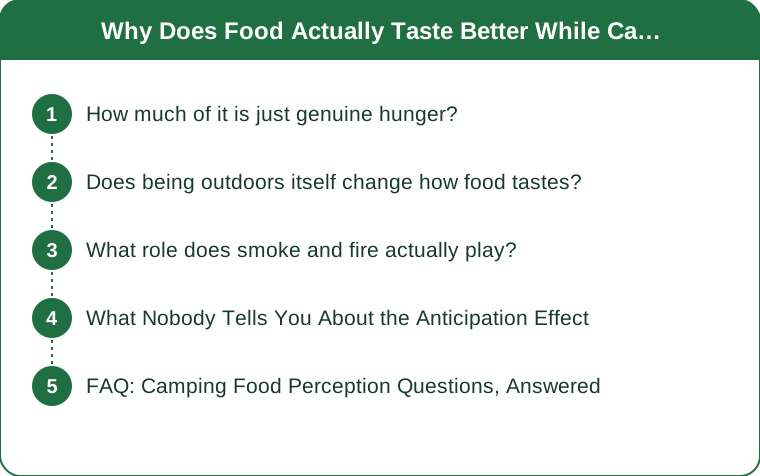
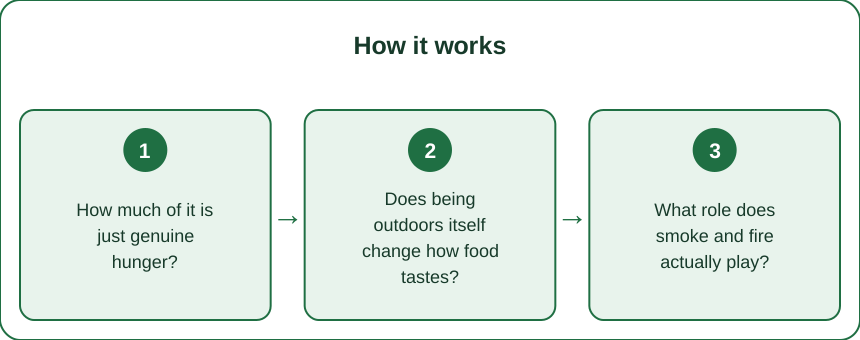
How much of it is just genuine hunger?
A significant amount. Camping typically involves more physical activity and longer gaps between meals than a normal day, both of which genuinely intensify hunger and, in turn, the perceived pleasure of eating — this is basic appetite physiology, not a camping-specific effect, but camping reliably creates the conditions for it.
Studies on exercise and food perception consistently show that moderate physical exertion increases the hedonic (pleasure) response to eating afterward, particularly for calorie-dense and salty foods — exactly what most camp meals are.
Does being outdoors itself change how food tastes?
There’s real evidence for this too. Research on outdoor vs. indoor eating environments has found that natural settings, fresh air, and even the sound of nature can measurably shift sensory perception and mood in ways that influence taste enjoyment — this isn’t purely psychological, it involves actual changes in attention and stress hormones that affect how flavors register.
Cortisol and other stress-related hormones, generally lower in a relaxed outdoor setting for most people (once the initial camp-setup effort is done), are also linked to appetite and food reward pathways.

What role does smoke and fire actually play?
A bigger one than people assume. Wood smoke aroma compounds interact directly with your sense of smell, which accounts for the majority of what we perceive as ‘flavor’ beyond basic taste (sweet, salty, sour, bitter, umami).
Even food not cooked directly over the fire — a sandwich eaten near a campfire — picks up ambient smoke aroma that measurably enhances perceived flavor complexity, which is part of why camp food often tastes ‘better’ even when the cooking method itself is simple.
What Nobody Tells You About the Anticipation Effect
Here’s the psychological piece that’s often skipped: effort and anticipation genuinely amplify enjoyment. Food you worked for — hiked to a spot for, waited on a slow fire for, prepared with some real effort — activates reward pathways more strongly than the identical food obtained with zero effort.
This is a well-documented psychological effect (sometimes called effort justification), and it’s a meaningful part of why the simplest camp meals — beans, a basic sandwich, instant oatmeal — can taste disproportionately satisfying compared to a more elaborate meal made with zero effort at home.
FAQ: Camping Food Perception Questions, Answered
Can I recreate any of this effect at home?
Somewhat — eating outdoors (even a backyard), building in genuine hunger with meal timing, and adding effort or anticipation (cooking something that takes real time) all replicate pieces of the effect.
Does altitude change how food tastes?
At higher elevations, taste and smell perception can genuinely shift — some studies note reduced sweet and salty perception at altitude, which is part of why airline food famously tastes different, and a similar (milder) effect can occur at higher camping elevations.
Is this effect the same for everyone?
Intensity varies — people with a stronger baseline stress response to daily life often report a bigger perceived shift outdoors, since there’s a larger contrast to relax into.
TL;DR:
- Genuine hunger from activity and meal timing is a real, measurable part of the effect
- Outdoor settings and lower stress hormones actually shift sensory perception, not just mood
- Smoke aroma enhances perceived flavor complexity even in food not cooked over the fire directly
- Effort and anticipation amplify enjoyment — simple food you worked for tastes disproportionately good
Try replicating just one piece — genuine hunger timing, or eating outside — next time a meal at home feels like it needs a boost.
Keep Reading
This article is for general informational and styling purposes only. Fit, sizing, and product availability may vary.