Staying Active and Fit While Camping (Adventure Is the Workout)
Quick Answer: Camping is naturally active — hiking, setting up camp, exploring, and moving through nature add up to real exercise without a gym in sight. Build a little hiking fitness beforehand, protect your back when lifting gear, and fuel, hydrate, and sleep well so your body can actually recover between adventures.
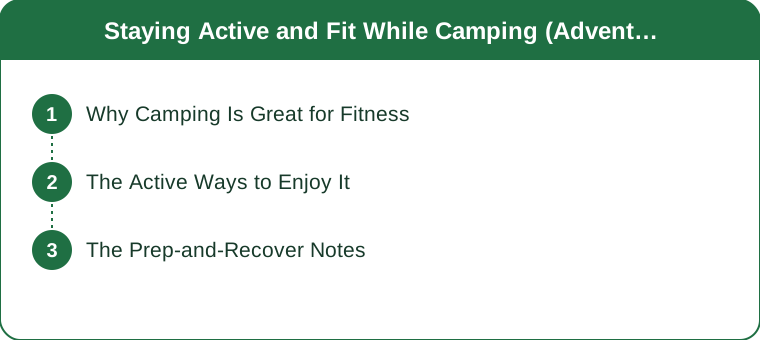
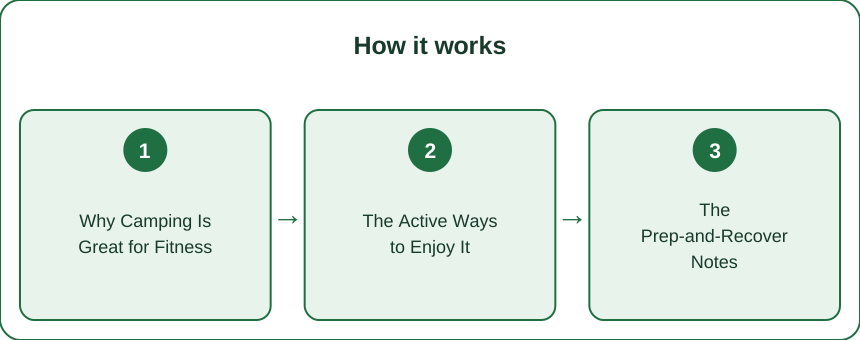
Camping is a natural fitness opportunity — the hiking, setting up, exploring, and moving through nature add up to a genuinely active getaway. With a little intention, adventure becomes the workout. Here’s why camping is great for fitness, the active ways to enjoy it, and how to prepare and recover so the trip doesn’t wreck you.

Why Is Camping Actually Good Exercise?
A camping trip stacks activity into your day without ever feeling like a workout:
- Built-in natural movement — hiking, setting up the site, carrying gear, and exploring all add up over a weekend
- The adventure itself is the workout — no gym required; the activities you’d do anyway provide the exercise
- Nature boosts mood on its own — being outdoors has a wellbeing effect that layers on top of the physical activity
- Full-body engagement — the variety of tasks (lifting, walking, balancing on uneven ground) works muscle groups a single-focus gym session often misses
- You disconnect and move more — fewer screens tends to mean more spontaneous walking and exploring, simply because there’s less to sit still for
What Are the Best Ways to Stay Active While Camping?
- Hiking and exploring — the core activity for most trips, and the easiest way to rack up real mileage
- Water activities — swimming or paddling if your site has access, a genuinely full-body addition to the trip
- Camp setup and daily tasks — pitching tents, gathering firewood, and general camp life are real physical work, not just chores
- A morning walk or stretch — starting the day with intentional movement in nature sets the tone before the day’s activities begin
- Active games at the campsite — a simple way to keep moving during downtime between bigger activities
- Biking or trail activities, where the site allows it
- Walking instead of driving to nearby points of interest whenever it’s a reasonable distance

How Do I Prepare My Body Before a Hiking-Heavy Trip?
If your trip is hike-heavy, build some baseline fitness beforehand rather than treating day one of the trip as your first workout in months. A few weeks of regular walking or stair climbing makes a real difference in how your legs feel by day two of a multi-day hike.
Pack thoughtfully, too — the right gear for an active trip matters as much as the fitness prep itself, since carrying an overloaded or poorly balanced pack undercuts everything else you did to prepare.
How Do I Recover Properly on a Camping Trip?
- Protect your back when setting up camp — use good lifting mechanics for tents, coolers, and gear rather than bending from the waist
- Hydrate and fuel with real food — a good camp kitchen setup fuels the day’s activity level, and dehydration outdoors sneaks up faster than it does at home
- Set up for comfortable sleep — recovery happens overnight, and a bad night’s sleep on uneven ground undoes a lot of the day’s gains
- Mind sun and general safety — sunscreen and awareness of terrain protect you from the kind of setback that cuts a trip short
- Pace your activity and build in rest — an all-out first day often means a miserable second day; spreading effort across the trip works better than front-loading it
What Nobody Tells You About Staying Fit While Camping
- Camp chores count as real exercise — pitching a tent and hauling water are functional strength work, even though they don’t feel like “working out”
- Uneven terrain works stabilizer muscles a treadmill never touches — this is part of why a hiking trip can leave you sorer than expected in unexpected places
- Dehydration outdoors happens faster than you’d think — heat, elevation, and physical exertion combine in a way that’s easy to underestimate compared to a normal day
- Recovery sleep is harder to get right in a tent — investing in a decent sleep setup (pad, bag rated for the temperature) pays off in how ready you feel each morning
Camping Fitness FAQ
Do I need to train specifically before a camping trip?
Only if the trip is hiking-heavy — a few weeks of regular walking or stair climbing beforehand makes multi-day hikes noticeably more comfortable. For a more relaxed camping trip, the natural activity of the trip itself is usually enough.
What’s the biggest mistake people make trying to stay active while camping?
Going too hard on day one. An all-out first day of hiking or activity often leads to a rough second day; pacing yourself across the whole trip produces a better overall experience.
How do I avoid getting hurt while setting up camp?
Use proper lifting mechanics — bend at the knees, not the waist, when moving coolers, packs, or firewood, and take breaks during repetitive tasks like driving tent stakes. Most camp-setup injuries come from repetitive strain rather than a single dramatic mistake.
TL;DR:
- Camping naturally builds in exercise: hiking, camp setup, and exploring all add up
- Hike, swim, do camp chores, and walk instead of driving to nearby spots
- Build some hiking fitness beforehand if the trip is hike-heavy
- Protect your back, hydrate, fuel well, and prioritize sleep to actually recover
- Pace activity across the whole trip instead of front-loading day one
Keep Reading
This article is for general informational and styling purposes only. Fit, sizing, and product availability may vary.