Solo Camping for Women: The Confidence-and-Logistics Guide
Quick Answer: Solo camping for women is safer and more doable than it feels on paper — the real work is strategy, not bravery. Start at a hosted campground (not the wilderness), arrive well before dark, rehearse setup at home, and tell someone your itinerary. Handle those basics and the fear mostly evaporates by the first sunrise coffee.
Solo camping sits on many women’s someday-list behind one question: is it safe and can I handle it? The honest answers are “statistically yes, with strategy” and “more than you think.” Here’s the first-solo blueprint: site selection, the skills audit, and the quiet that turns out to be the actual point.
How Do I Pick a Safe Site for a First Solo Trip?
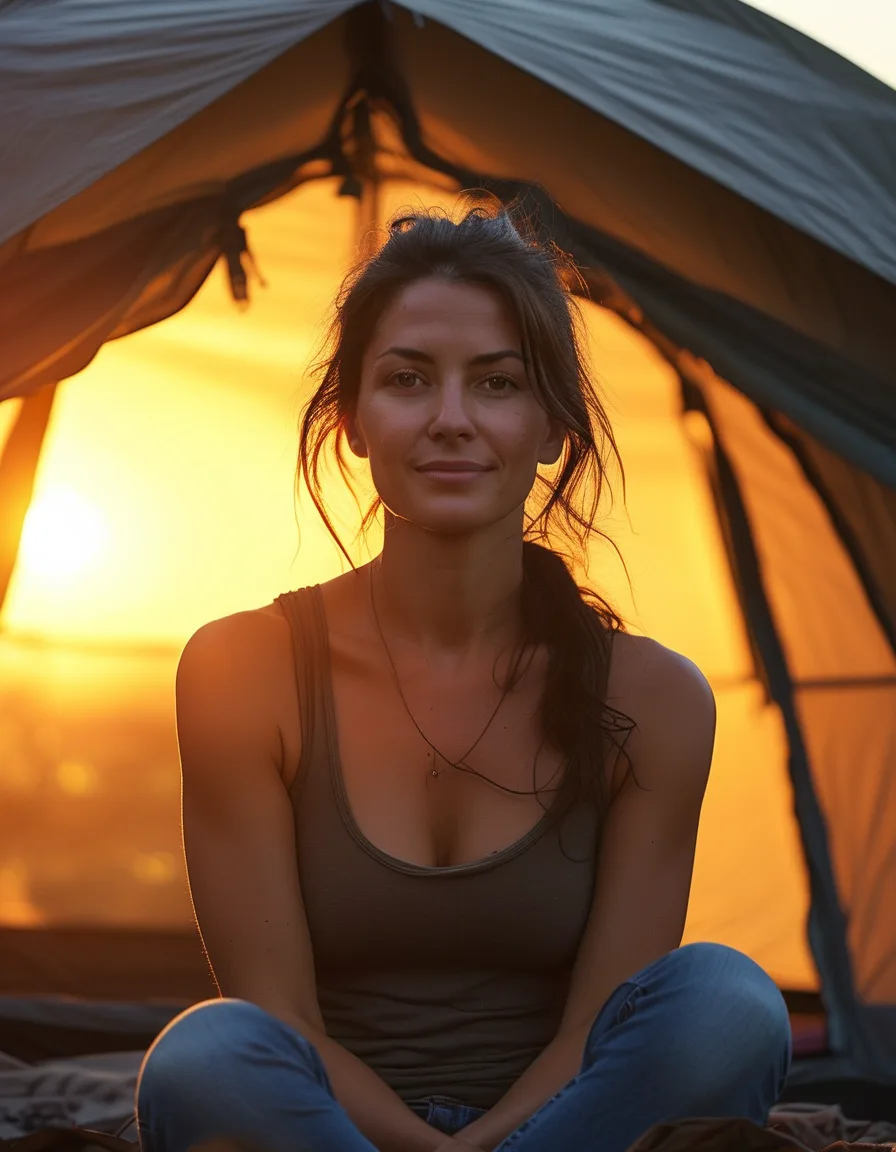
The safety strategy is mostly about location. Start at an established campground — a hosted site with a camp host and neighbors nearby is solo camping’s training wheels, while dispersed wilderness camping is a later chapter, not chapter one. Within the campground, choose your specific site carefully: visible but not isolated, close enough to the host station and other families rather than the far dark corner, and worth walking the loop before you commit to a spot. Plan to arrive in daylight — setting up in the dark is where confidence goes to die, so aim to arrive at least three hours before sunset. Finally, tell someone: share your itinerary, site number, and a check-in schedule with a friend. It costs nothing and it’s the single most reassuring habit on this list.
What Skills Should I Actually Practice Before I Go?
Nearly everything worth practicing can be rehearsed at home first. Pitch your tent in the yard or living room until doing it is boring — the campsite itself is a terrible classroom for a skill you’re learning for the first time. Do a stove-and-fire drill: boil water on your actual camp stove once at home, and know the campground’s fire rules before you arrive. Plan for the dark hours — a headlamp plus a backup light, and the discipline of giving everything a specific place, since solo camping is fundamentally an organization sport where nobody else remembers where you put something. And be honest about format: a car-camping trip with your car ten meters away is the right first solo trip. Save backpacking for trip five, not trip one.
Is It Normal to Feel Nervous on the First Night?
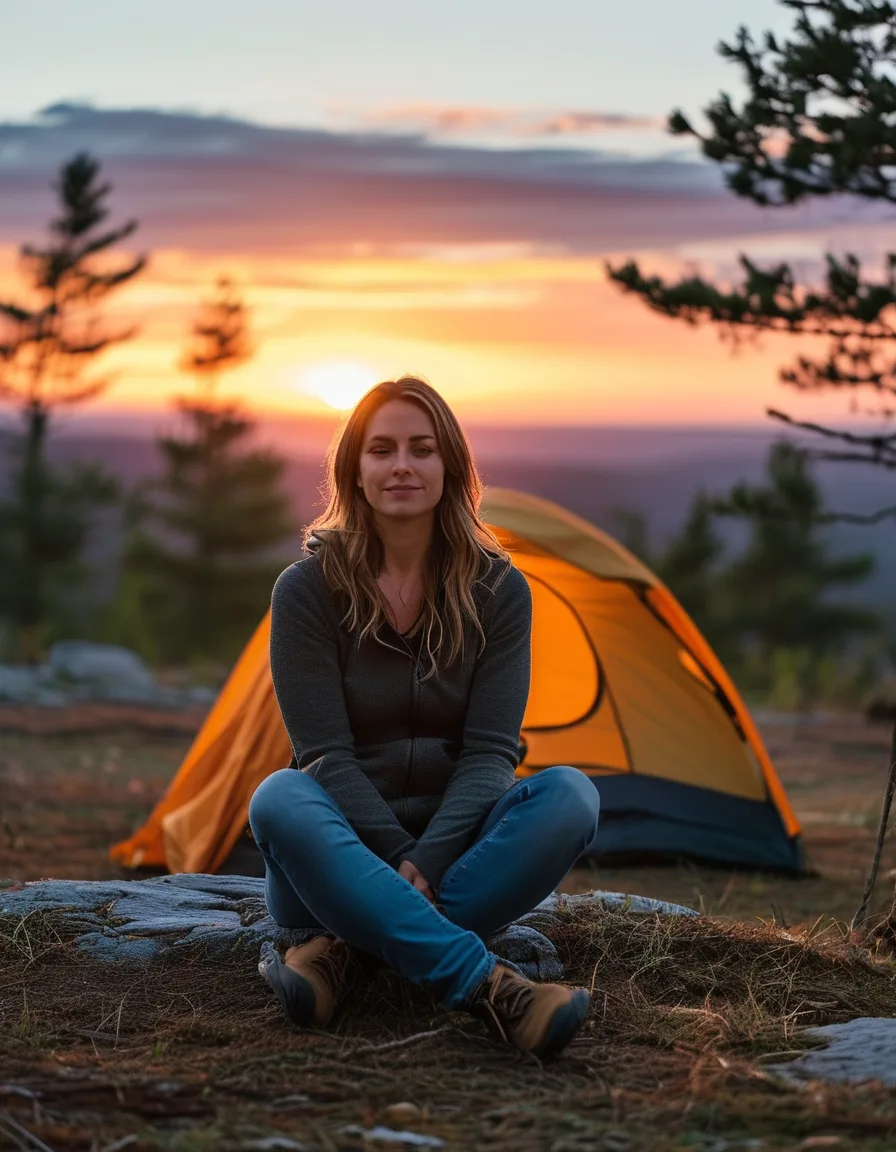
Completely normal, and it passes fast. Night forests are loud — an acorn hitting the tent, a neighbor’s zipper — and that catalog of ordinary sounds gets learned in one night and stops being scary after that. Using your phone for comfort (downloaded shows, a podcast sleep timer) isn’t failing at nature; night one is about actually sleeping, not about proving something. Knowing you can leave — the car is right there — is exactly what lets you stay; nobody revokes the trip for a 2am drive home, and almost nobody actually uses that option once they know it exists. And the payoff comes fast too: the first solo campsite coffee at sunrise is the moment the someday-list item becomes part of your identity. Nearly every solo camper cites that exact moment.
Why Do People Say the Quiet Is the Actual Point of Solo Camping?
What solo trips actually deliver goes beyond checking a box. There’s a decision-free zone — nobody to negotiate hike times or dinner plans with, the trip running entirely on your own preferences, a rarer luxury than it sounds. There’s a real nervous-system reset, essentially a forest-bath at overnight dose: screens go quiet, circadian light returns, and the sleep on night two is famous among people who do this regularly. There’s competence compounding — every small problem you handle yourself (a wonky stove, surprise rain) deposits into a self-reliance account that solo campers describe as transferring into the rest of their life. And there’s permission to start small: one night, close to home, at an established campground is a completely legitimate first trip, and it’s usually the one that converts someday into a repeated habit.
What Nobody Tells You About a First Solo Trip
- The question was never really about safety — it was about permission. Most of the actual risk gets managed by site selection and daylight arrival; the rest is just working up to going.
- Almost nobody uses the “I can leave” option, but everyone needs to know it exists. That knowledge is what makes staying possible, not a sign you’ll actually need it.
- Boredom during at-home tent practice is a good sign, not a waste of time. The goal is for setup to be automatic before you’re doing it alone in the dark for the first time.
- The sunrise coffee moment is almost universally cited by solo campers as the turning point. It’s worth planning your first morning around having that quiet moment uninterrupted.
Solo Camping FAQ
Is solo camping actually safe for women?
Statistically, yes, especially with basic strategy: an established campground, a site that’s visible but not isolated, arriving in daylight, and telling someone your itinerary. Most of the risk that worries first-timers is managed by those choices, not by bravado.
Should my first solo trip be backpacking or car camping?
Car camping, with your vehicle close by. It removes the “what if something goes wrong and I need to leave” anxiety almost entirely, and it’s the format nearly every experienced solo camper recommends starting with.
What if I get scared on the first night and want to go home?
Go home. Nobody revokes the trip for a 2am drive back, and knowing that option is available is actually part of what makes staying possible for most people. In practice, almost no one ends up using it once they’re there.
Bottom Line
Hosted campground, daylight arrival, rehearse at home, one night counts. Solo camping is logistics plus permission — and the sunrise coffee closes the case.
TL;DR:
- Start at an established, hosted campground — not dispersed wilderness camping
- Arrive at least three hours before sunset and tell someone your itinerary
- Rehearse tent setup and your stove at home until it’s boring
- Choose car camping for your first trip; save backpacking for later
- The first sunrise coffee is the moment it stops being a someday-list item
Keep Reading
This article is for general informational and styling purposes only. Fit, sizing, and product availability may vary.