7 Mistakes People Make Packing the Car for a Camping Trip
Quick Answer: Pack in reverse order of use — the tent, the mallet, and the headtorches come out first, so they go in last. The most common failures are burying the tent, splitting a system across multiple bags, packing food where it will be crushed, and having nothing accessible for the first thirty minutes at the site. Fix those four and arrival becomes an entirely different experience.
You arrive at seven, the light is going, and the tent is at the bottom under everything. So now everything comes out onto wet grass before anything goes up.
That was decided two hours ago in the driveway.
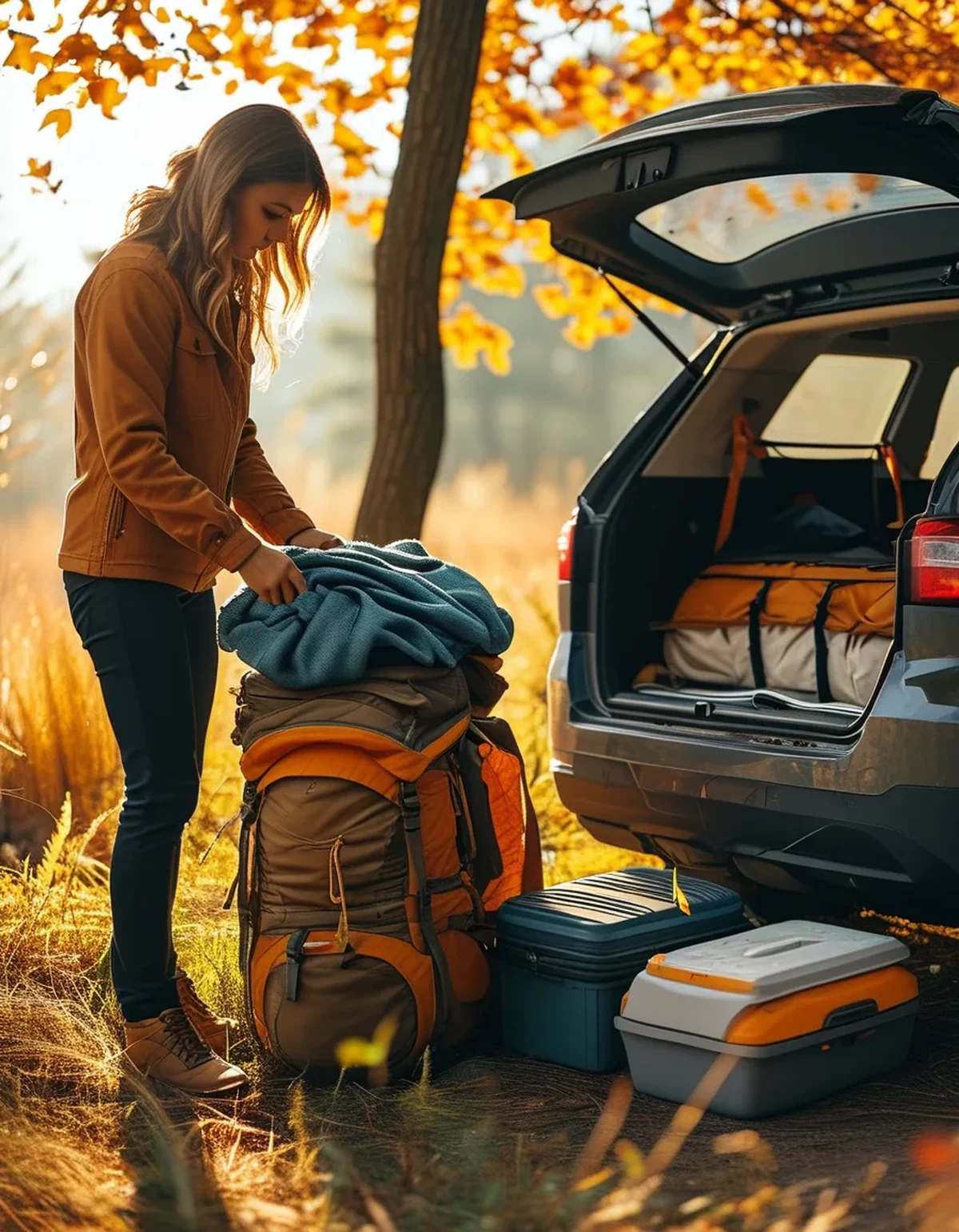
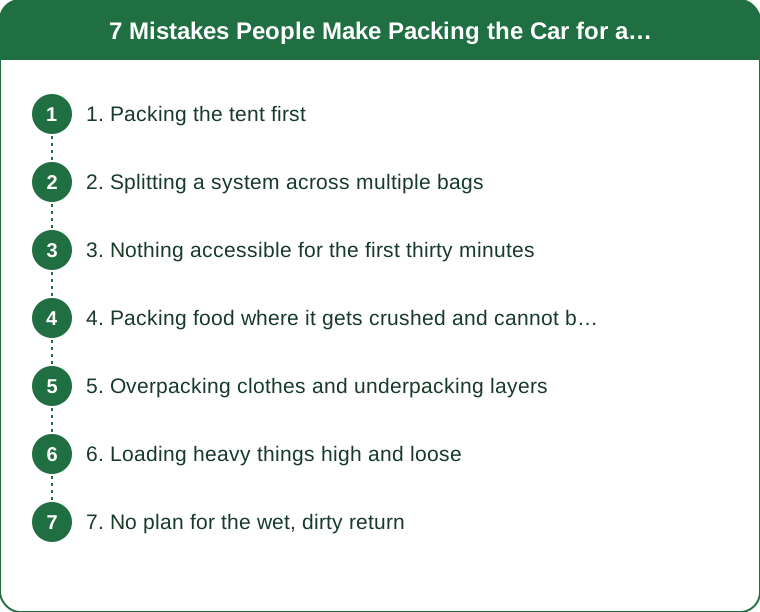
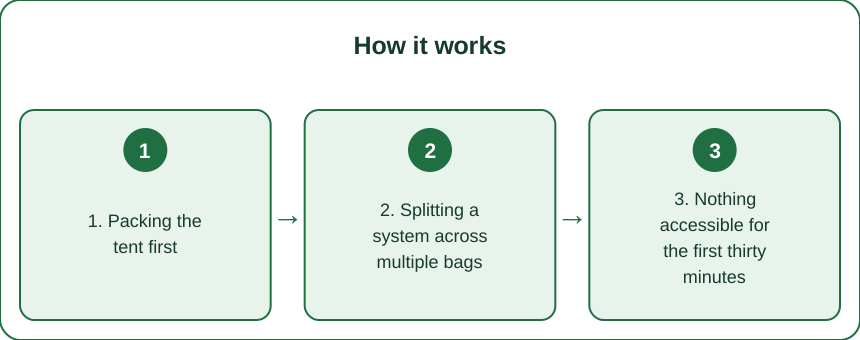
1. Packing the tent first
This is the most common error and the most consequential, and it is entirely a sequencing problem.
The tent is large and rectangular, so it looks like the natural foundation to build the load on top of. It is also the first thing you need out of the car, along with the mallet, the pegs, and the groundsheet.
Packing in the order things go in the car rather than the order you need them out is what produces the scene where the entire boot is emptied onto the ground before the tent goes up. In the rain or the dark, that is the difference between a smooth arrival and a bad start to the trip.
The fix: pack in reverse order of use.
- Last in, first out: tent, poles, pegs, mallet, groundsheet, headtorches.
- Middle: sleeping bags, mats, camp kitchen, chairs.
- First in, last out: clothes bags, food that is not needed immediately, spare kit, anything for later in the trip.
A related fix: keep the tent, poles, pegs, and mallet together in one bag or one clearly identified group. A surprising number of arrival disasters are simply the mallet being somewhere else, and hand-driving pegs into hard autumn ground is genuinely difficult.
2. Splitting a system across multiple bags
The stove is in one bag, the gas is in another, the lighter is in a coat pocket, and the pan is in the food crate. Now making a cup of tea requires four searches.
This is the second-biggest cause of low-grade campsite frustration, and it compounds across the trip because things get put back in the wrong places.
Pack by system, not by category:
- The cook box: stove, gas, lighter, pans, utensils, washing-up things, a tea towel. One container, everything for cooking.
- The sleep bag: bags, mats, pump, pillows.
- The tent bag: tent, poles, pegs, mallet, groundsheet, spare guy line.
- The light and power box: headtorches, lanterns, batteries, chargers, cables.
- The wet box: waterproofs, boots, towels — anything that will come back damp and should not touch anything dry.
Why it works: each container is now self-sufficient. You bring one thing out to do one job, and everything for that job is in it. Repacking is also dramatically faster, because everything has an obvious home.
Clear plastic boxes beat bags for this. You can see what is in them, they stack, they do not collapse, and they survive being left on wet ground.
3. Nothing accessible for the first thirty minutes
The first half hour at a campsite has a specific set of needs, and almost nobody packs for it.
You arrive, possibly tired, possibly with children who have been in a car for three hours, possibly in fading light. In that window you need: to find the pitch, to put the tent up, to see, to have a drink, and quite often to stop somebody crying.
If all of that requires unloading, the first thirty minutes go badly and set the tone.
The fix: an arrival bag, in the cabin rather than the boot.
- Headtorches for everyone. Even a mid-afternoon arrival can become a dusk pitch.
- A flask or water, and snacks. Non-negotiable with children and genuinely useful without.
- A warm layer for each person. Campsites are colder than the car, particularly in autumn.
- The pitch booking details and site map, on paper. Signal is often poor.
- Wet wipes, tissues, a small first aid kit.
- A ground mat or old blanket to put things on so kit does not go straight onto wet grass.
The cost: one bag and five minutes of thought. The benefit: you can arrive, pitch, and be sitting down with a drink before the main unload.
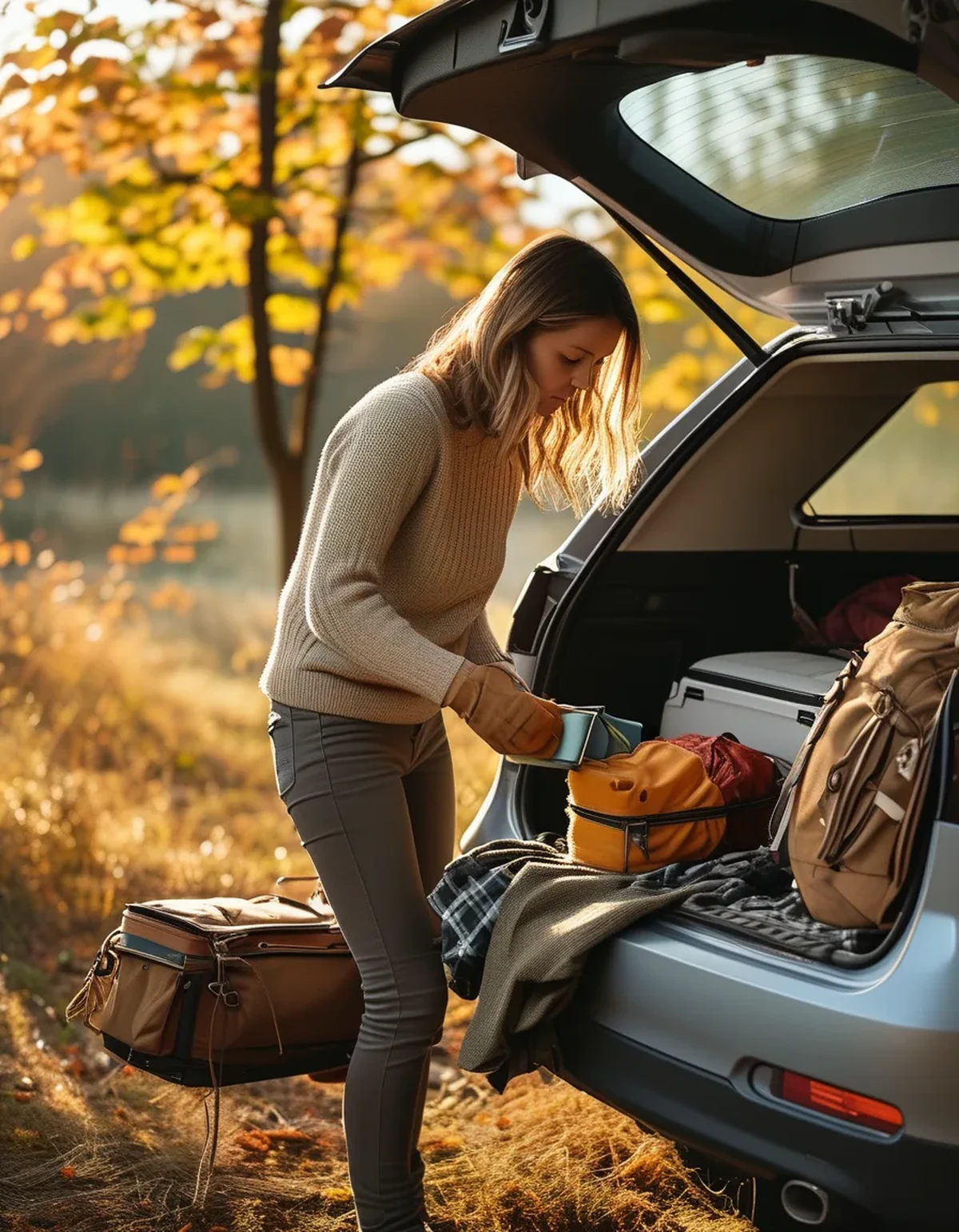
4. Packing food where it gets crushed and cannot be reached
Food gets packed early because it is heavy, and then it is under everything and half of it is flattened.
Three separate problems:
Crushing. Bread, eggs, crisps, and fruit lose badly to a full load shifting on a motorway. Anything crushable goes in a rigid box, on top, or in the cabin.
Temperature. A cool box in direct sun through a rear window will not stay cool. It should sit in the shaded part of the load, ideally in the footwell of the back seat rather than the boot, and it should be packed full — a full cool box holds temperature far longer than a half-empty one. Fill gaps with anything cold.
Access. You will want a drink and something to eat before you unpack, and probably again before dinner. A small food bag in the cabin removes the need to open the boot.
Two additional notes:
Separate the first night’s dinner from everything else and pack it accessibly. The first night is the meal most likely to be cooked in poor light by tired people. Make it the simplest one and make it easy to find.
Food storage at the site matters too. Depending on where you camp, food left accessible attracts wildlife ranging from mildly annoying to genuinely problematic. Check the site’s guidance and keep food sealed and stored as advised, not in the tent.
5. Overpacking clothes and underpacking layers
Almost everyone brings too many clothes and not enough of the right ones.
The pattern is a full bag per person of ordinary clothes, and one thin fleece between them. Then it turns cold at eight in the evening and everyone is sitting in the tent.
What actually gets used on a two-night autumn trip:
- One warm mid layer, worn most of the time.
- One insulated jacket for the evening. This is the single item that determines whether the evening is enjoyable, and it is the one most commonly left at home.
- A waterproof, regardless of forecast.
- A hat. Genuinely important — a large share of the difference between comfortable and cold in the evening.
- Two pairs of thick socks per person, and a dry pair reserved for sleeping only.
- One change of clothes, not three.
What does not get used: the additional outfits, the second pair of jeans, anything chosen for how it looks.
The sleeping kit deserves specific attention. Sleeping clothes should be dry, dedicated, and warm — thermal base layers and thick socks, put on only for sleeping. Sleeping in what you wore all day is one of the most common reasons people are cold at night, because the clothes have absorbed moisture you cannot feel.
Pack clothes by person in separate bags, not by category. Rummaging through a communal clothes bag in a dark tent is exactly as annoying as it sounds.
6. Loading heavy things high and loose
This is the safety item and it gets skipped.
In a car, unsecured cargo becomes a projectile under heavy braking. A cool box or a stove on top of a pile behind the rear seats has a clear path forward if you stop suddenly.
The rules are simple:
- Heavy items low and forward, against the back of the rear seats.
- Light and bulky items high — sleeping bags, clothes, chairs.
- Nothing above the height of the rear seat backs if you can avoid it. If you cannot, use a cargo barrier or a net.
- Fill the gaps so nothing can shift. A load that cannot move is far safer than a neatly stacked one that can.
- Keep the rear window clear enough to see through.
On roof boxes and roof loads: they change the handling of the car noticeably, they affect fuel consumption significantly, and they have a weight limit that is lower than most people assume. Check your vehicle’s roof load limit, and put light bulky things up there — bedding, chairs — rather than heavy ones.
A practical extra: put anything you might need at a service station within reach. Unpacking a boot in a car park to find a coat is a poor use of a break.
7. No plan for the wet, dirty return
The trip out is organised. The trip back is whatever fits, and it is why everything smells and why unpacking takes two days.
Three things to pack specifically for coming home:
A dedicated wet bag or box. Large, waterproof, empty on the way out. Wet tent, wet groundsheet, muddy boots, damp towels. Keeping wet things away from dry things is the whole job, and a tent packed wet against sleeping bags ruins the bags for the drive.
A bin bag or two. For rubbish, and for genuinely filthy items.
A rough repack plan. The tent will not go back in its bag as neatly, everything is damper and bulkier, and it is likely to be raining. Assume the return load takes more space and allow for it rather than discovering it in a field.
And the one that matters most for the next trip: the tent must be dried before storage. A tent packed away damp will develop mould and can be permanently damaged within days. If you get home in the rain, put it up in a garage, a spare room, or over a bannister as soon as you can. This is the single most common reason tents are ruined, and it is entirely preventable.
FAQ: Camping Packing Questions, Answered
How much space should I actually allow?
More than the outbound load. Wet gear is bulkier, the tent will not repack as tightly, and things accumulate. If the car is completely full leaving home, the return journey will be a problem.
Are plastic boxes better than duffel bags?
For car camping, yes. They stack, they hold shape, they keep things dry and visible, and they survive wet ground. Duffels are better where weight and flexibility matter, which is backpacking rather than driving.
What is the most commonly forgotten item?
The mallet, a spare set of tent pegs, and a torch that works. All three are trivial, all three are trip-defining at eight in the evening on a dark pitch.
TL;DR:
- Pack in reverse order of use. The tent, pegs, and mallet come out first, so they go in last.
- Pack by system, not category — a cook box, a sleep bag, a tent bag, a light box. Clear plastic boxes beat duffels.
- Keep an arrival bag in the cabin: headtorches, snacks, warm layers, the site map on paper.
- Food in the cabin, cool box full and shaded, first night’s dinner separate and simple.
- Fewer clothes, more layers. An insulated jacket, a hat, and dedicated dry sleeping clothes.
- Heavy low and forward, nothing loose above the seat backs. An unsecured load is a safety issue.
- Bring an empty wet box for the return, and dry the tent before storing it.
Most of the first hour at a campsite is decided in the driveway.
Keep Reading
This article is for general informational and styling purposes only. Fit, sizing, and product availability may vary.