Camping in the Rain (The Trip That Teaches You the Most)
Quick Answer: A rainy camping trip stays fine (instead of miserable) with a tarp over your living area, a site on higher ground, everything packed in dry bags, one sealed set of spare dry clothes, and real waterproofs — not a poncho. Protect hot food and dry feet above everything else, and morale holds too.
Rain is what separates people who camp occasionally from people who camp regularly — and it comes down almost entirely to preparation. A wet trip tends to land in one of two places: genuinely fine, or completely miserable. There’s not much middle ground, and which one you get is decided before you ever leave the driveway.
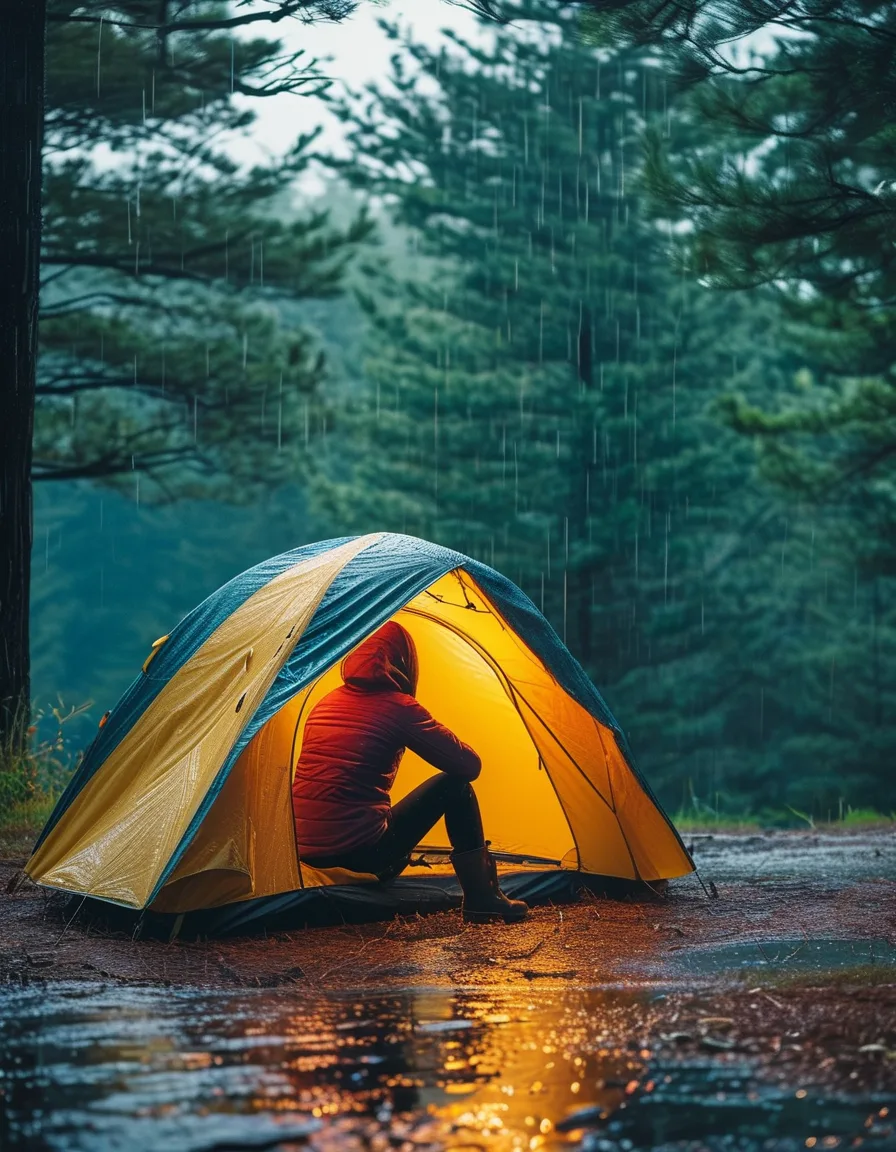
Why Does Rain Ruin an Unprepared Camping Trip So Fast?
It’s not one big failure — it’s a handful of small ones that compound quickly:
- Wet gear cannot be dried in the field. Once something’s soaked, there’s no fix out there — you’re carrying wet weight for the rest of the trip.
- One leak reaches everything. A single failure point — a leaky seam, a tarp gap — can reach your sleeping bag and clothes and turn one problem into five.
- Being wet makes you cold far faster than temperature alone. Wet skin loses heat much quicker than dry skin, even in mild weather.
- There’s nowhere dry to sit. Without a covered space, the trip collapses into tent confinement — you’re stuck inside for hours with nothing to do.
- Morale drops fast once everything’s damp. It’s rarely one big thing that ruins a wet trip’s mood — it’s the accumulation of small discomforts.
The reframe worth internalizing: a rainy trip is decided by preparation, not luck. Once things get wet, there’s no undo button — so the entire strategy is preventing that in the first place.
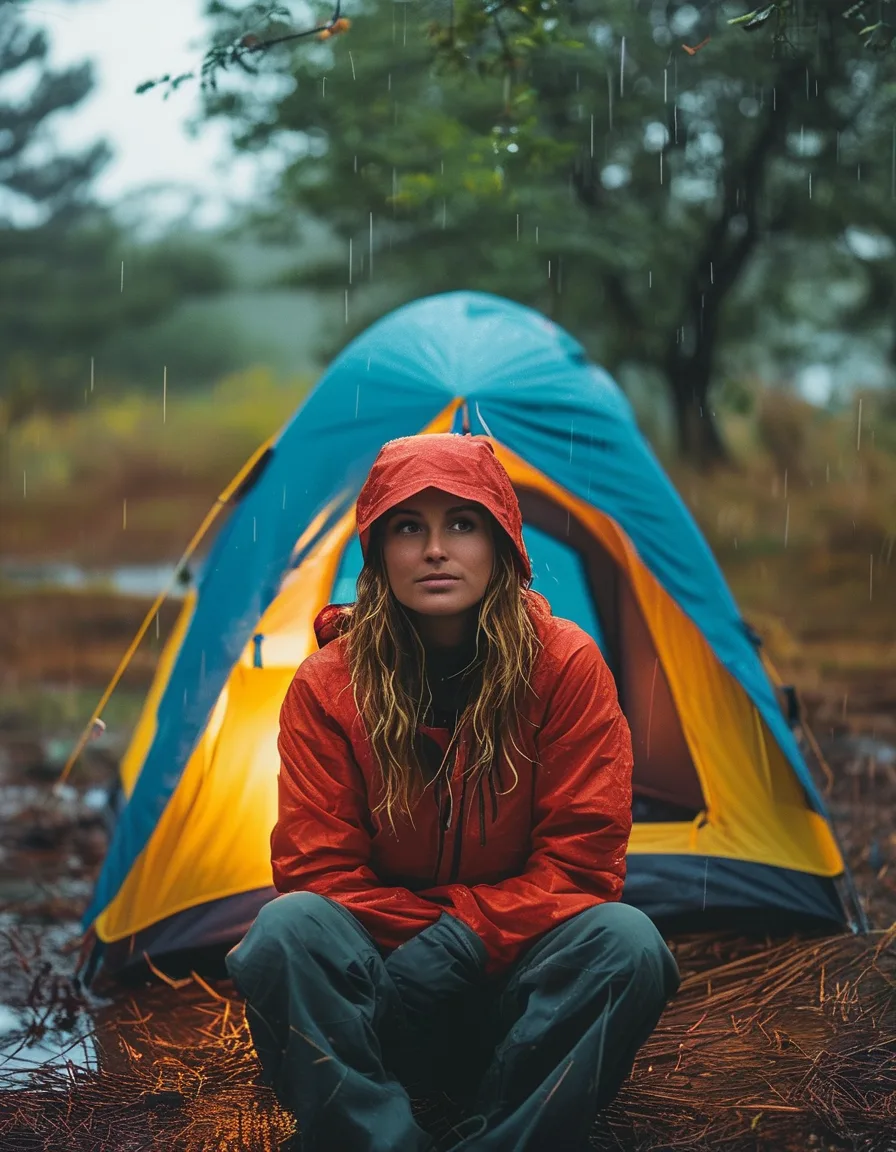
What Setup Actually Holds Up in the Rain?
Building a genuinely dry camp comes down to eight specific moves:
- A tarp over the living area. This creates real dry space outside the tent itself — somewhere to cook, sit, and store gear without being crammed inside.
- Pitch on higher ground. Avoid anywhere water will pool. This sounds obvious until you’re setting up in a downpour and just want to stop walking.
- A proper groundsheet under the tent. Non-negotiable — it’s the barrier between you and ground moisture all night.
- Everything in dry bags. Clothes and sleeping gear specifically. This is the single habit that prevents “one leak ruins everything.”
- A designated wet area. Keep a wet zone in the tent porch so the inner tent stays completely dry — wet boots and jackets never come past that line.
- Spare dry clothes, sealed and untouched. One full set kept sealed until you actually need it — the temptation to “just wear it a little” defeats the purpose.
- Real waterproofs, not a poncho. A genuine waterproof jacket and trousers — ponchos flap, let wind-driven rain in sideways, and don’t hold up to actual hiking.
- A camp kitchen under cover. A covered cooking area means hot food stays achievable even in a full downpour.
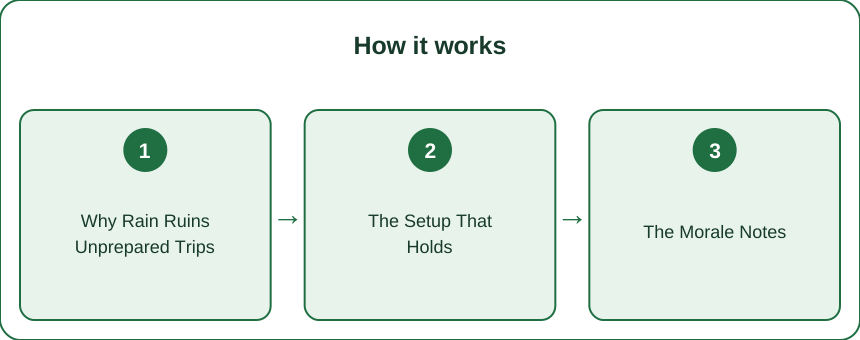
How Do You Keep Morale Up When It Won’t Stop Raining?
Hot food and drinks do enormous morale work. A hot meal or even just a hot drink resets the mood more than almost anything else you can do.
Dry feet matter more than anything. Dry socks, dry boots — protect this above nearly every other comfort priority.
Get into the sleeping bag completely dry. Change fully before you get in, even if it feels like an extra step in the cold. A damp sleeping bag ruins the whole night.
Have something to do in the tent. Cards, a book, a simple game — tent hours add up fast in a long rain, and boredom is what actually breaks morale, not the rain itself.
Go out in it anyway. Counterintuitively, walking in the rain often beats sitting and waiting it out. Movement keeps you warmer and the day feels less lost.
Lower your ambitions instead of abandoning the day. Scale back the plan rather than scrapping it entirely — a shorter hike still counts.
Remember: it makes the best stories. Every camper’s favorite trip to retell is rarely the perfect-weather one.
What Nobody Tells You About Rainy Camping Trips
The campers who actually like wet-weather trips aren’t the ones with the fanciest gear — they’re the ones who’ve done it enough times to trust their own setup. The first rainy trip is always the hardest, because you don’t yet know which parts of your kit actually hold up. After one genuinely wet trip with a solid tarp-and-dry-bag system, most people stop dreading the forecast entirely.
Mini FAQ
What’s the single most important item for camping in the rain?
A tarp over your living area. It’s the difference between being confined to the tent and having usable dry space for the whole trip.
Are ponchos good enough for rainy camping?
No — real waterproof jacket and trousers hold up far better than a poncho, which lets wind-driven rain in and isn’t built for hiking or extended movement.
How do you keep a sleeping bag dry overnight in the rain?
Use a proper groundsheet, keep gear in dry bags, designate a wet zone at the tent entrance, and always change into dry clothes before getting into the bag.
TL;DR:
- Rain ruins unprepared trips through compounding small failures — wet gear that can’t dry, one leak reaching everything, and fast morale collapse
- The dry setup: tarp over the living area, higher ground, groundsheet, dry bags, a wet zone, sealed spare clothes, real waterproofs, covered kitchen
- Protect hot food and dry feet above all other morale priorities
- Get into the sleeping bag fully dry, keep tent entertainment on hand, and lower ambitions rather than cancel the day
- A well-prepared rainy trip often becomes the trip you remember and tell stories about
Keep Reading
This article is for general informational and styling purposes only. Fit, sizing, and product availability may vary.