Beyond Burnt Marshmallows: Campfire Cooking That Actually Works
Quick Answer: Good campfire cooking comes down to cooking over glowing coals rather than open flames, using foil packets for easy hands-off meals, and building a two-zone fire with a hot side and a cooler side. Let the fire burn down 30-45 minutes before you start cooking anything.
Dinner is either golden and glorious or charcoal on the outside, cold in the middle, with a light dusting of ash for seasoning. There’s rarely an in-between at the campfire. The gap between those two outcomes is smaller than you’d think — mostly one insight about flames versus coals.
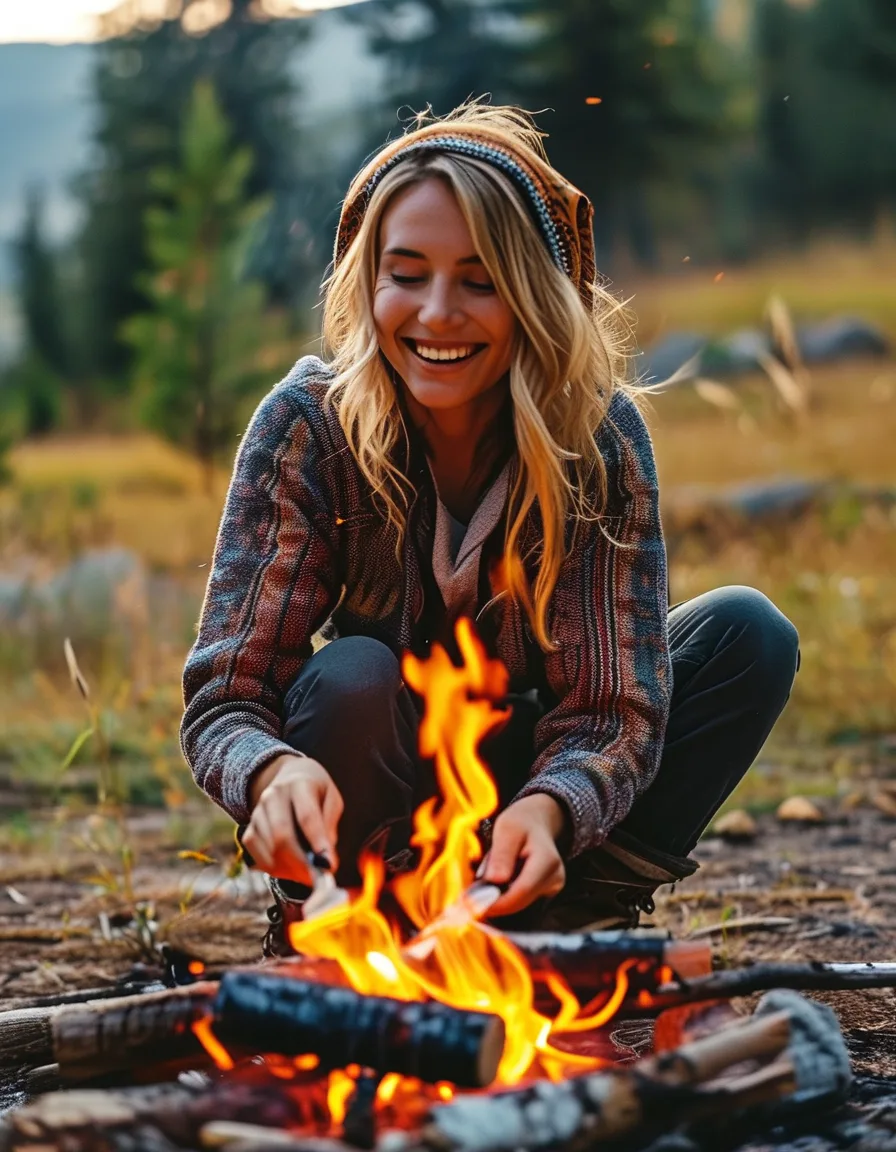
Why does everything burn on the outside but stay raw inside over a campfire?
The short answer is flames. Open flame cooking looks dramatic and photographs well, but it’s brutally uneven heat — scorching whatever’s closest while leaving the center undercooked. Coals, not flames, are what actually cook food evenly. Flames are for ambiance and marshmallows; coals are for dinner.
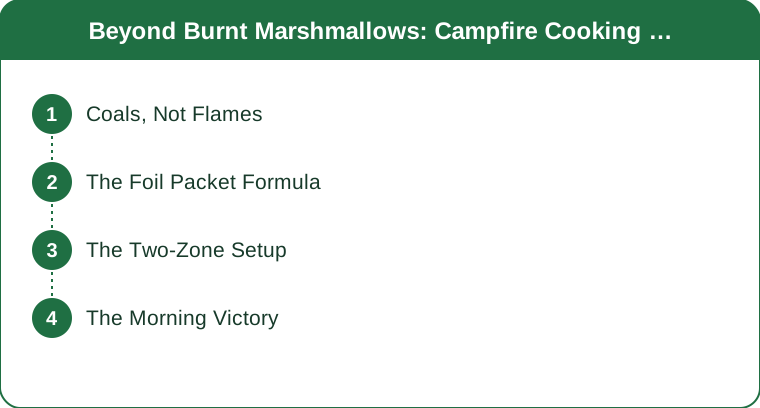
How long should you wait before cooking over a campfire?
Let the fire burn down for roughly 30-45 minutes until you’re left with a bed of glowing embers rather than active flames. It’s the single hardest instruction to follow when you’re hungry and the fire looks perfectly cookable at minute ten. The patient camper eats golden dinners while the eager one eats carbon — that’s not a threat, it’s just how radiant heat works.
What’s the easiest campfire meal for a beginner to cook?
Foil packets, hands down. The formula barely changes no matter what you’re cooking:
- A protein (sausage, chicken thighs, fish, or a plant-based swap)
- Quick-cooking vegetables (peppers, potatoes cut small, onions, zucchini)
- A drizzle of oil
- Salt, pepper, and whatever seasoning is in your camp box
Double-wrap it in heavy-duty foil, set it on the coals for 15-20 minutes with one flip partway through, and you’re done. Sausage-pepper-potato is the classic combination for a reason — it’s forgiving, filling, and the cleanup is throwing away a piece of foil. Chef-ish achieved with almost no equipment.
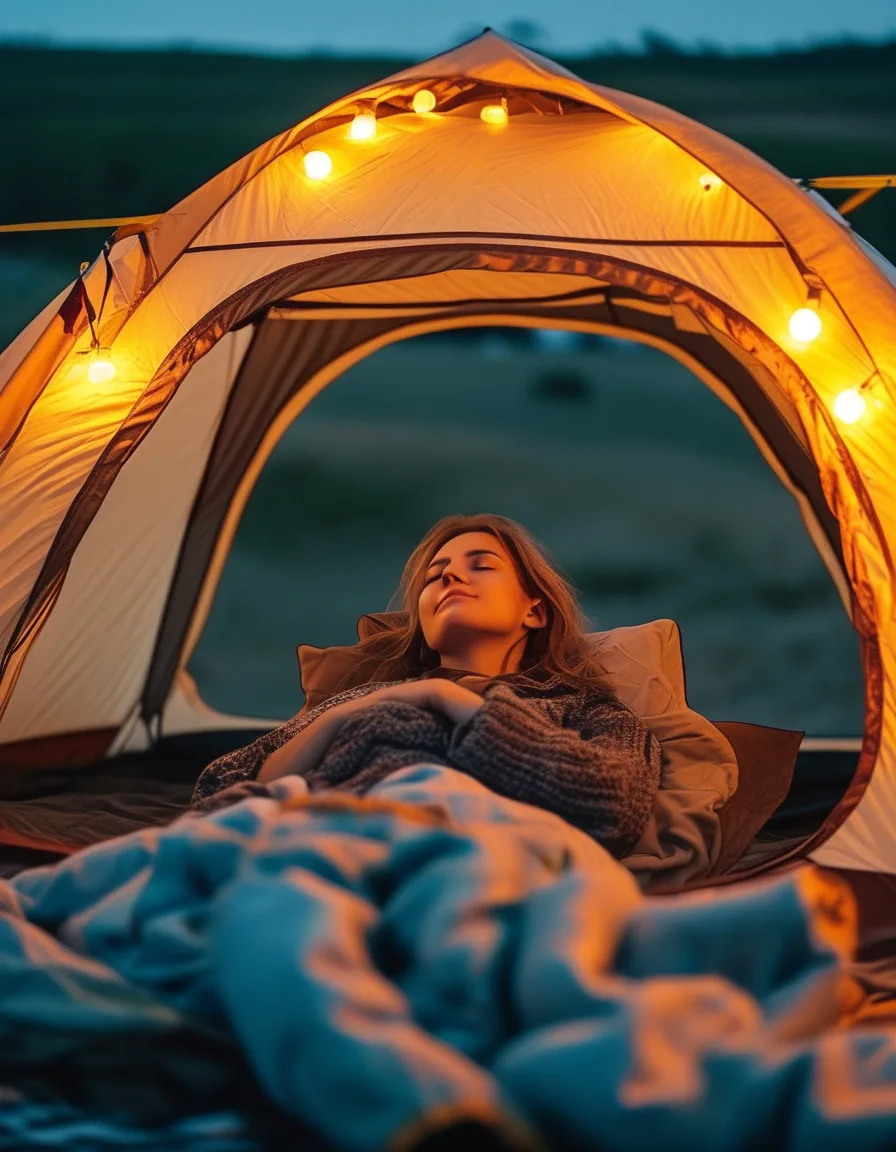
What is a two-zone fire and why do experienced campers swear by it?
A two-zone setup means raking your coals so one side of the fire pit is hotter and denser, and the other side is thinner and cooler. The hot zone is for searing and fast cooking; the quiet zone is for keeping finished food warm and rescuing anything that’s cooking too fast. It’s essentially the campfire version of stovetop dials — high heat for the sear, low heat for the hold — and it’s the difference between cooking on purpose and just hoping for the best.
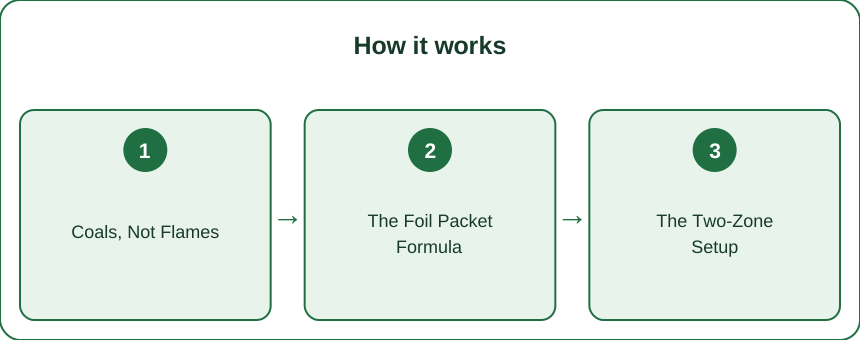
What should you cook for breakfast at a campsite?
This is where campfire cooking earns its reputation. Campfire coffee — whether from a percolator or a simple pour-over setup — paired with eggs scrambled in a pan set right on the grate is the breakfast that makes the whole tent-sleeping enterprise feel justified. It doesn’t need to be fancy. It just needs a pan. Pack the pan. Always pack the pan; it’s the one item people forget and regret most.
What Nobody Tells You About Campfire Cooking
Nobody tells you that the best campfire meals are almost boringly simple — it’s technique, not ambition, that separates a good camp cook from a bad one. Nobody tells you that a cheap folding grate over the coals upgrades everything instantly, letting you use a pan the same way you would at home. Nobody tells you that pre-chopping vegetables at home before the trip saves more stress than any fancy gear purchase. And nobody tells you that the fire looking “ready” at ten minutes is a trap — your eyes want to cook before the coals are actually ready, and ignoring that instinct is most of the skill.
FAQ: Beginner Campfire Cooking
How do I know when campfire coals are ready to cook on?
Look for a steady bed of glowing orange embers with a light coating of gray ash, and minimal visible flame. This typically takes 30-45 minutes of burn-down time, and holding your hand a safe distance above the coals should feel like strong, steady heat rather than the flickering heat of open flame.
What’s the best beginner-friendly campfire meal?
Foil packet meals are the easiest starting point because they’re nearly foolproof — protein, quick vegetables, oil, and seasoning wrapped tightly and set on coals for 15-20 minutes. There’s very little that can go wrong, and cleanup is minimal.
Do I need special equipment for campfire cooking?
Not much. A folding grate, a sturdy pan, and heavy-duty foil cover the vast majority of campfire meals. A percolator or simple pour-over setup for coffee is the one upgrade most beginners end up wishing they’d packed sooner.
TL;DR:
- Cook over glowing coals, not open flame — wait 30-45 minutes for the fire to burn down
- Foil packets (protein + quick veg + oil + seasoning, 15-20 minutes) are the easiest beginner meal
- Build a two-zone fire: a hot side for searing, a cool side for holding
- Campfire coffee plus grate-cooked eggs is the breakfast that makes camping worth it
- Always pack a pan — it’s the most-forgotten, most-regretted item
Keep Reading
This article is for general informational and styling purposes only. Fit, sizing, and product availability may vary.