7 Camp Kitchen Mistakes That Are Sabotaging Your Trip (And How to Fix Them Tonight)
Quick Answer: The biggest camp kitchen mistakes are under-packing fuel, skipping a meal plan, and bringing raw meat that needs constant refrigeration. Fix all three before you leave the driveway and dinner stops being the hardest part of the trip.
Every camper has had the night where dinner takes two hours, the stove runs out of fuel halfway through, and everyone’s cranky and starving by the time the food is actually ready. None of that is bad luck — it’s almost always one of these seven fixable mistakes, and every single one of them is solvable with about twenty minutes of prep before you ever load the car.
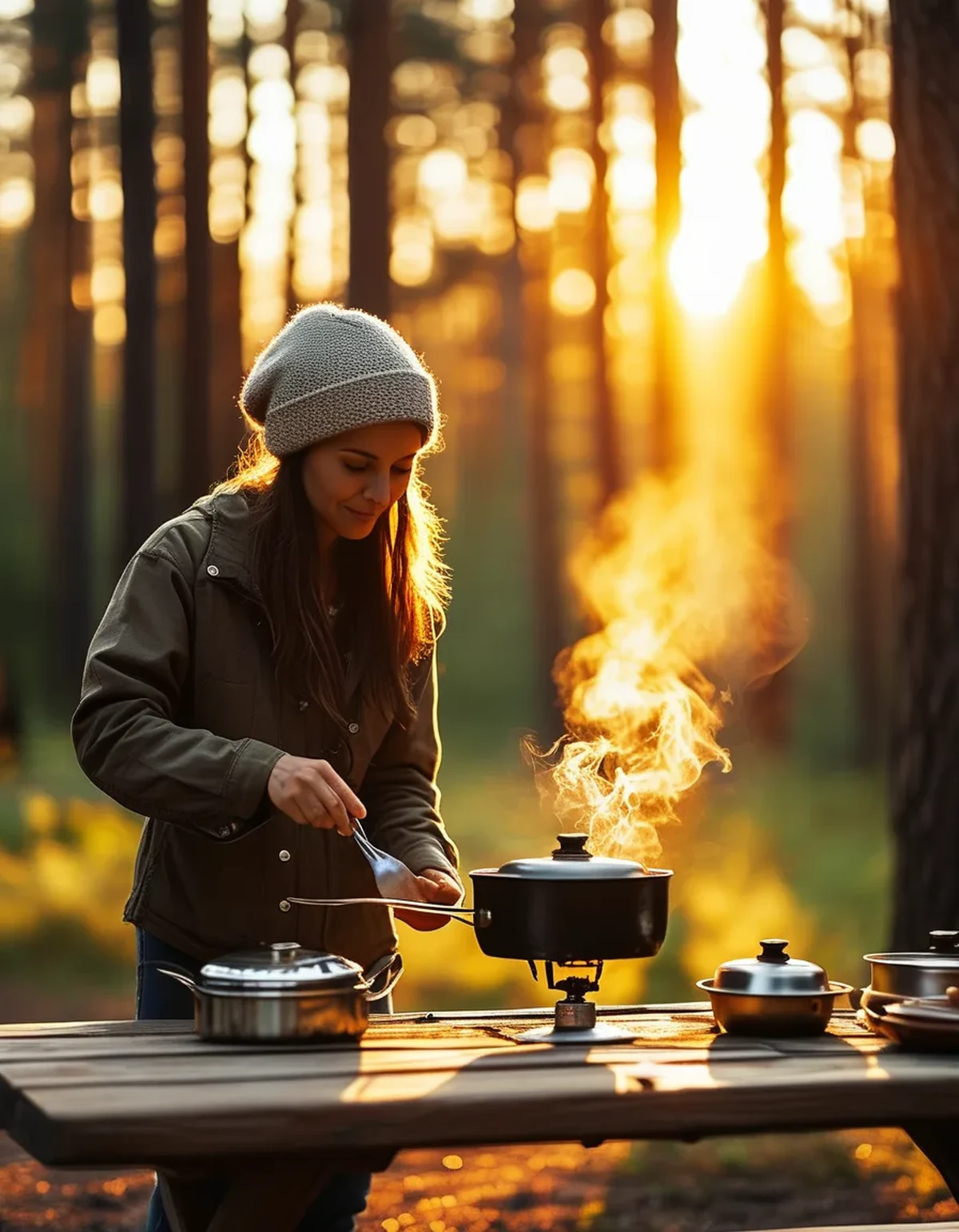
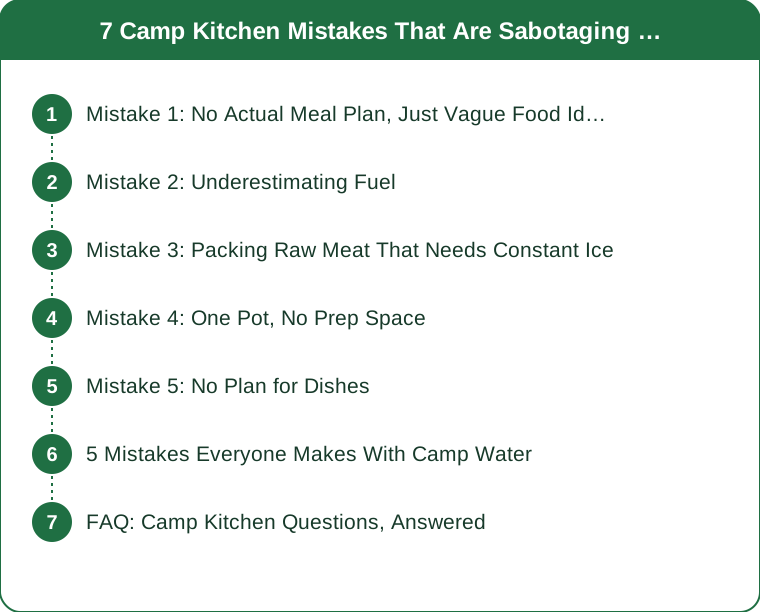
Mistake 1: No Actual Meal Plan, Just Vague Food Ideas
Packing ‘stuff for meals’ instead of a specific plan (breakfast Day 1: oatmeal packets and coffee; dinner Day 1: one-pot pasta with pre-chopped vegetables) is the single biggest cause of camp kitchen chaos. Without a plan, you either over-pack and haul home three unused bags of food, or under-pack and end up rationing on day two, standing in front of a cooler trying to improvise a meal out of condiments and half a bell pepper.
The fix: write out every meal by day before you shop, then buy exactly what’s on the list, portioned per person. A simple index card taped inside the cooler lid with each day’s meals listed also saves the ‘what were we going to make with this’ scramble once you’re actually at the site.
Mistake 2: Underestimating Fuel
Camp stoves burn through fuel faster at altitude and in wind than the canister label suggests, and cold morning air also makes canisters run less efficiently than the same stove would at room temperature. Running out mid-boil on night two, with no backup, means a cold dinner, lukewarm coffee, or a scramble to find a gas station 40 minutes away with the right canister size in stock.
The fix: bring one full backup canister beyond what you think you’ll need, and test a new stove at home first so you know its real burn rate under normal conditions before trusting it in the field. If you’re camping somewhere windy or at elevation, budget for meaningfully more fuel than the manufacturer’s flat-ground estimate.
Mistake 3: Packing Raw Meat That Needs Constant Ice
Raw meat demands a cooler that stays reliably below 40°F for days, which is genuinely hard to manage on a multi-day trip without a dedicated fridge, especially once the ice starts melting by day two and pools of meltwater start soaking everything else in the cooler. The result is either wasted food, a soggy mess of ruined vegetables, or worse, food poisoning from meat that sat too warm for too long.
The fix: pre-cook and freeze meat components at home, then pack them frozen — they thaw as natural ice packs and only need reheating, not raw-temperature safety. This one change also frees up cooler space, since you’re not packing a separate bag of ice specifically to keep raw meat cold.
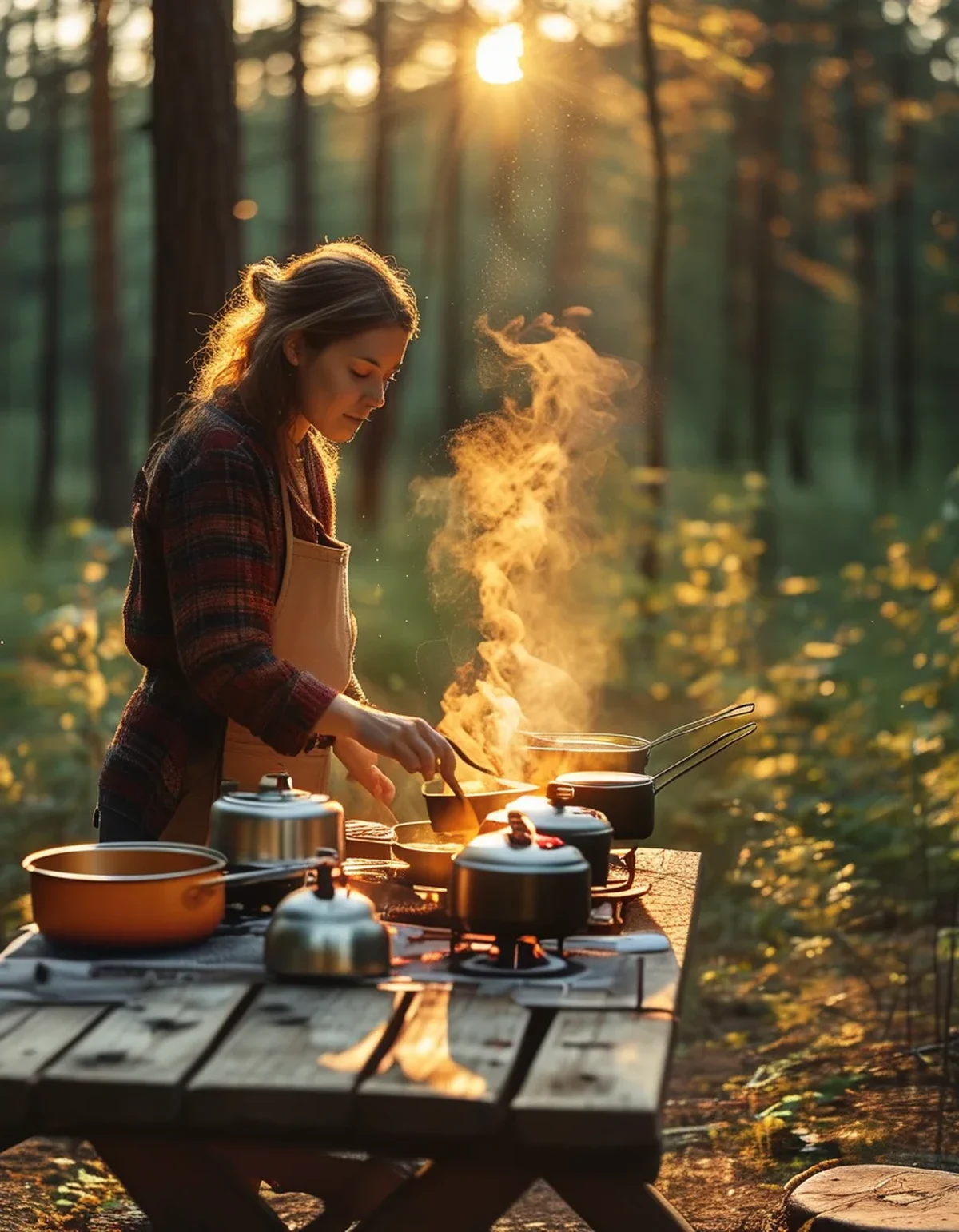
Mistake 4: One Pot, No Prep Space
A single small pot and no flat surface to chop on turns a simple recipe into a 90-minute ordeal. Vegetables get cut awkwardly on a paper plate balanced on a knee, the pot gets used and rewashed three separate times for one meal, and by the time dinner’s ready, everyone’s patience is gone along with the daylight.
The fix: bring a folding cutting board (they weigh almost nothing and pack flat against a cooler wall) and pre-chop what you can at home into labeled bags — onions, garlic, and anything that needs a knife should already be prepped before you leave, so camp prep becomes assembly, not cooking-show-level chopping by headlamp.
Mistake 5: No Plan for Dishes
Dirty dishes pile up fast when there’s no system, and washing them becomes an unpleasant chore done by headlamp at 9pm while everyone else is already in their sleeping bag. Worse, food scraps left sitting in a wash basin overnight are one of the most common things that attract wildlife into a campsite, turning a dish-washing oversight into a genuine safety issue by 2am.
The fix: wash immediately after eating rather than letting dishes sit, strain food scraps into a sealed trash bag (never the ground or the fire pit, both of which still attract animals), and store the wash basin itself in the car or a bear-proof container overnight rather than leaving it out by the fire ring.
5 Mistakes Everyone Makes With Camp Water
Beyond dishes, water mistakes deserve their own list, since running short on water is arguably worse than running short on food: 1) not bringing enough for cooking plus drinking plus dishes combined — double your drinking-water estimate to cover all three uses realistically; 2) relying on a single water source at the campsite that turns out to be dry, seasonal, or shut off for maintenance; 3) not treating water from a stream or lake even when it looks perfectly clean, since contamination isn’t visible; 4) using scented soap directly in or near a natural water source, which contaminates it for wildlife and every other camper downstream; 5) forgetting a dedicated jug set aside just for cooking, so you’re not draining your drinking supply mid-recipe and realizing too late you’re short for the rest of the trip.
FAQ: Camp Kitchen Questions, Answered
How much fuel should I actually pack per person per day?
Plan for roughly one small (8oz) canister per two people per day of cooking if you’re boiling water and cooking one hot meal daily — pack an extra full canister as backup regardless of group size, and budget more if you’re at elevation or expecting wind.
What’s the single best pre-camp prep step?
Pre-chopping and pre-portioning every ingredient into labeled bags at home. It turns 20-minute camp prep into a 5-minute assembly job, and it’s the one habit that most consistently separates a smooth camp dinner from a stressful one.
Is it safe to reuse the same cutting board for meat and vegetables at camp?
Only if you wash it thoroughly with hot water and soap between uses — better to bring two small boards or designate one side of a single board per food type with a permanent marker line, since camp conditions make thorough washing between uses less reliable than at home.
What’s the single most-forgotten camp kitchen item that causes the most disruption?
A can opener, specifically a small dedicated one packed with the cooking gear rather than assumed to be on a multi-tool — canned goods are a common camp staple precisely because they’re shelf-stable, and discovering there’s no way to open them is a surprisingly common and completely avoidable trip disruption.
TL;DR:
- Write a specific meal plan by day, not a vague grocery list
- Pack one full backup fuel canister beyond your estimate, more if windy or at elevation
- Pre-cook and freeze meat at home instead of packing it raw
- Bring a folding cutting board and pre-chop everything you can
- Wash dishes immediately and store scraps and basins away from the campsite overnight
- Double your water estimate and treat any natural water source
None of these fixes cost much time or money — they just require doing the planning at your kitchen counter instead of at the picnic table, which is exactly when you don’t want to be figuring it out.
Keep Reading
This article is for general informational and styling purposes only. Fit, sizing, and product availability may vary.