7 Things Your Tent Setup Is Missing That Are Causing Your Wet, Cold Nights
Quick Answer: Most wet, cold tent nights come from 7 fixable setup gaps - not a bad tent - including a missing footprint, condensation from poor ventilation, and pitching on the wrong ground slope. Fixing these usually costs nothing extra since it’s about technique, not new gear.
You bought a good tent, checked the weather, and still woke up in a damp sleeping bag with your gear soaked through. The tent usually isn’t the problem - here are the 7 setup details that actually cause it.

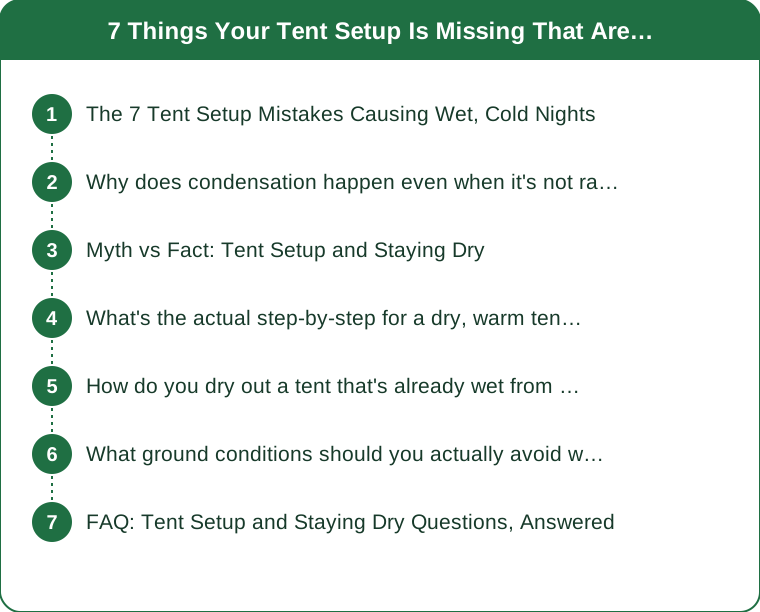
The 7 Tent Setup Mistakes Causing Wet, Cold Nights
1. Skipping a footprint or ground tarp
Without a footprint underneath, ground moisture wicks directly through your tent floor overnight, and sharp debris underneath can wear through the floor fabric over time. A footprint cut slightly smaller than your tent’s actual footprint (so it doesn’t collect rain and funnel it under the tent) is one of the cheapest, highest-impact additions you can make.
2. Not clearing the ground underneath first
Leaves, twigs, and small rocks left under the tent create pressure points that push against the floor fabric all night, and over time these pressure points are exactly where leaks start to develop. A 2-minute clear-and-sweep before pitching prevents most of this.
3. Zipping the rainfly too tight, blocking ventilation
A fully sealed rainfly traps your breath and body heat as moisture, which condenses on the tent’s interior walls overnight - this is the single most common cause of a tent feeling “wet inside” even with zero rain. Cracking the vents or leaving a small gap at the bottom of the fly lets moist air escape.
4. Pitching on a slope without checking water flow
Even a gentle slope can funnel rainwater directly under your tent floor during a storm. Walking the site and checking where water would naturally flow during rain - before you pitch, not after it starts raining - avoids setting up in a natural drainage path.
5. Not staking out the rainfly at full tension
A loose, saggy rainfly touches the tent body at multiple points, and anywhere fabric touches fabric, moisture transfers straight through to the inside. Full tension on every stake point keeps the rainfly from contacting the tent body even in wind.
6. Storing wet gear inside the tent overnight
Damp boots, jackets, or hiking clothes left inside the tent add significant moisture to the air you’re breathing all night, which condenses right back onto the tent walls. A vestibule or a small dry bag just outside the sleeping area keeps wet gear from adding to the problem.
7. Ignoring the difference between a 3-season and 4-season tent’s ventilation design
3-season tents are built with more mesh and airflow specifically to manage condensation in mild weather; using one in genuinely cold, wet conditions without adjusting your ventilation habits (vents open, fly tension correct) leads to more condensation than the tent is actually designed to produce.
Why does condensation happen even when it’s not raining?
Your own breathing and body heat release a surprising amount of moisture overnight - a sleeping person can release close to a pint of water vapor through breath and skin over 8 hours. In a sealed tent with poor airflow, that moisture has nowhere to go except the nearest cold surface, which is almost always the tent’s interior wall.
Temperature difference is the other half of the equation: warm, moist air inside meeting a cold tent wall overnight causes that moisture to condense into liquid droplets, the same way a cold glass sweats on a humid day. This is a physics problem, not a tent-quality problem, which is exactly why ventilation - not a more expensive tent - is the actual fix.
Myth vs Fact: Tent Setup and Staying Dry
Myth: A more expensive, higher-rated tent won’t have condensation problems. Fact: Even premium tents develop condensation without proper ventilation - price and rating affect durability and weather resistance, not condensation physics, which comes down to airflow regardless of tent cost.
Myth: Keeping the rainfly zipped completely tight is always safer. Fact: A fully sealed fly traps moisture inside and often makes the tent feel wetter than a properly vented setup, even in active rain - most rainflies are designed with vents specifically because full sealing backfires.
Myth: A footprint is an optional extra, not a real necessity. Fact: A footprint is one of the cheapest and most effective upgrades for both dryness and tent floor longevity - skipping it is a common beginner cost-cutting choice that tends to cause more problems than it saves in money.

What’s the actual step-by-step for a dry, warm tent setup?
Scout the site first - flat ground, no visible drainage path, cleared of debris. Lay the footprint slightly smaller than your tent’s footprint so it doesn’t collect and funnel rainwater underneath. Pitch the tent body, then the rainfly at full tension, checking that fabric-to-fabric contact points are minimized.
Open at least one vent, even in cold weather - cracking a vent loses less heat than the moisture buildup from sealing everything costs you in comfort. Store wet gear in the vestibule, not the sleeping area, and change out of any damp clothing before getting into your sleeping bag, since damp clothes worn to bed are one of the most common individual causes of a cold night regardless of tent setup quality.
How do you dry out a tent that’s already wet from condensation?
Open every vent and the door as fully as weather allows first thing in the morning, since morning air is typically less humid than nighttime air and airflow is the fastest way to dry interior condensation. Wiping down visible droplets with a small camp towel before packing up also prevents that moisture from soaking into your gear bag during transport.
If you have to pack a still-damp tent, unpack and fully air-dry it as soon as you’re home, even if just for an hour in a dry room - packing a wet tent away for days risks mildew developing on the fabric, which is a separate and harder problem to fix than simple overnight condensation.
What ground conditions should you actually avoid when picking a campsite?
Low points, natural depressions, and anywhere you can see debris lines from previous water flow are all signs that spot floods or pools during rain, even if it looks dry when you arrive. Directly under large trees can also be a poor choice - not just for falling branch risk, but because trees continue dripping long after rain stops, keeping the ground and your tent wetter than an open site nearby.
A slightly elevated, flat spot with good drainage on all sides is worth the extra few minutes of scouting compared to the first flat-looking patch of ground you find.
FAQ: Tent Setup and Staying Dry Questions, Answered
Do I really need a footprint if my tent already has a durable floor?
Yes, even durable tent floors benefit from a footprint - it’s primarily about moisture wicking and abrasion protection over repeated use, not just floor strength on a single trip.
Is it normal to see some condensation even with a well-vented setup?
Yes, some condensation is normal in humid or cold conditions even with good ventilation - the goal is minimizing it to a manageable level, not eliminating it completely, which usually isn’t fully possible outdoors.
Should I close all the vents if it’s raining hard to keep water out?
No - vents are typically positioned and designed to let air out while keeping rain out, so closing them during rain often makes interior condensation worse without meaningfully improving dryness.
TL;DR:
- A footprint, cleared ground, and proper stake tension are the setup basics most people skip
- Condensation from your own breathing is the most common cause of a “wet” tent, not rain getting in
- Cracking a vent, even in cold weather, prevents more moisture buildup than it costs in heat loss
- Scout for drainage and avoid low points or directly under large dripping trees
Most wet, cold camping nights trace back to one or two of these setup details - fix them once and they become automatic habits on every future trip.
Keep Reading
This article is for general informational and styling purposes only. Fit, sizing, and product availability may vary.