7 Things That Quietly Ruin a First Solo Camping Trip
Quick Answer: Most ruined first solo trips come down to underestimating nightfall timing, packing for comfort instead of function, and skipping a real check-in plan — all fixable with 20 minutes of prep, not more gear.
Your first solo camping trip doesn’t get ruined by anything dramatic. It’s almost always one of these seven small, boring mistakes — and every one of them is fixable before you even leave the driveway.
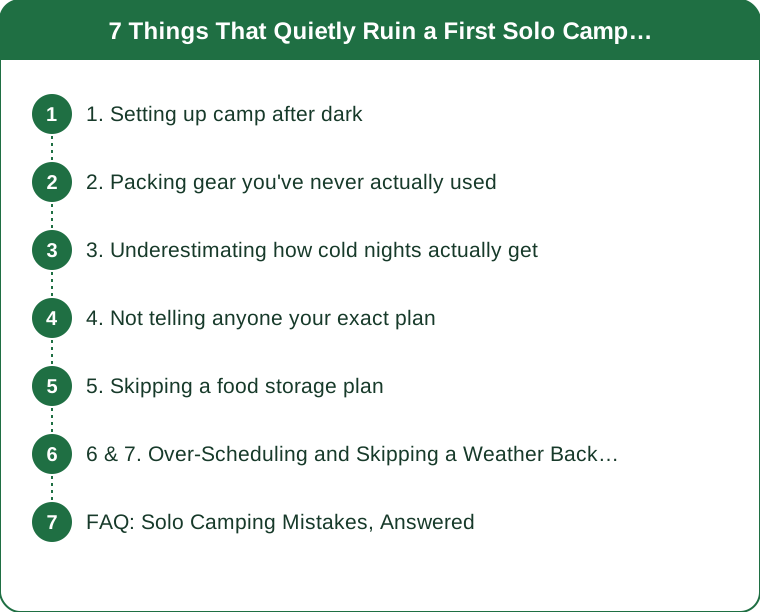
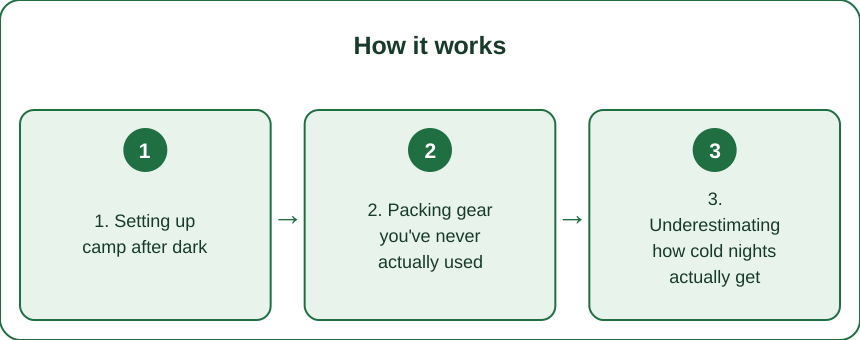
1. Setting up camp after dark
Arriving with an hour of daylight left feels like enough — until you’re fumbling with tent poles by headlamp with zero margin for a mistake. Plan to arrive with at least 2 hours of daylight, more if it’s your first time pitching that specific tent.
2. Packing gear you’ve never actually used
A brand-new tent, stove, or sleeping pad you haven’t tested at home is a gamble you don’t want to take alone in the dark. Set everything up once in your backyard or living room first — 15 minutes of practice prevents an hour of frustration at the campsite.
3. Underestimating how cold nights actually get
Daytime temperature has almost nothing to do with nighttime temperature at most campsites — a 75°F day can easily drop into the 40s once the sun sets. Pack for the overnight low, not the forecast high, and bring one more layer than feels necessary.
4. Not telling anyone your exact plan
“I’m camping this weekend” is not a safety plan. Share your specific site, arrival and departure times, and a check-in time with someone — and actually check in when you say you will, even just a text.
5. Skipping a food storage plan
Leaving food in the tent or an unsecured cooler is one of the most common reasons wildlife shows up at a campsite. Use a bear-proof container or hang food properly, even at sites that feel too tame for it to matter.
6 & 7. Over-Scheduling and Skipping a Weather Backup Plan
6. Over-scheduling the trip
Planning a hike, a swim, a campfire cook, and a sunset photo session on day one is a recipe for exhaustion, not relaxation. Solo trips go better with one loose plan per day and space to just sit at camp.
7. Not having a weather backup plan
Rain isn’t a trip-ender if you’ve packed for it — but showing up with a tarp you’ve never rigged and a tent with no vestibule turns a light rain into a miserable night. Know your rain plan before you need it, not during it.
FAQ: Solo Camping Mistakes, Answered
What’s the single biggest first-timer mistake?
Arriving too close to dark — it turns every other small problem (unfamiliar gear, unclear site layout) into a bigger one under time pressure.
Do I need to test all my gear before a solo trip?
At minimum, test your tent and any cooking setup — those are the two most common points of frustration when unfamiliar.
How do I stay safe camping alone without over-planning?
One detailed check-in plan with a trusted person covers most of the real risk; everything else is comfort, not safety.
TL;DR:
- Arrive with 2+ hours of daylight to set up camp
- Test all new gear at home before your first solo trip
- Pack for the overnight low temperature, not the daytime high
- Share a specific plan and check in with someone as promised
- Secure food properly and leave one day unscheduled
None of these seven fixes cost extra gear — just 20 minutes of prep before you leave.
Keep Reading
This article is for general informational and styling purposes only. Fit, sizing, and product availability may vary.