7 Things That Make a Campsite Actually Comfortable (That Have Nothing to Do With Gear Quality)
Quick Answer: Site selection, tent orientation relative to morning sun, a designated ‘wet gear’ zone, ground prep before pitching, a defined cooking area separate from sleeping space, proper food storage placement, and lighting placed before dark all matter more to actual comfort than gear price tag.
Two campers with identical gear can have completely different experiences based on setup choices that have nothing to do with what they spent — and everything to do with a handful of decisions made in the first twenty minutes at the site.
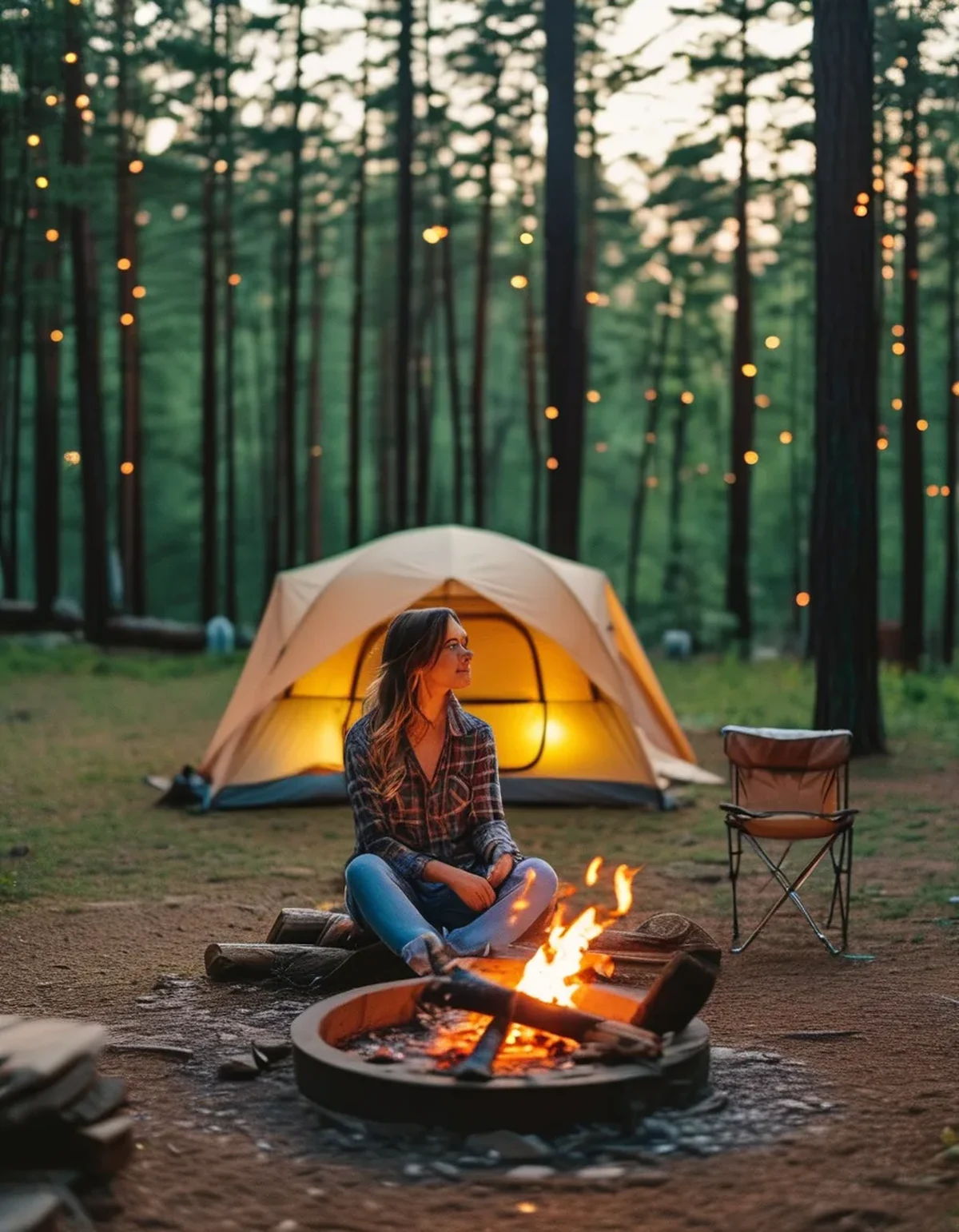
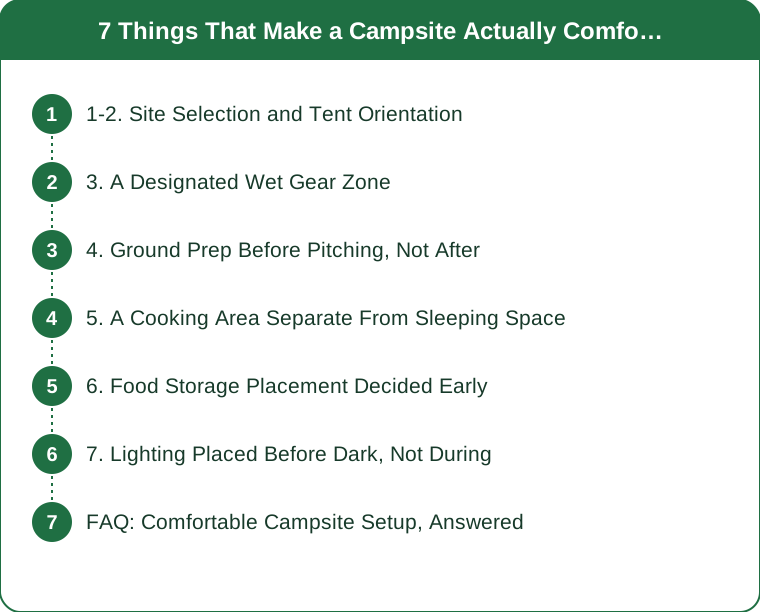
1-2. Site Selection and Tent Orientation
Walk the full site before committing — check for slight natural drainage slopes (you want gentle, not steep, slope away from your tent spot) and avoid low points where water pools after rain. This single decision prevents more overnight discomfort than any piece of gear you could buy.
Position the tent door facing east if you want an easier wake-up, or facing away from east if you’re trying to sleep in, since direct morning sun through a tent significantly raises internal temperature within minutes of sunrise regardless of the season.
3. A Designated Wet Gear Zone
Decide on one specific spot — a tarp corner or a tree branch — for wet boots, damp towels, and rained-on gear before you need it, rather than figuring it out mid-storm. Wet gear mixed into your dry sleeping area is one of the fastest ways to turn a comfortable site into a miserable one.
4. Ground Prep Before Pitching, Not After
Clear rocks, roots, and uneven ground before the tent goes up, not after you’re already lying in it at 11pm realizing something is digging into your back. A few extra minutes of ground prep upfront saves hours of poor sleep.
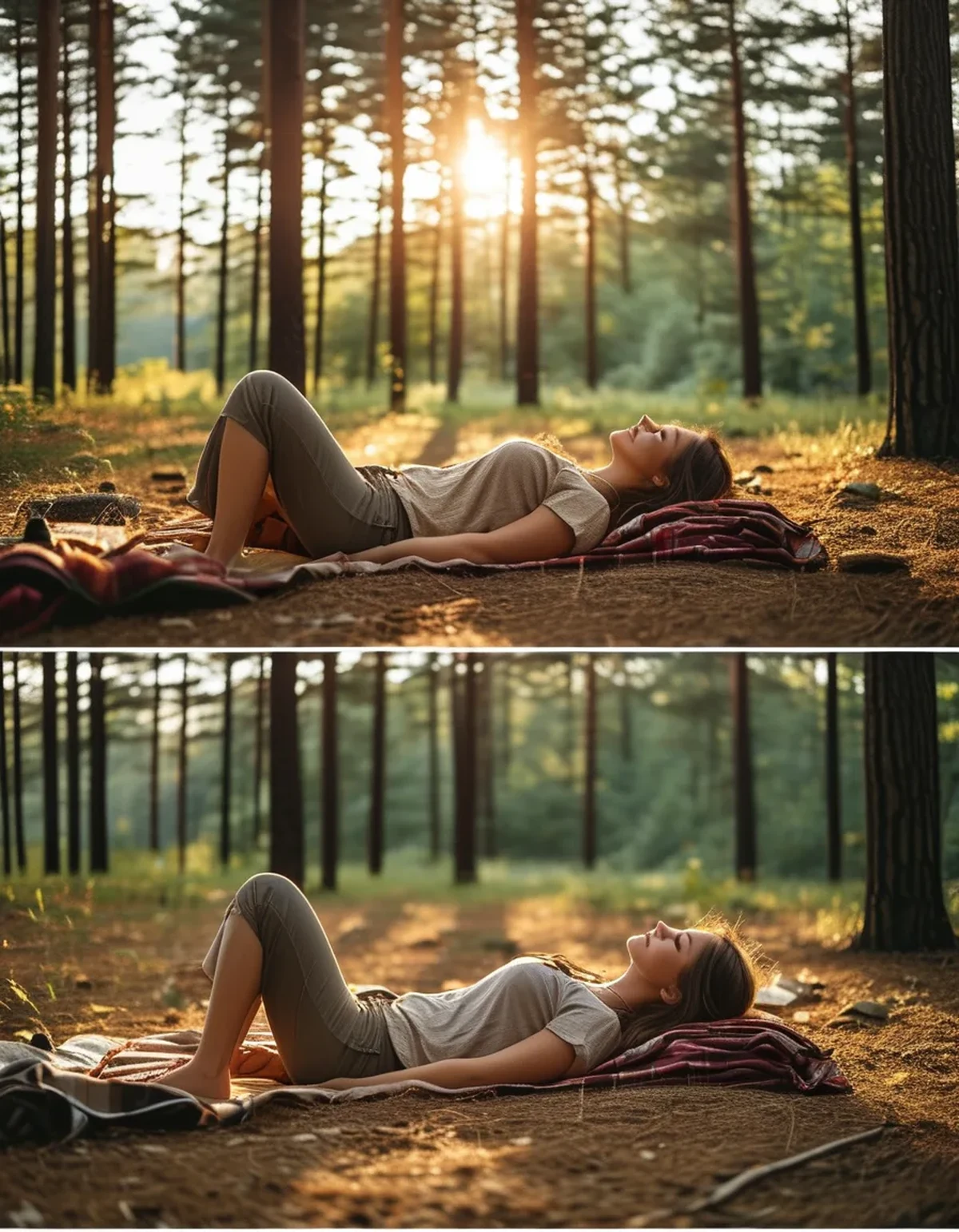
5. A Cooking Area Separate From Sleeping Space
Cooking smells and food residue near your tent attract wildlife and insects overnight, and keeping a clear physical separation between where you cook and where you sleep meaningfully reduces both the smell and the risk of unwanted nighttime visitors.
6. Food Storage Placement Decided Early
Decide on your food storage location (bear canister, hung bag, or vehicle) before dark, not after you’re already tired and it’s hard to see. Scrambling to sort this out at night is both less safe and more stressful than handling it in daylight.
7. Lighting Placed Before Dark, Not During
Set up your lantern or string lights while there’s still daylight to work by, rather than fumbling with headlamps and batteries once it’s already dark — this small timing shift makes the whole evening feel more organized and less chaotic.
FAQ: Comfortable Campsite Setup, Answered
Does campsite comfort really matter more than gear quality?
Good gear helps, but a poorly chosen or poorly organized site can undermine even the best sleeping bag or tent, making setup choices at least as important.
How much extra time does doing all seven of these actually take?
Most of these add only 10-15 minutes total to setup if done deliberately, which is a small tradeoff for a noticeably more comfortable night.
Which one matters most if I only have time for a few?
Site selection and ground prep have the biggest individual impact on sleep quality, so prioritize those two if time is limited.
TL;DR:
- Site selection and ground prep matter more to comfort than gear price
- Separate zones for wet gear, cooking, and sleeping prevent the most common overnight annoyances
- Deciding on food storage and lighting before dark avoids scrambling later
- These seven choices add about 10-15 minutes to setup but change the whole trip
Next trip, spend the extra fifteen minutes on setup before relaxing — it pays off the moment the sun goes down.
Keep Reading
This article is for general informational and styling purposes only. Fit, sizing, and product availability may vary.