7 Mistakes That Make Breaking Camp Take Twice as Long
Quick Answer: Breaking camp usually takes 90 minutes when it should take 40, and the cause is almost always sequencing rather than speed. Dry the tent first, pack the kitchen last, and never pack anything wet into a stuff sack you will not open for a week. Fix the order and you cut the time roughly in half without moving any faster.
Setup gets rehearsed in your head on the drive out. Pack-up gets improvised at 8 a.m. with cold hands and a coffee you have not finished. That asymmetry is the whole problem.
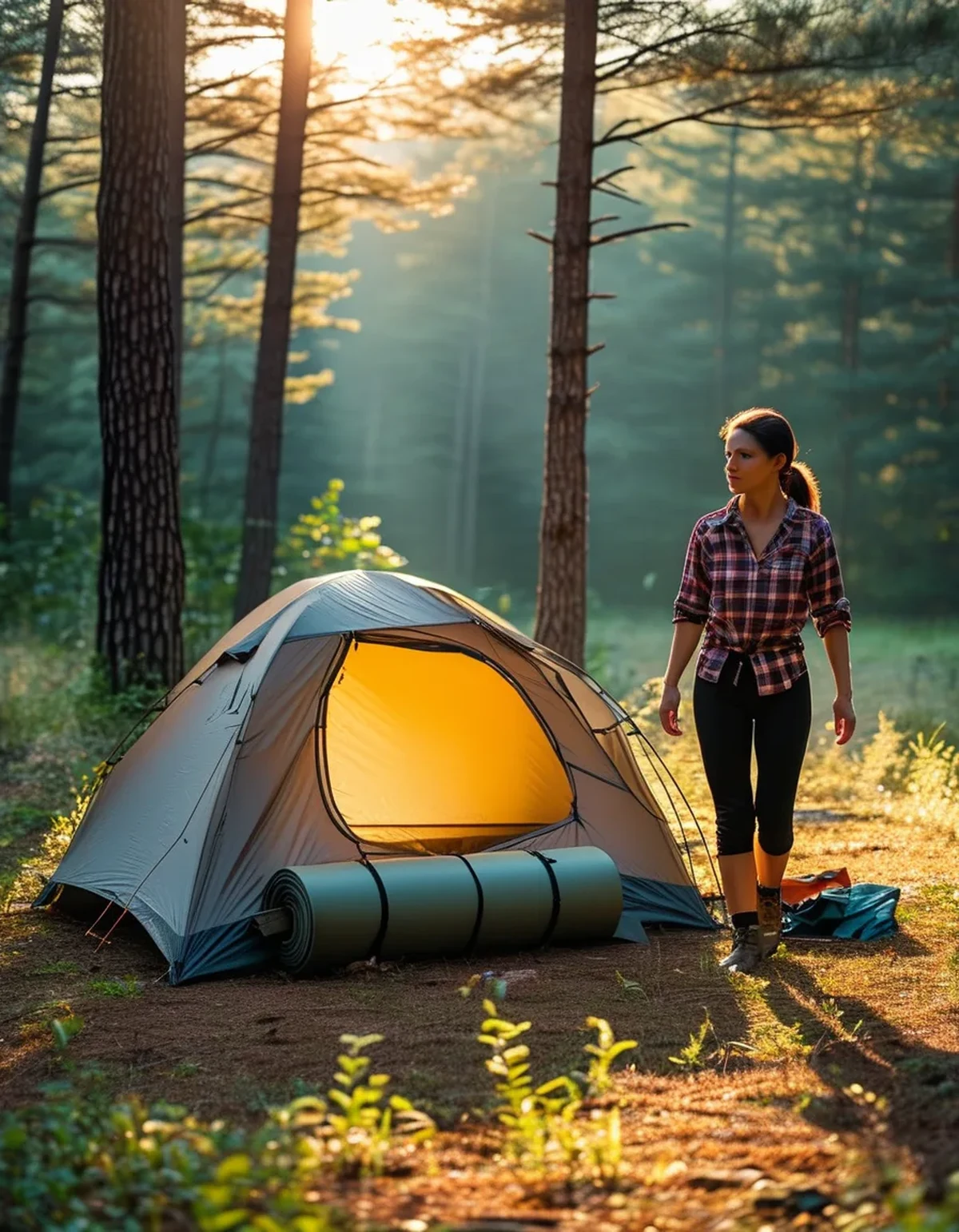
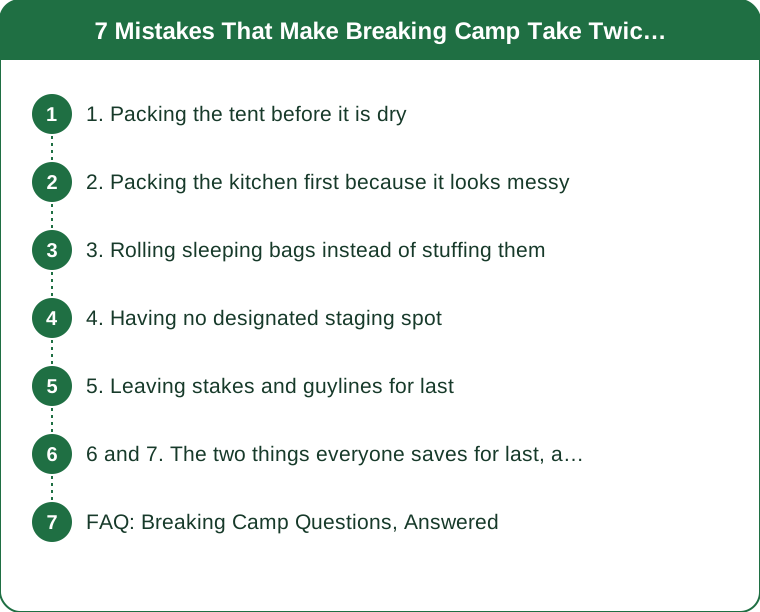
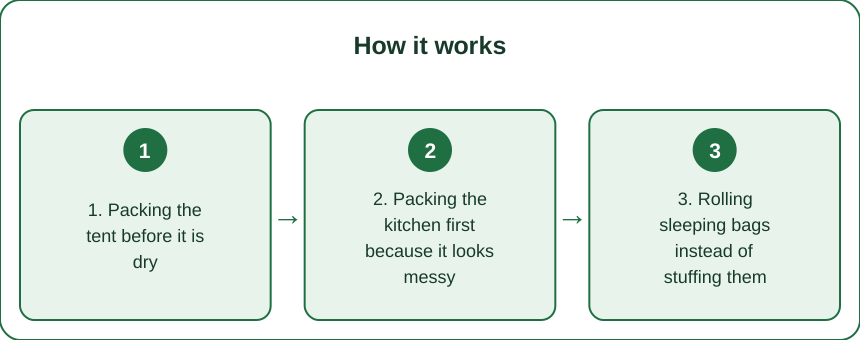
1. Packing the tent before it is dry
This is the single biggest time sink and the most expensive mistake.
Overnight condensation is unavoidable - warm bodies inside a cold shell produce moisture, and on a clear late-summer night with a temperature drop, the inside of a rainfly can be genuinely wet even with zero rain.
Pack it wet and one of two things happens. Either you unpack it in your hallway that evening to dry, which nobody actually does, or it sits in a stuff sack and grows mildew that permanently ruins the coating within about 48 hours.
The fix is sequencing. The moment you get up, unstake the fly and drape it over a picnic table or a line in the sun. Then make coffee. Then eat. Then pack everything else. By the time you get back to the tent it is dry, and you spent zero extra minutes because the drying happened in parallel with breakfast.
If it truly will not dry - persistent rain, heavy fog - pack it in a separate bag you will actually see when you get home, not buried at the bottom of the trunk.
2. Packing the kitchen first because it looks messy
The kitchen looks like the biggest job, so people attack it first. Then they spend the next hour without a stove, a mug, or a knife.
The kitchen is the last thing you pack, for the same reason it is the first thing you unpack. You want coffee during the process and you want the ability to make one more one if things run long.
A workable order: tent fly out to dry, sleeping bags and pads, personal gear and clothing, tent body and poles, chairs and shelter, then kitchen, then the final sweep.
One exception - pack away everything with a smell the night before, not in the morning. Food, scented toiletries, and trash go into the car or a bear box overnight anyway in most places, which conveniently means they are already packed.
3. Rolling sleeping bags instead of stuffing them
Rolling looks tidier and takes about three times as long. It is also worse for the bag.
Rolling creates the same fold lines every time, and repeated compression along identical lines breaks down insulation loft at those points. Stuffing distributes the compression randomly, which is why almost every bag manufacturer packs their bags with a stuff sack rather than straps.
Stuff from the foot end, push it in fistful by fistful, and let the air escape as you go. Thirty seconds instead of three minutes, per bag, per person.
Same logic applies to down jackets. The tidy roll is a habit from luggage, not from gear.
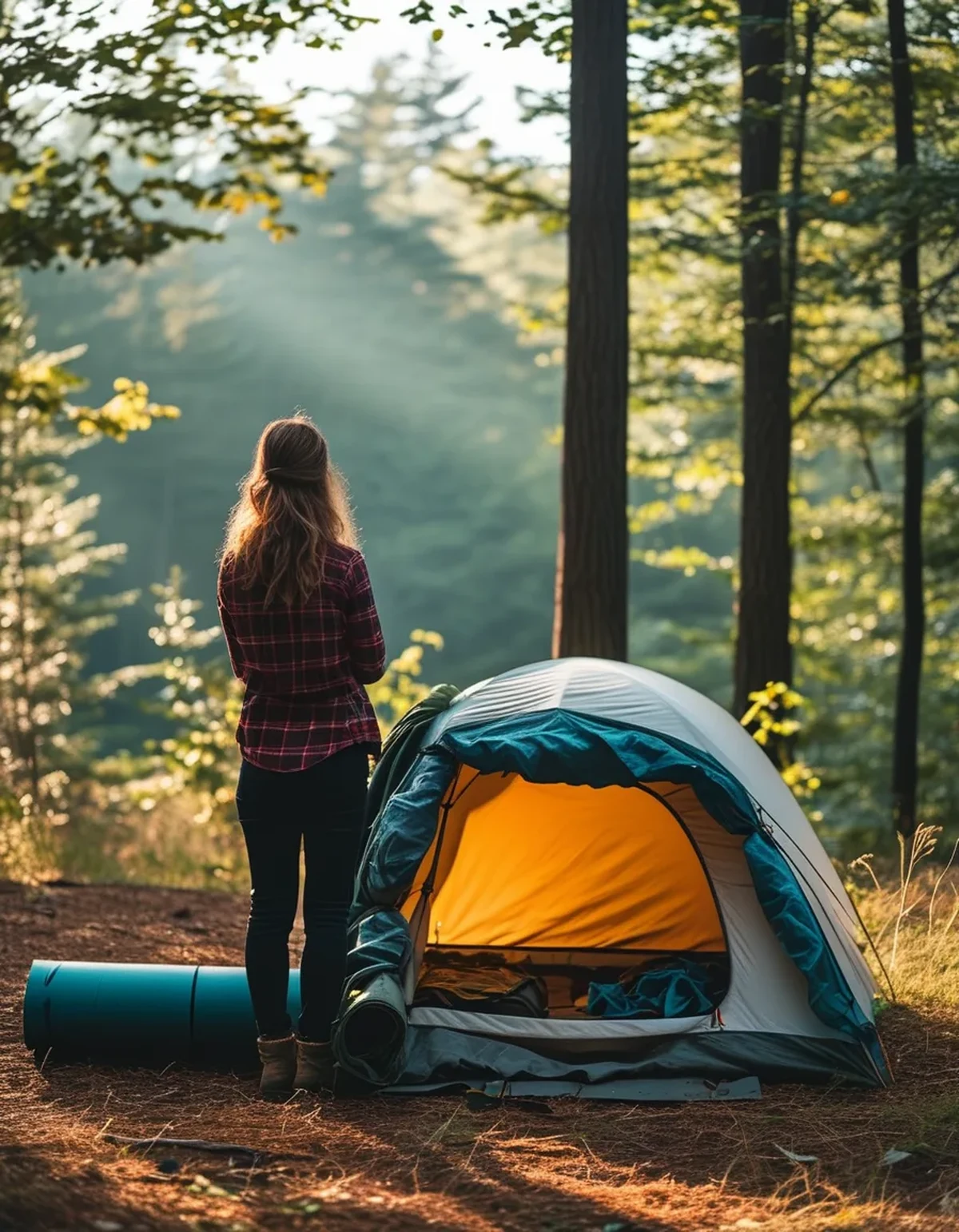
4. Having no designated staging spot
Without a staging area, packing turns into dozens of individual trips to the car, each of which requires deciding where the thing goes.
Pick one spot - the picnic table, a tarp, the open tailgate - and move everything there first, grouped roughly by where it lives in the car. Then load in one or two trips.
This sounds trivial and it typically saves 15 to 20 minutes on a two-person site. The savings come from removing decisions, not steps. Every trip to the car with a single item involves a small choice about where it goes, and those choices are what actually consume the morning.
5. Leaving stakes and guylines for last
Stakes are the thing people lose, and lost stakes cost more than time - they cost the next trip.
Pull stakes as a single dedicated task, count them out loud against the number you know you brought, and put them straight in their bag before touching anything else. Guylines get wound and clipped at the same moment.
The common failure is pulling stakes as you go, setting them on the ground, and then folding the tent over them. They end up in the grass, you find out three weeks later at a different campsite, and you spend the evening improvising with rocks.
A small upgrade worth making: swap the stock silver stakes for anodized colored ones. They cost very little and they are dramatically easier to spot in leaf litter.
6 and 7. The two things everyone saves for last, and should not
6. Doing the trash and sweep at the very end
By the end you are tired, the car is packed, and the sweep becomes a 20-second glance. That is how a headlamp, a tent stake, and someone’s water bottle get left behind.
Do the sweep in two passes instead. First pass while the site is still half set up - collect obvious trash, micro-litter, twist ties, food scraps. Second pass after the car is loaded, walking the full perimeter of the site, including behind the tent footprint and around the fire ring.
The second pass is when you find the things that were under gear. Give it a full 3 minutes and actually look at the ground rather than scanning at eye level. Check the fire ring specifically - foil, wrappers, and partially burned food do not decompose and they attract wildlife into the site for whoever camps there next.
7. Not accounting for the temperature swing
Mid-August mornings can start at 50F and hit 80F by 10 a.m. People pack for the temperature they woke up in, then break camp sweating in a fleece with their day clothes already buried.
Set aside what you will actually wear driving home before you pack anything - it takes 60 seconds and prevents the moment where you are digging through a packed duffel in a parking lot.
The same logic applies to water. Fill your driving bottle before the water container gets emptied and packed. And keep one small towel out until the very end, because something will be wet and it will not be the thing you expected.
This is also the season where dew is heaviest - a clear cool night after a warm humid day produces the most condensation of the year. Budget the extra drying time in August specifically.
FAQ: Breaking Camp Questions, Answered
How long should packing up actually take?
For a two-person car camping site with a standard tent, 40 to 50 minutes is realistic once the sequence is set. Backpacking setups run 20 to 30 minutes because there is simply less gear.
What if the tent is still wet when I have to leave?
Pack the fly separately from the body in its own bag, and hang both within a few hours of getting home. Mildew starts fast - within about 48 hours in a warm car - and the coating damage is permanent.
Is it worth packing the night before?
Partially. Anything you will not use - extra clothing, gear you did not need, non-food items - can go in the car after dinner. It shortens the morning considerably without leaving you short of anything.
TL;DR:
- Dry the tent fly first so it happens in parallel with breakfast, not after everything else.
- Kitchen packs last, always. You want coffee during the process.
- Stuff sleeping bags, do not roll them - faster and better for the insulation.
- Use one staging spot and load the car in two trips instead of twenty.
- Pull and count stakes as a single dedicated task before folding anything.
- Do two sweeps, one mid-pack and one after loading, and check the fire ring.
- Set aside your driving clothes and water before they get buried.
None of this requires moving faster. It just requires deciding the order before you are standing in a wet field trying to figure it out.
Keep Reading
This article is for general informational and styling purposes only. Fit, sizing, and product availability may vary.