7 Mistakes That Make a Crowded Campground Miserable
Quick Answer: In a packed campground the problems are social and logistical, not technical. Pick a site away from the toilet block and the main loop road, arrive before 4pm, orient your tent door away from your nearest neighbour, bring earplugs and a proper eye mask, and do your cooking and washing up before the queues form at 7pm. Almost every bad crowded-campground weekend traces back to arriving late.
The gear is fine. The weather is fine. And you are lying awake at 11:40pm listening to a group three metres away discuss their opinions loudly, wondering why this trip feels nothing like the last one. Crowding changes what camping requires from you, and most of the adjustments happen before you leave the house.

Why does a crowded site break plans that normally work?
Because the resources you take for granted become contested, and the buffer that absorbs mistakes disappears.
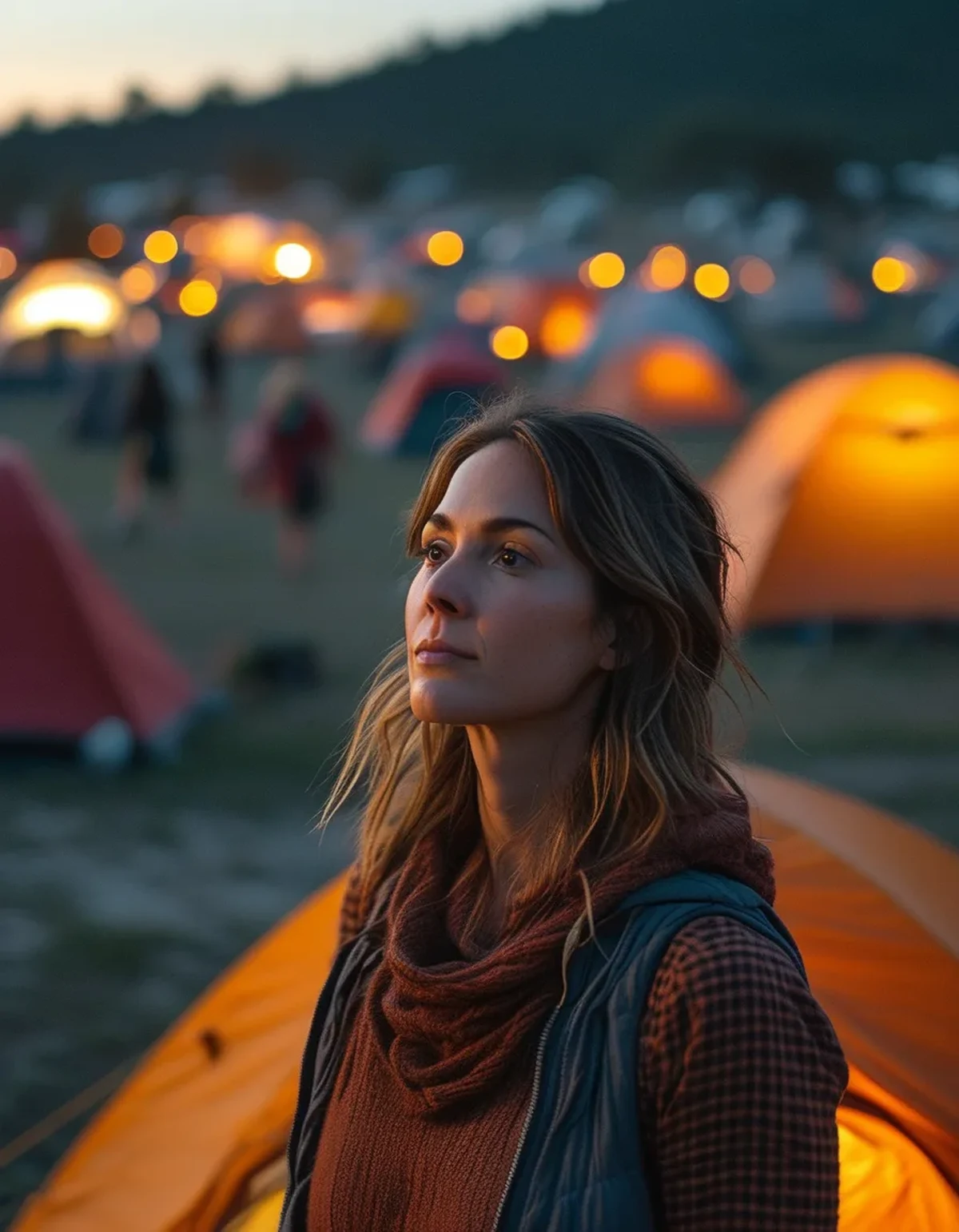
On a quiet site, arriving at 6pm is fine - you take your pick of pitches, the water tap is free, and nobody is within earshot. On a full site, that same 6pm arrival means you get the pitch nobody wanted, next to the bins or the toilet block, and you pitch in fading light while queuing behind eleven people for water.
The second change is acoustic. Sound falls off with distance, and on a packed site the distances are short. A conversation at normal volume ten metres away is genuinely audible inside a tent, because tent fabric provides almost no sound insulation at all - it stops wind, not noise.
The third is timing. Everyone eats at the same time, everyone showers at the same time, everyone leaves at the same time. The single most useful skill on a busy site is doing everything ninety minutes off the peak, and it costs nothing.
What follows is the seven decisions that matter, roughly in the order you will face them.
Mistakes 1 to 3: Before you arrive
1. Booking without looking at the site map
Most campground booking systems show a numbered map, and most people click the first available pitch. The pitches to avoid are near the toilet block - constant foot traffic and doors all night - near the main loop road, near the play area, and at the entrance to any walking route through the site. The pitches to want are on the outside edge of a loop, backing onto trees or a boundary, ideally with a hedge on at least one side. Two minutes with the map is worth more than any piece of gear you could buy.
2. Arriving after 4pm
On a busy weekend, arriving late means the leftover pitch, pitching in poor light, and doing your first water run during the queue. Arriving between 1pm and 4pm gives you daylight, choice where pitches are unallocated, an empty tap, and time to sit down before dinner. This is the highest-value single change on the entire list.
3. Packing for weather but not for people
The kit that transforms a crowded site is unglamorous: proper foam earplugs rather than the flimsy ones, a contoured eye mask that does not press on your eyes, and a head torch with a red mode so you are not blinding your neighbours at midnight. Add a small doormat or offcut of foam for the tent door to keep grit out, because on a busy site the ground around you gets walked on far more.
Mistakes 4 to 5: Setting up
4. Pitching the door toward your nearest neighbour
A tent door is a window into your whole living space, and two doors facing each other three metres apart makes both parties uncomfortable all weekend. Orient the door away from the closest tent, ideally toward a view, a hedge, or the quiet direction. If pitches are tight and you have no choice, angle it 45 degrees so you are not looking directly in. Also point the door away from the prevailing wind if you want any chance of cooking outside.
5. Spreading out into the gap
On a quiet site you can put the chairs, the table, the washing line, and the shoes wherever you like. On a full site, the space between pitches is shared, and a group that expands into it creates friction that lasts the whole weekend. Keep the footprint tight: gear inside the porch or under the awning overnight, chairs pulled in when not in use, and nothing on the boundary line. It also means you can find everything, which matters more than it sounds when it starts raining.
And on the arrival conversation - say hello to the neighbours within the first hour. It is not just manners. People are dramatically quieter and more considerate toward someone whose name they know, and a thirty-second exchange when you arrive prevents most of the friction that would otherwise build up in silence.
Mistakes 6 to 7: Running the day
6. Cooking and washing up at peak time
Between roughly 6:30pm and 8pm, every tap, every washing-up sink, and every bin on a busy site is contested. Eat at 5:30pm or 8:30pm and the whole problem evaporates. The same applies to showers - 7am and 8pm are the crush, while 6am and 10am are usually empty. Fill your water containers when you arrive and again first thing in the morning, so you are never queuing at the tap while your food goes cold.
7. Assuming quiet hours mean quiet
Most campgrounds have quiet hours from around 10 or 11pm. They are enforced unevenly and they do not stop tent zips, car doors, children, or the group that genuinely believes they are whispering. The realistic approach is to make yourself independent of other people’s behaviour: earplugs in as a matter of routine rather than as a response, eye mask on, and a sleep setup you actually find comfortable - a proper insulated mat rather than the thinnest one that fits in the bag. Being warm and comfortable makes ambient noise far easier to sleep through than being cold and irritated does.
If noise is genuinely beyond reasonable and persistent, tell the site warden rather than the group. That is what the warden is for, and it keeps you out of a dispute with people you have to live beside for another two days.
Quick checklist and FAQ
The two-minute version:
- Book from the site map, not the first available number
- Arrive between 1pm and 4pm
- Earplugs, eye mask, red-mode head torch
- Door away from the nearest tent
- Keep your footprint inside your pitch
- Say hello within the first hour
- Eat and shower ninety minutes off peak
What is the best pitch on a busy campground?
Outside edge of a loop, backing onto a hedge, treeline, or boundary, well away from the toilet block, bins, play area, and any path people use to cut across the site.
How do you sleep at a noisy campsite?
Assume noise rather than hoping for quiet. Foam earplugs, a contoured eye mask, and a genuinely warm, comfortable sleep system. Comfort raises your tolerance for noise more than anything else does.
What time should you arrive at a campsite in peak season?
Between 1pm and 4pm. It gives you pitch choice where available, daylight to set up, empty taps, and time to settle before the evening rush.
TL;DR:
- Choose the pitch from the map - away from toilets, bins, roads, and cut-through paths.
- Arrive by 4pm; almost every bad crowded weekend starts with a late arrival.
- Point the door away from your neighbour and keep your gear inside your own pitch.
- Say hello early, eat and shower off-peak, and treat earplugs as standard kit rather than a last resort.
A full campground is not a worse campground. It just asks you to make seven decisions in advance instead of improvising, and every one of them takes under five minutes.
Keep Reading
This article is for general informational and styling purposes only. Fit, sizing, and product availability may vary.