7 Mistakes People Make on Their First Cold Night Camping
Quick Answer: The main reasons people get cold overnight are insulating above rather than below, going to bed already cold, wearing too much inside the bag, and ignoring ventilation - which lets condensation soak the insulation. Fix the sleeping pad first: an insulated pad matters more than a warmer bag on cold ground, because the ground pulls heat away far faster than the air does.
Summer camping forgives almost everything. The first 40-degree night forgives nothing, which is why the same people who slept fine in July spend September awake at 3am.
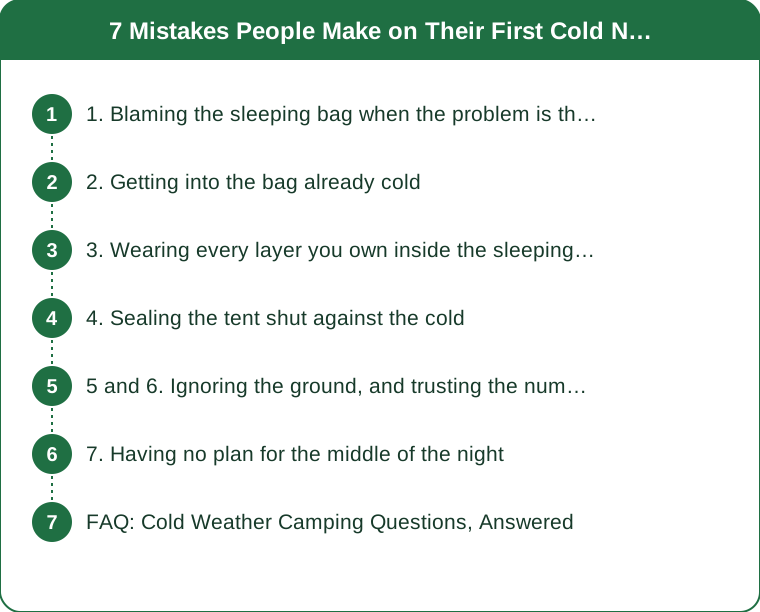
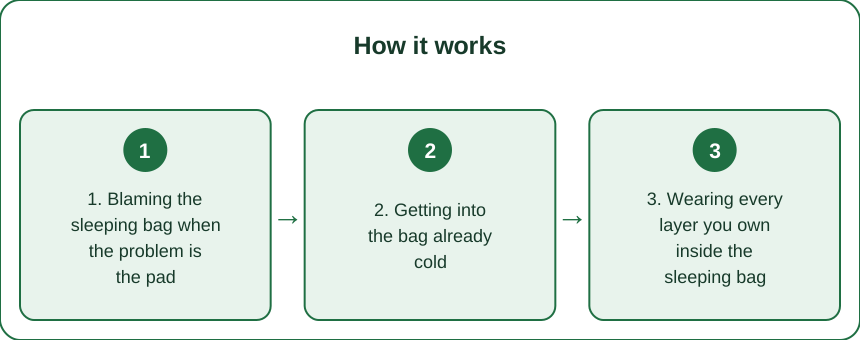
1. Blaming the sleeping bag when the problem is the pad
This is the single most common cold-night error, and it costs people money on the wrong equipment.
The physics. Air is a poor conductor of heat; ground is a good one. Lying on cold ground, your body loses heat by conduction far faster than it loses it to the surrounding air - and the insulation in a sleeping bag is compressed flat underneath you, so it provides almost nothing where you need it most.
What that means practically: a warm bag on a thin foam pad will be cold. A moderate bag on a properly insulated pad will be warm. The pad is the higher-leverage purchase and almost nobody starts there.
The number to look for is R-value, which measures resistance to heat flow through the pad. Rough guidance:
- R-value 1 to 2: summer only
- R-value 3 to 4: three-season, comfortable into genuinely cool autumn nights
- R-value 5 and above: cold weather and winter
R-values stack. A cheap closed-cell foam pad under your existing inflatable adds roughly its own R-value to the total, costs very little, weighs almost nothing for car camping, and is the single cheapest fix available. It also protects the inflatable from punctures.
A common shortcut that fails: extra blankets underneath. They compress and lose most of their loft under body weight, so the insulation value is far lower than the same blankets on top. Foam does not compress, which is the entire point.
2. Getting into the bag already cold
A sleeping bag does not produce heat. It only retains what you bring into it.
If you climb in cold, you may stay cold all night, because your body has to generate enough surplus heat to warm the bag while you are asleep, which is when your metabolic rate is at its lowest. This is why some people report being cold in a bag rated well below the actual temperature.
What to do in the twenty minutes before bed:
- Move. Fifty jumping jacks, a brisk walk to the toilet block, or a few minutes of anything that raises your temperature. Stop short of sweating
- Eat something. Digestion generates heat, and a snack with some fat and protein before bed genuinely helps overnight warmth
- Drink something warm. The effect is partly real and partly psychological, and both count at 10pm in a field
- Change into dry clothes. Anything you have worn all day holds moisture even if it feels dry
- Empty your bladder. Your body spends energy keeping urine at body temperature, and beyond that, nobody sleeps well while putting off a 2am trip outside
The hot water bottle trick is the best one on this list. A rigid water bottle filled with hot water, sealed properly, and put in the foot of the bag twenty minutes before you get in warms the whole bag and stays warm for hours. Check the bottle is rated for boiling water first, and put it in a sock if the plastic is thin.
3. Wearing every layer you own inside the sleeping bag
Counterintuitive, and it is the mistake with the biggest gap between what feels right and what works.
A sleeping bag works by trapping a layer of warm air around you. Stuffing it full of bulky clothing compresses the bag insulation and reduces the air space, which lowers the effective warmth. Wearing your down jacket inside a snug bag can genuinely make you colder.
What to wear instead:
- A clean, dry base layer - merino or synthetic, not cotton
- Dry socks, changed specifically for sleeping and never worn during the day
- A hat. Meaningful heat is lost from an uncovered head, and it is the easiest thing to add
- A light fleece or extra layer only if the bag is loose enough to keep its loft
What not to wear:
- Anything cotton, including the jeans and hoodie people default to. Cotton holds moisture against the skin and loses essentially all its insulating value when damp
- Tight clothing anywhere, which restricts circulation to hands and feet - the two places you will notice cold first
- Anything you wore all day, which carries sweat you cannot feel
If you are still cold in a correct base layer, the answer is a bag liner rather than more clothing. A fleece or silk liner adds real warmth without compressing the bag, packs small, and doubles as a summer bag on its own.
4. Sealing the tent shut against the cold
The instinct is right and the result is wet insulation.
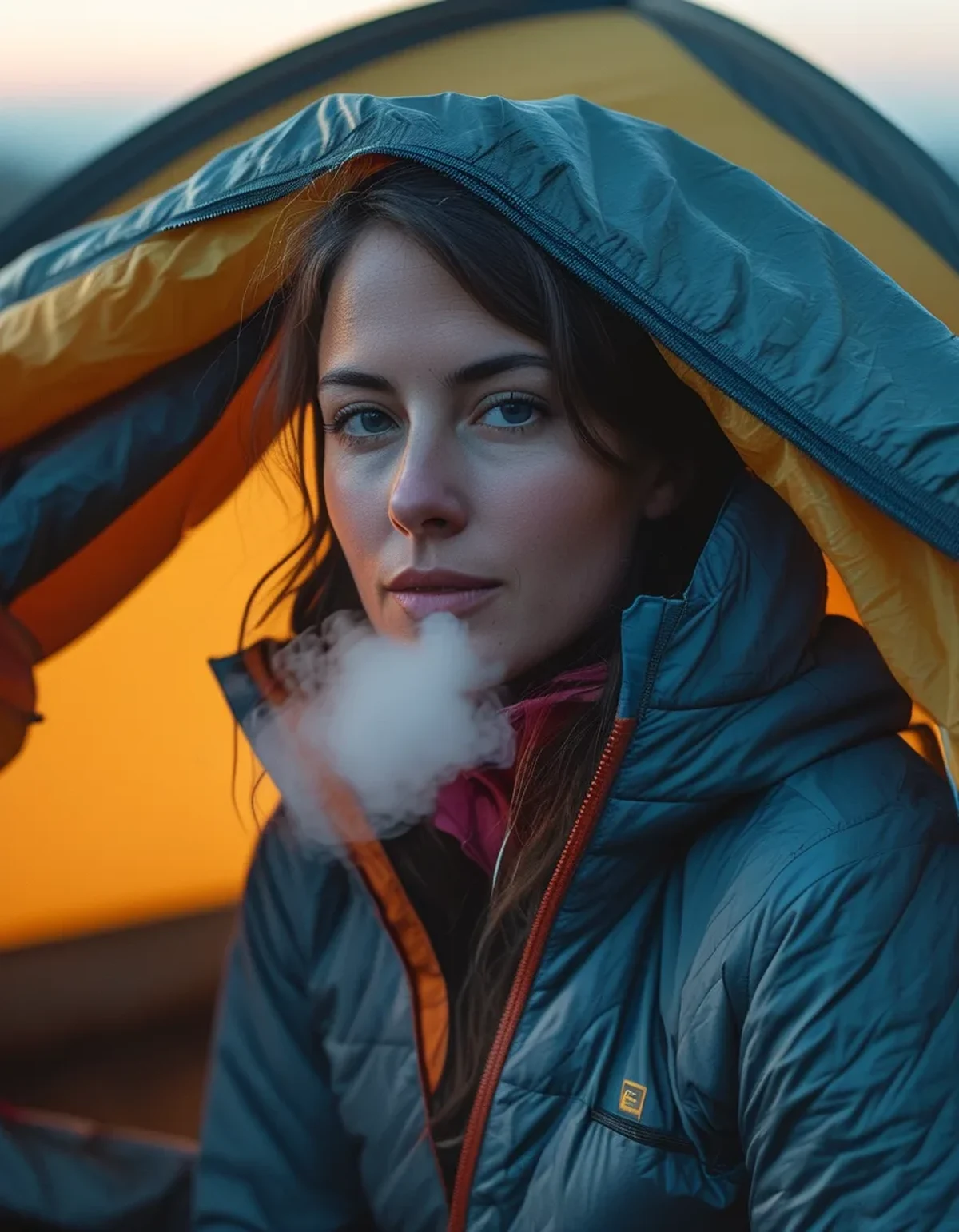
Where the moisture comes from. A sleeping person releases a significant amount of water vapour overnight through breathing and skin. In a sealed tent, that vapour hits the cold inner surface and condenses. By morning, the inside of the fly is wet, the condensation has dripped onto your bag, and damp insulation loses much of its warmth.
What to do instead:
- Leave the vents open, both high and low if the tent has them. The airflow carries vapour out
- Crack the door slightly if there are no vents. A small opening at the top costs you very little warmth
- Pitch the fly properly taut so the inner and fly are not touching - contact points are where condensation transfers straight through
- Keep wet gear in the vestibule, not inside. Wet boots and jackets release moisture all night
- Do not cook in the tent, which is both a condensation problem and a genuine carbon monoxide risk
On single-wall and cheap tents: condensation is harder to avoid and worth planning around. Wipe the inner surface with a cloth before bed and again if you wake, and keep your bag off the walls.
A useful morning habit: if the bag is damp, drape it over the tent or a line in the sun for twenty minutes while you have breakfast. Two consecutive nights in a bag that never dried is how a cold night becomes a cold trip.
5 and 6. Ignoring the ground, and trusting the number on the bag
Site choice affects overnight temperature more than most people realise, and it costs nothing.
Cold air sinks. A valley bottom, a hollow, or a dip in a field can be several degrees colder overnight than ground twenty metres higher. Pitching on a slight rise is free warmth.
Water makes it worse. Next to a river, a lake, or in a damp meadow, you get both colder air and more moisture. Beautiful in the evening, noticeably colder at 4am.
What to look for:
- Slightly elevated ground, out of the lowest point
- Natural windbreaks - hedges, walls, tree lines - on the windward side
- Ground that is dry to the touch, not a low green patch that stayed lush in a dry spell
- Morning sun exposure, which makes packing up substantially more pleasant
What to avoid:
- Directly under trees in a frost, where cold drips can fall, though tree cover does moderate radiant heat loss on clear nights
- Exposed ridges and open field centres, where wind strips heat
- Anywhere that shows signs of being a water channel
On clear nights specifically: radiant heat loss to a clear sky makes a cloudless night noticeably colder than a cloudy one at the same forecast temperature. If the forecast is clear and still, plan for colder than the number.
6. Trusting the temperature rating on the bag
The number on the label is not the temperature at which you will be comfortable, and the gap is large.
How ratings work. Standardised sleeping bag ratings generally include a comfort rating and a lower limit. The comfort rating is the one to use. The lower limit is roughly the point at which a person is curled up and surviving, not sleeping. Many bags are marketed on the lower limit because it is a more impressive number.
Rules of thumb worth applying:
- Assume the usable comfortable temperature is several degrees warmer than the headline number
- Women generally sleep colder than the standard test assumes, which is why women-specific bags exist and are cut and filled differently
- Ratings assume you are on an adequately insulated pad, in a base layer, in a tent, and reasonably fed. Any of those missing shifts the number
Down versus synthetic, briefly: down is warmer for its weight and packs smaller, and it loses its insulating power when wet and is slow to dry. Synthetic is bulkier and heavier and retains some warmth when damp. For damp autumn camping in an unfamiliar tent, synthetic is a reasonable choice and often the cheaper one.
The practical approach: for a first cold trip, take a bag rated well below the forecast, plus a liner. Being too warm is trivially solved by opening a zip. Being too cold at 3am is not solvable at all.
7. Having no plan for the middle of the night
The people who have a bad first cold night are almost always the ones who have nothing to reach for at 3am.
Keep within arm’s reach, inside the tent:
- A headtorch, positioned where you can find it in the dark without sitting up
- A spare dry pair of socks and a hat, so adding warmth does not mean leaving the bag
- Water, which stops you waking dehydrated. Insulate it or keep it inside the bag in genuinely freezing conditions
- A snack. Something with fat and calories. Eating at 3am when you wake cold works surprisingly well
- Your shoes or camp slippers, inside the tent so they are not full of dew or frost
Keep inside your sleeping bag on cold nights: phone battery, spare batteries, and anything with a lithium cell. Cold drains batteries quickly, and a phone that will not turn on is a genuine safety issue rather than an inconvenience.
If you wake up cold, do something rather than waiting it out. Eat the snack, add the hat, do 30 seconds of tensing and releasing your muscles inside the bag to generate heat, and refill the hot water bottle if you have a stove and the energy. Lying still hoping to warm up rarely works, because you have already lost the heat you needed.
On when to stop and go home: shivering that will not stop, confusion, slurred speech, or clumsiness are signs of genuine hypothermia and are a reason to warm up actively and seriously - get into a car with the heater on, or drive out. That is uncommon on a normal autumn campsite with adequate kit, and it is worth knowing where the line is. This is general information rather than medical advice.
The reassuring part: almost every cold-night problem is solved with an insulated pad, a dry base layer, a hot water bottle, and an open vent. That list costs very little and turns a miserable night into an ordinary one.
FAQ: Cold Weather Camping Questions, Answered
What matters more, the sleeping bag or the pad?
The pad, on cold ground. The bag insulation compresses flat underneath you and provides almost nothing, so the pad’s R-value is doing that work.
Should I wear my coat inside my sleeping bag?
Usually not. Bulky clothing compresses the bag’s insulation and reduces the trapped air that keeps you warm. A dry base layer, socks, and a hat is the better combination, plus a liner if you need more.
Why is my tent wet inside in the morning?
Condensation from your own breathing, made worse by sealing the tent shut. Keep the vents open and pitch the fly taut so it is not touching the inner.
How cold is too cold for a normal three-season setup?
With a three to four R-value pad, a bag rated a few degrees below the forecast, and a dry base layer, most people are comfortable into the low 40s Fahrenheit. Below freezing needs a genuine winter setup.
Does a hot water bottle really work?
Yes, and it is the best value item on the list. Filled and placed in the foot of the bag twenty minutes before you get in, it warms the whole bag and holds heat for hours.
TL;DR:
- Fix the pad before the bag - the ground pulls heat away far faster than the air, and bag insulation compresses to nothing underneath you
- Get into the bag warm: move, eat, drink something hot, and change into dry clothes first
- Do not wear everything you own inside the bag; it compresses the loft and can make you colder
- Leave the vents open, or your own breath soaks the insulation by morning
- Pitch on slightly higher ground, use the comfort rating rather than the limit rating, and keep a snack, hat and torch within reach
An insulated pad, dry socks, a hat and a hot water bottle turn the first cold night from memorable into ordinary.
Keep Reading
This article is for general informational and styling purposes only. Fit, sizing, and product availability may vary.