7 Late Summer Camping Mistakes That Ruin a Suddenly Cool Night
Quick Answer: Late summer camping catches people out because the daytime temperature says summer and the overnight temperature says autumn - a 25-30F drop between afternoon and pre-dawn is common in late August. The seven most costly mistakes are packing for the daytime high, ignoring ground insulation, sealing the tent against condensation, going to bed cold, underestimating dew, packing no dry backup layer, and forgetting how much earlier it gets dark.
It was 84F when you set up. At 4am it’s 52F, everything is damp, and you’re wearing every item you brought.
This specific trip - the warm-day, cold-night late summer one - goes wrong in seven predictable ways. Here they are.
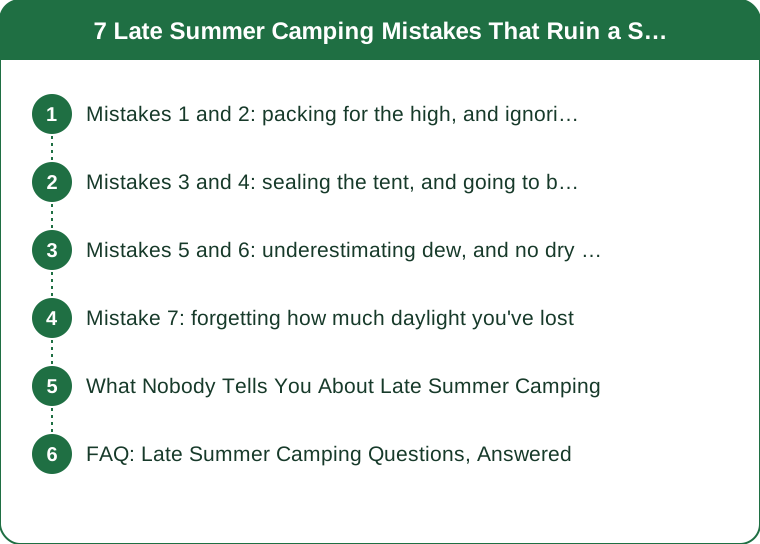
Mistakes 1 and 2: packing for the high, and ignoring the ground
1. Packing for the daytime temperature
The overnight low in late August is routinely 25-30F below the afternoon high, and in dry inland or higher-elevation areas the gap is wider still. A pleasant 84F afternoon becomes a genuinely cold 52F at 4am.
Check the overnight low, not the daily high, and then subtract a few degrees - valley floors and clearings collect cold air, so the campsite is often colder than the forecast for the nearest town.
Pack for the low. A 40F-rated sleeping bag in late summer is not overkill, and a summer-weight bag plus a liner is the flexible version. Bag temperature ratings are survival ratings, not comfort ratings - most people are comfortable roughly 10-15F above the stated number.
2. Ignoring ground insulation
This is the most under-appreciated of the seven. The ground conducts heat away from your body far faster than air does, and in late summer the ground is still releasing stored heat early in the night, then goes cold.
A sleeping pad is insulation, not padding. Its R-value measures resistance to heat loss. An R-value under 2 is summer-only; 2-4 covers three seasons. A thick, comfortable air mattress with no insulating fill can be colder than a thin foam pad, which is genuinely counter-intuitive and catches a lot of people.
The cheapest fix: a closed-cell foam pad under whatever you already have. It adds roughly R-2 for very little money or weight, and it works even if your air pad deflates.
Mistakes 3 and 4: sealing the tent, and going to bed cold
3. Closing every vent to stay warm
It backfires completely. A person exhales a significant amount of water vapour overnight. In a sealed tent that vapour condenses on the inner surface and rains back down on you - and damp insulation stops insulating.
Ventilation is warmth in a tent, which sounds wrong and isn’t. Keep vents open, leave a gap at the top of the door, and pitch the fly with proper airflow underneath.
Late summer is peak condensation season because warm humid days meet cold clear nights - the largest possible temperature swing across the tent fabric. Pitching away from water and out of low hollows helps significantly.
4. Getting into the bag already cold
A sleeping bag doesn’t produce heat. It traps the heat you produce. Getting in cold means staying cold, sometimes for hours.
Warm up before you get in:
- 20 jumping jacks or a brisk 5-minute walk immediately before bed
- A hot drink 15 minutes prior
- A hot water bottle in the bag for 10 minutes before you get in - a hard-sided drink bottle filled with hot water works, wrapped in a sock
- Change into dry sleeping clothes. Whatever you wore all day holds moisture even if it feels dry
Never sleep in the clothes you hiked in. This single change fixes more cold nights than any gear upgrade.
Mistakes 5 and 6: underestimating dew, and no dry backup
5. Underestimating late summer dew
Clear late summer nights produce heavy dew - often heavy enough that people wake convinced it rained. Anything left out gets soaked: boots, towels, clothing on a line, the camp chair, the firewood.
Everything goes under cover or in the tent vestibule overnight. Boots in particular - putting on soaked boots at 7am sets the tone for the entire day, and they won’t dry in the cool morning air.
Dew affects the tent too. The fly will be wet in the morning even in perfect weather. Pack it separately from dry gear, and dry it at the first opportunity - a wet fly stuffed in a bag for a weekend grows mildew fast.
6. Packing no dry backup layer
The one item that saves a trip: a dry insulating layer that never gets worn during the day. Sealed in a dry bag, worn only in the evening and at night.
Why it matters: everything else you’re wearing has absorbed sweat and dew. Damp insulation loses most of its value, so the layer you’re counting on for the evening is often the one that’s least able to deliver.
Cotton is the specific problem. It holds moisture, stops insulating when wet, and dries very slowly in cool humid air. A cotton hoodie is the classic late summer camping mistake - it feels warm at 7pm and it’s a cold damp weight by 10pm. Fleece, wool, or synthetic insulation instead.
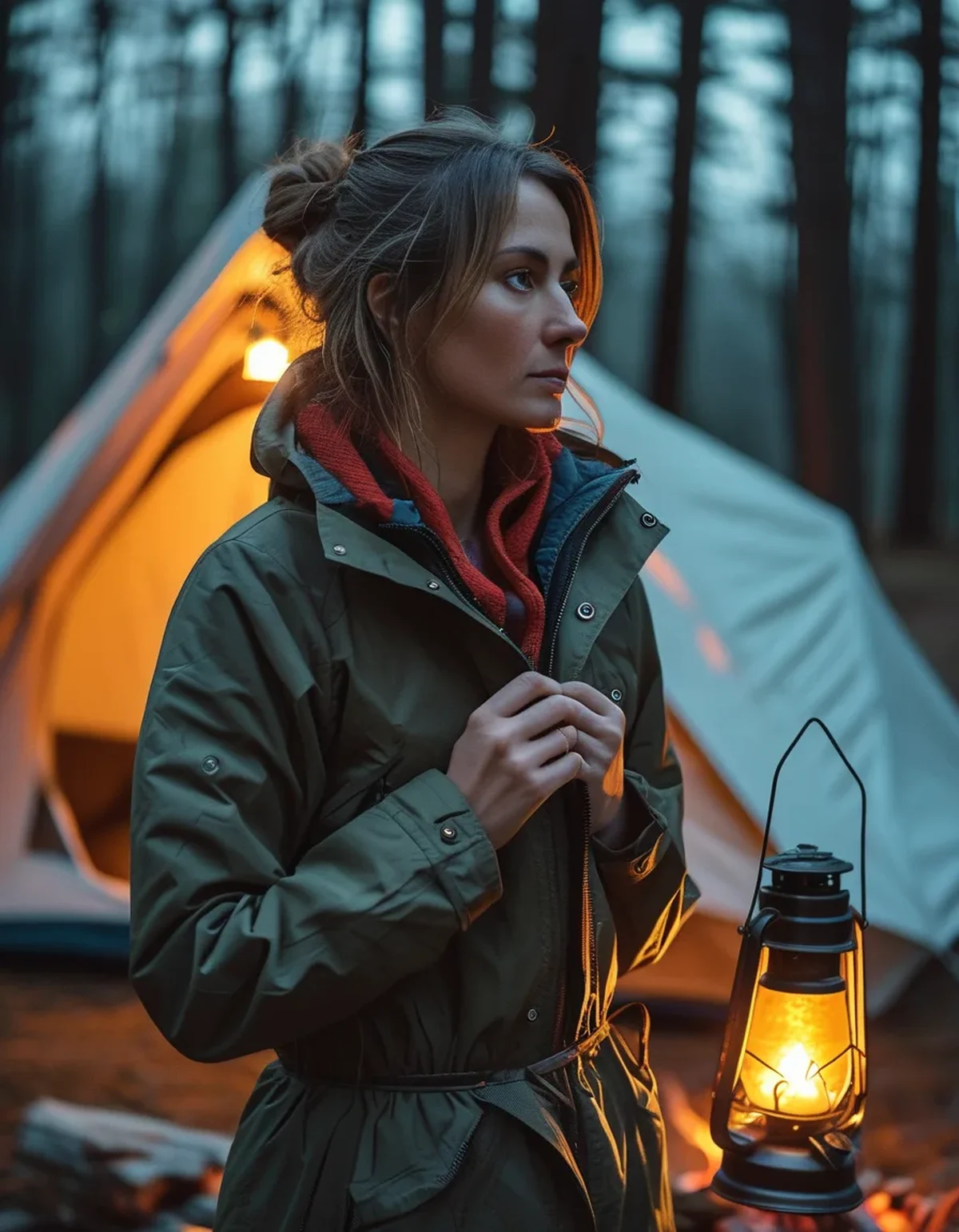
Mistake 7: forgetting how much daylight you’ve lost
By late August, sunset is roughly an hour and a half earlier than at the summer solstice, and it keeps moving fast - several minutes a day through September.
What goes wrong: you arrive at the same time you did on the June trip and find yourself pitching in the dark. Setting up a tent, finding a flat spot, gathering firewood, and cooking all take dramatically longer by headlamp, and the first hour of the trip sets the tone for the rest of it.
Adjust the schedule, not the pace:
- Check actual sunset time for your location and date - not your memory of summer
- Arrive at the site with at least two hours of daylight left
- Pitch first, always. Then fire, then food. In that order
- Gather more firewood than you think you need before dark, because finding it afterwards is miserable
Bring more light than you did in July. A headlamp per person plus one lantern is the practical minimum, and spare batteries matter more in the cold - battery performance drops as temperature falls.
The longer evening is actually the appeal. Late summer gives you real darkness at a civilised hour, which means proper stargazing without staying up until midnight. Plan for the dark rather than being caught by it and the earlier sunset turns from a problem into the best part of the trip.
What Nobody Tells You About Late Summer Camping
Five things learned the hard way.
Elevation matters more than the calendar. Temperature drops roughly 3-5F per 1,000 feet of elevation gain. A campsite 3,000 feet above the town whose forecast you checked can be 15F colder, and late summer trips often go higher precisely because the heat pushed you there.
Wildlife activity shifts in late summer. Animals are actively feeding ahead of autumn, which makes food storage discipline more important than it was in June. Store all food, rubbish, and scented items - including toothpaste and sunscreen - properly, in a locker, canister, or vehicle per local regulations.
Your summer sleeping setup was working on borrowed heat. In July the ground stays warm all night. By late August the ground is measurably colder by 3am, which is why the exact same pad and bag that were fine in July stop being fine.
Insects change rather than disappear. Mosquito activity often drops with cooler nights and other insects become more active in the evening. Don’t leave the repellent at home on the assumption that late summer solves it.
The best campsites open up. Late August into September is genuinely the sweet spot - fewer people, fewer bugs, better light, and sites that were booked out in July become available. Getting the cold night right is what unlocks the best camping season of the year.
FAQ: Late Summer Camping Questions, Answered
What temperature rating sleeping bag do I need for late August?
Check the overnight low, subtract 5F for the site being colder than the forecast, then choose a bag rated about 10-15F below that number - ratings are survival figures rather than comfort figures. A summer bag plus a liner is a flexible alternative.
Is it worth bringing a tent heater?
Generally no, and fuel-burning heaters inside a tent carry a serious carbon monoxide risk. Better insulation, a hot water bottle, and dry sleeping clothes solve the problem without the hazard.
Why is everything wet in the morning when it didn’t rain?
Dew and condensation. Clear cool nights after warm days produce both heavily. Ventilate the tent, keep gear under cover overnight, and expect to pack a damp fly.
How do I dry out gear on a short trip?
Morning sun and airflow. Drape the fly over the tent or a line as soon as the sun hits camp - even 30 minutes makes a difference. If you’re packing up damp, unpack and dry everything fully at home the same day.
Should I still bring bug spray in late summer?
Yes. Mosquito activity may drop with cooler nights, and evening insect activity often continues. It’s a small item to carry and an unpleasant thing to be without.
Is a campfire enough to stay warm?
Only on the side facing it, and only while it’s burning. A fire is good for morale and cooking; it’s not an insulation strategy. The night is won by the pad, the bag, and dry clothes.
TL;DR:
- Pack for the overnight low, not the afternoon high - a 25-30F swing is normal in late August
- Ground insulation matters more than bag rating; a cheap foam pad underneath fixes most cold nights
- Ventilate the tent - sealing it in creates condensation that soaks your insulation
- Get in the bag warm: move first, hot drink, hot water bottle, dry sleeping clothes
- Everything left out gets soaked with dew, boots especially
- Keep one insulating layer dry and unworn, and make sure it isn’t cotton
- Sunset is roughly 90 minutes earlier than midsummer - arrive with two hours of light
Get the cold night right and late summer becomes the best camping of the year: fewer people, fewer bugs, better light.
Keep Reading
This article is for general informational and styling purposes only. Fit, sizing, and product availability may vary.