7 Camping Mistakes That Ruin the First Night (and How to Avoid Each One)
Quick Answer: The first night is where camping trips fail, and the causes are consistent: arriving too late to set up in daylight, sleeping cold because of what is under you rather than over you, pitching on a slope, and bringing food that needs cooking when you are exhausted. Fix the sleeping pad, arrive two hours before sunset, and plan a no-cook first dinner, and most first-night misery disappears.
Everything about camping is fine except the first night, and the first night is why people decide they are not campers.
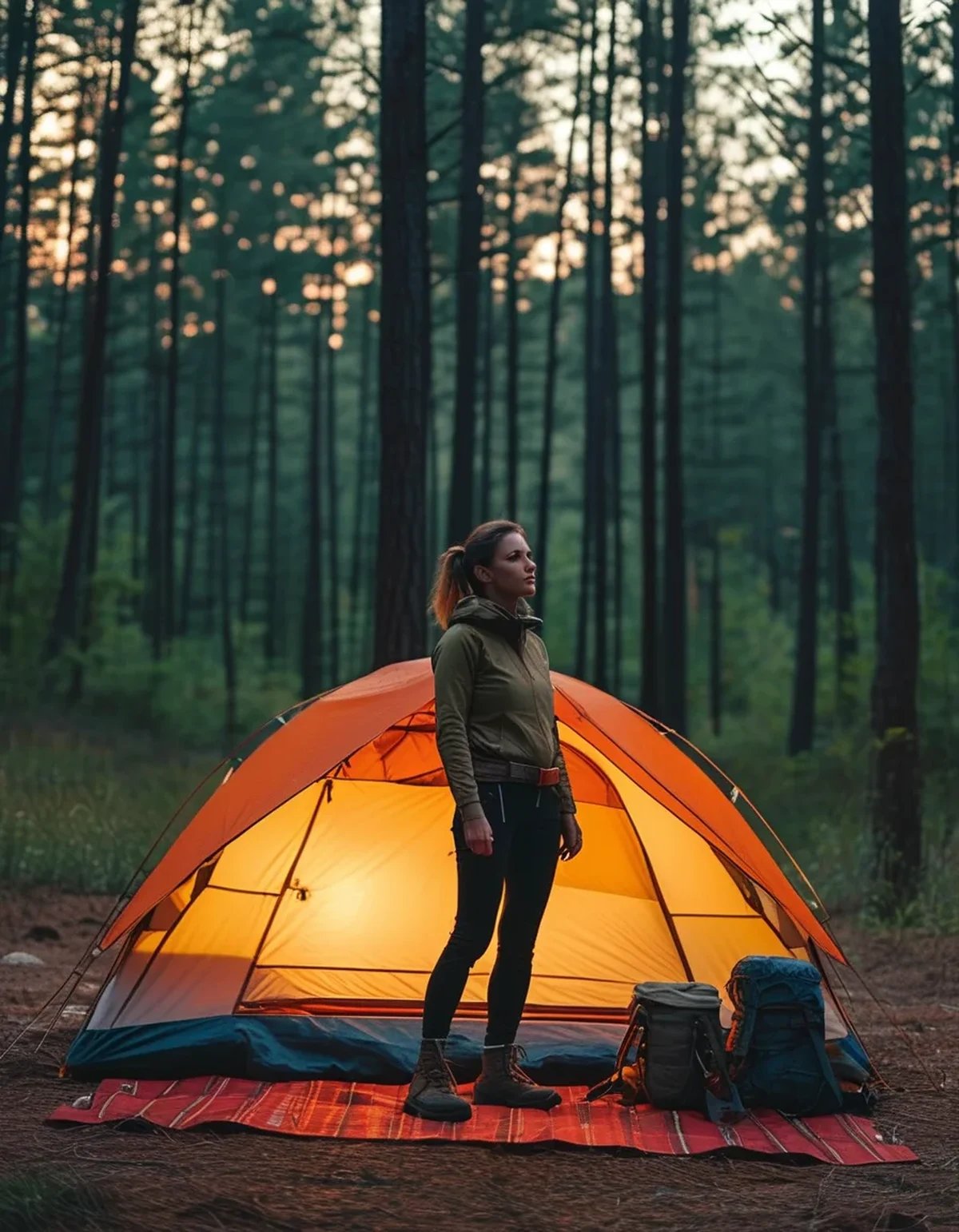
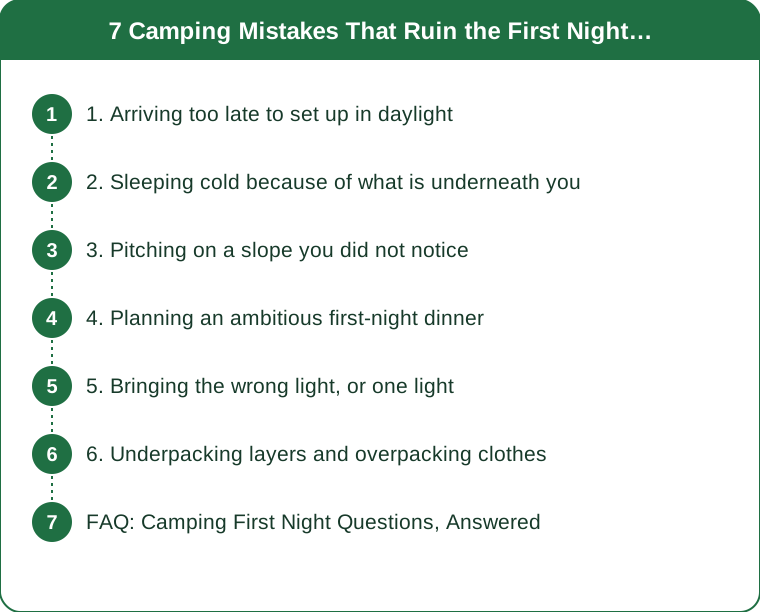
1. Arriving too late to set up in daylight
The single most consequential mistake, and it causes several of the others.
Setting up in the dark means you cannot see the ground you are pitching on, cannot spot the slope or the roots, cannot find things in the car, and cannot cook properly. Everything takes twice as long and goes wrong more often.
The fix: arrive at least two hours before sunset. For a first trip or an unfamiliar site, three. Sunset in mid-August is considerably earlier than it was in June - people plan around remembered midsummer light and get caught out.
What that means practically: work backwards from sunset, add your drive time, add an hour for the things that always happen - traffic, a stop, a wrong turn at the site. That is your departure time, and it will feel absurdly early. It is not.
The secondary benefit is that you get to choose your pitch rather than take what is left, which decides how well you sleep.
And practise the tent at home first. A tent you have never pitched is a 40-minute job the first time and a 10-minute job the second.
2. Sleeping cold because of what is underneath you
This is the mistake that produces the most misery and the one people misdiagnose most consistently.
When people are cold at night, they blame the sleeping bag. Usually the problem is underneath them. The ground conducts heat away from your body far faster than air does, and a sleeping bag compresses to nothing where your weight sits on it, which removes its insulation exactly where you need it most.
The relevant specification is the R-value of your sleeping pad - a measure of insulation. A summer pad with a low R-value on a cold night will leave you cold in any sleeping bag.
Rough guidance: an R-value around 2 is adequate for warm summer nights; 3 to 4 for shoulder seasons; 5 and above for cold. Late August nights in many regions drop considerably further than the daytime temperature suggests, and this is where people get caught.
The cheapest fix if you already have a pad: put a closed-cell foam mat underneath it. Stacking pads adds R-values together, and a foam mat costs very little.
Three other cold-sleeping fixes that work:
- Do not go to bed cold. Your bag does not warm you; it retains the heat you produce. Get warm first - a brief walk, a hot drink.
- Change into dry sleep clothes. Clothes you have worn all day are slightly damp and will chill you.
- A hat. Unglamorous and highly effective.
3. Pitching on a slope you did not notice
You will notice it at 2am when you have slid to the bottom of the tent for the fourth time.
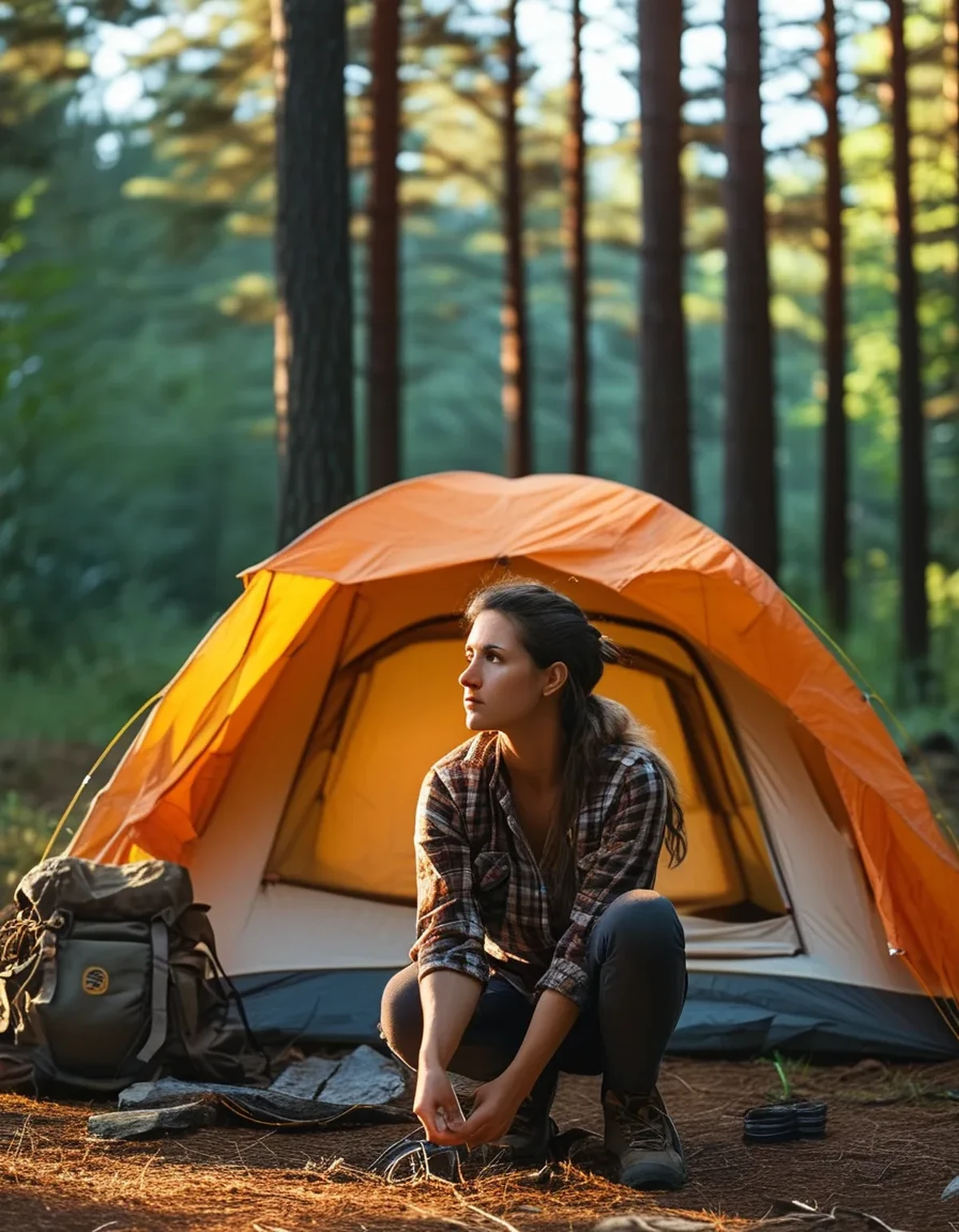
Ground that looks flat rarely is. The test: lie down on the spot before you pitch. Thirty seconds on your back tells you what an hour of looking will not.
If there is any slope, sleep with your head uphill. Sideways slope is the worst - you roll all night. A slight head-up slope is tolerable and a slight head-down slope is not.
Also check for:
- Roots and rocks. Clear them before pitching, not after.
- Dips and hollows. These collect water if it rains, and cold air pools in them regardless.
- Ground that is soft in a suspicious way, which frequently means it drains poorly.
- What is above you. Dead branches are a genuine hazard and worth 10 seconds of looking up.
On location within the site: slightly elevated is better than the lowest point, near a water source is convenient and colder and buggier, and under trees is warmer overnight but drips for hours after rain stops.
4. Planning an ambitious first-night dinner
By the time the tent is up, you are tired, it is getting dark, and you do not want to cook. Every ambitious first-night meal plan collides with this.
The fix: make the first dinner require no cooking at all, or close to it. Sandwiches made at home, a pasta salad, a pre-cooked meal that only needs heating in one pot. Save the proper cooking for the second night, when camp is set up and you have daylight and energy.
Bring more water than you calculated. Water runs out faster than anyone expects - drinking, cooking, washing up, brushing teeth. A rough planning figure of 2 litres per person per day for drinking alone, plus more for everything else, and considerably more in hot weather.
Bring one hot drink capability even if you bring nothing else. A kettle or a pot and a stove. A hot drink at dusk does a disproportionate amount for morale, and it is the thing people most regret not having.
And pack food in the order you will need it, with the first night’s food on top. Digging through a cool box in the dark for the thing at the bottom is a small misery that is entirely avoidable.
5. Bringing the wrong light, or one light
A single torch is not enough, and a hand-held torch is the wrong format.
A head torch is the single most useful piece of camping equipment relative to its cost. It leaves both hands free, which matters for every single task after dark - pitching, cooking, finding things, walking to the toilet block.
Bring at least two light sources and spare batteries. A head torch each, plus a lantern for the tent or table. Lights fail, batteries die, and a torch left on in a bag is a classic.
A lantern changes the evening entirely. A head torch is a spotlight that points wherever you look, which is unpleasant for everyone else. A lantern makes a camp feel like a place rather than a dark field.
One practical detail: a head torch with a red light mode preserves night vision and does not blind whoever you are talking to. It is a small feature that gets used constantly.
6. Underpacking layers and overpacking clothes
People bring too many clothes and not enough of the right ones.
The temperature swing at a campsite is much larger than in a town - clear nights radiate heat away, and a 25-degree day can be followed by a 10-degree night. Dressing for the day you experienced is the standard error.
What you actually need:
- A warm mid-layer - fleece or light down. The most useful single item.
- A waterproof outer layer, regardless of the forecast.
- Dedicated dry sleep clothes that never leave the tent.
- Warm socks for sleeping, separate from walking socks.
- A hat and something for your hands in shoulder seasons.
What you do not need: a different outfit for each day. Nobody at a campsite is assessing your outfit rotation, and every extra item is something to pack, carry, and lose.
The single most useful clothing rule: avoid cotton for anything you might sweat in or get wet. Cotton holds water and stays wet, which is uncomfortable in the day and genuinely risky in cold conditions.
7. No plan for the small miseries
Nobody quits camping over the big things. They quit over insects, wet feet, and needing the toilet at 3am.
Insects. Repellent, and something for bites you already have. Late summer is peak season for mosquitoes near water and for wasps around food. A screened area or a bug net for eating changes the evening considerably.
Wet feet. A second pair of shoes, kept dry. Once your only shoes are wet, everything is worse for the rest of the trip.
The 3am toilet trip. Head torch and shoes positioned where you can find them without a search. Know where the toilet block is in daylight, not at 3am.
Noise. Earplugs are the cheapest sleep upgrade in camping. Campsites are much louder than people expect.
Rain. A tarp or a shelter over the eating area transforms a wet trip. Without one, rain means everyone sits in the tent from 4pm.
### Myth vs Fact: First-Time Camping
Myth: You need expensive gear to be comfortable. Fact: Two things justify spending - the sleeping pad and the tent. Everything else can be cheap, borrowed, or improvised without meaningfully affecting the trip.
Myth: A warmer sleeping bag solves being cold. Fact: If the pad is inadequate, a warmer bag helps far less than expected. Insulation from the ground comes first.
Myth: Camping is uncomfortable and that is the deal. Fact: Most camping discomfort is avoidable and comes from four or five specific, fixable decisions.
Myth: You should hike in and camp remote for the real experience. Fact: Car camping removes weight constraints entirely, which means better sleep, better food, and a much higher chance you go again.
FAQ: Camping First Night Questions, Answered
What is the single best thing to spend money on?
The sleeping pad. It determines whether you sleep, and it is the item most people under-buy because it is less exciting than a tent.
How early should I arrive at a campsite?
Two hours before sunset minimum, three if the site is unfamiliar or it is your first time with that tent. Sunset is getting noticeably earlier now.
Is it safe to camp alone as a woman?
Many people do so routinely. Practical steps that help: choose established sites with other campers around, tell someone your location and expected return, arrive in daylight, and trust your judgement about a pitch or a site that feels wrong.
What food is best for the first night?
Something requiring no cooking or one pot at most. Prepared at home is ideal. The first-night ambitious meal is one of the most reliable sources of first-trip regret.
How cold does it actually get overnight?
Often much colder than the daytime high suggests, particularly on clear nights. Check the overnight low specifically rather than the daily forecast, and plan your sleep setup around that number.
TL;DR:
- Arrive two to three hours before sunset - setting up in the dark causes most of the other problems
- Cold sleep is almost always the pad, not the bag; stack a foam mat underneath if in doubt
- Lie down on your pitch before you put the tent up, and sleep head uphill
- Make the first dinner no-cook, bring two light sources, and bring a hot drink option
- Plan for insects, wet feet, and the 3am toilet trip - those are what actually end trips
Six of the seven are decided before you leave your house.
Keep Reading
This article is for general informational and styling purposes only. Fit, sizing, and product availability may vary.